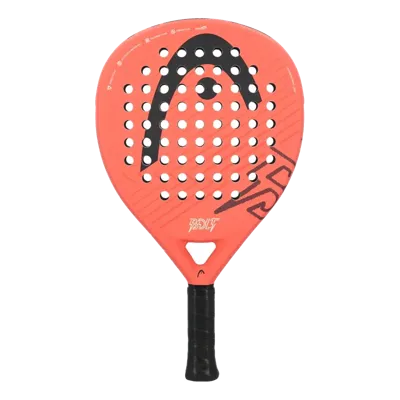
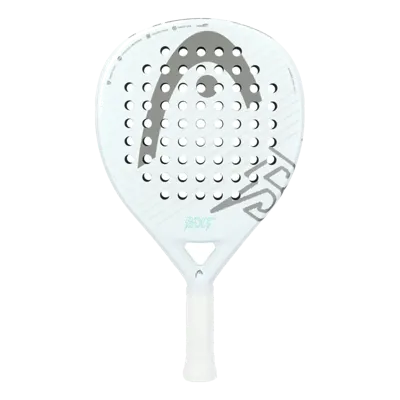
Reviewers and specs agree on one thing about the Head Bolt 2026: it is built to make the ball go deep without asking much of you. It is a soft racket with a modest ceiling. That suits some players well and others not at all.
Easy depth, little bite: what padel.how found on the Bolt
The only review on file comes from padel.how, which rated the racket 72 out of 100. Its pros are easy depth and manageable handling for club beginners, plus a soft face that keeps moderate mishits playable. Its main con is a smooth surface that limits spin and control. On its dimensions, comfort, control and sweet spot came out positive, grip neutral, power negative.
That last line matters. The Bolt will not add much to your shot. You supply the pace, and the racket returns the ball calmly. For a newer player that is often what you want. A ball that lands deep and predictably wins more rallies than a fast one that flies long.
Lightweight, says the product page: the listing says 360 to 370 g
The product page calls the racket lightweight and says the construction reduces fatigue. Treat that as a sales claim. Shops list the Bolt at 360 to 370 g, which puts it in a heavy weight class, and that pulls the maneuverability meter down to Low. One search result gives a nominal weight of 350 g. That figure is low-certainty and comes from a web search. Do not rely on it.
What does this mean on court? Quick exchanges at the net ask more of your wrist and forearm than a light racket would. The balance is 265 mm, which is medium, so the head does not add extra swing weight. Not a light racket, but not a head-heavy one either.
Fiberglass over soft Power Foam: why comfort reads High and power Low
The face is fiberglass and the core is Power Foam, described by one retailer as soft. Both soften impact. That is why comfort reads High, and the review agrees. It is also why power reads Low. A soft core and a flexible face absorb energy rather than return it.
The frame material is not published, so the specs cannot tell you how stiff the frame is. The product page mentions Innegra technology for durability, but that is a claim and the specs do not confirm it. If you want a soft build for long sessions, it is a real point in the racket's favour. If you want a ball that jumps off the face, it is the wrong build.
A flat surface and a Beginner / Intermediate tag: where you will outgrow it
The surface is flat. Padel.how noted that this limits spin. A rougher face grips the ball and helps you slice a bandeja. On the Bolt you rely on clean contact and placement instead.
The Beginner / Intermediate label is honest. The racket helps you learn depth and consistency. Once you hit harder, volley more and want to finish with a smash, the Low power meter becomes the limit. The fix is to move up in the range rather than to force the swing.
Bolt next to the Vibe 2026, the Radical Elite 2024 and the Alpha Tour
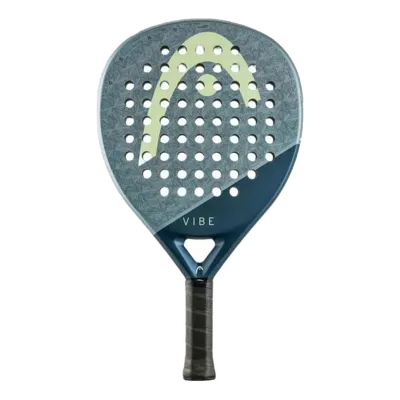
The Head Vibe 2026 is the closest match. It shares the teardrop shape, the fiberglass face and the 38 mm thickness. The weight range is also 360 to 370 g, and the level is Beginner / Intermediate. Its five meters match the Bolt's. Its core is listed simply as Foam. The direct comparison goes line by line.
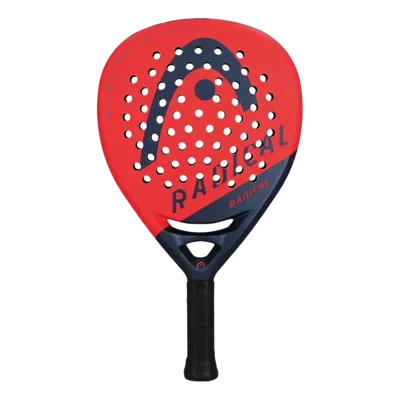
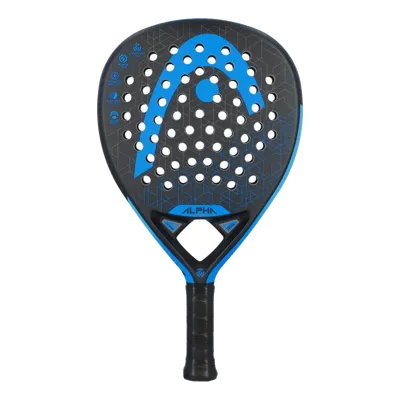
The Head Radical Elite 2024 has a Control Foam core, a 260 mm balance and a fixed 365 g weight. Its power meter is Medium against the Bolt's Low. The Head Graphene 360 Alpha Tour also has a Power Foam core, but it is tagged Advanced, weighs 370 g and gets a Medium power meter. It asks more of your technique.
 At Pádel Ibérico