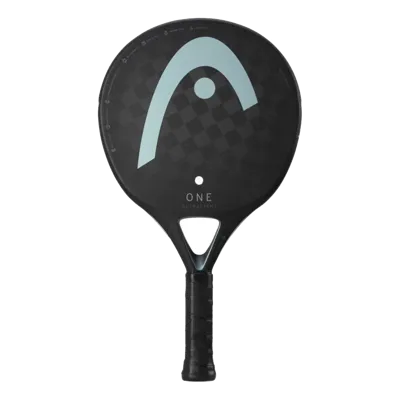
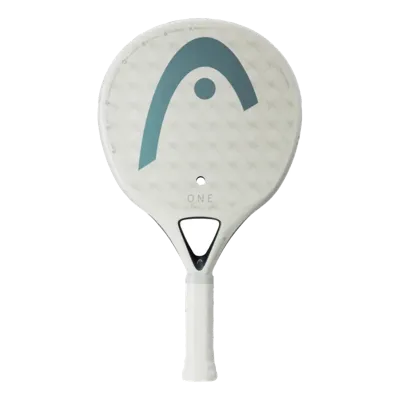
The Head One Ultralight 2025 weighs 300 g, full stop. Retailers list the minimum and maximum weight as the same figure. There is no weight window and no adjustable weight system is published. Head markets it for beginners and casual players of any age. The spec sheet points the same way: round shape, low balance, soft core.
A fixed 300 g build and what it changes
This racket is far lighter than the typical adult racket. That is the whole idea. You notice it before you hit a ball.
On court, low weight means fast preparation. You get the racket back sooner in defense. You react faster when the exchange at the net compresses. The trade is mass. A light racket does not push through the ball by itself. Your swing has to create the pace. For a beginner learning clean technique, that can help. For a player who ends points with one overhead, it is a real limit.
Head calls it the lightest padel racket on the market. Treat that as a brand claim. The fixed 300 g spec is the part you can rely on.
Comfort Foam under 12K carbon: soft first, firm enough
The core is Comfort Foam, a soft foam. Soft cores absorb impact. That is why the comfort meter is High. Your elbow and shoulder take less shock. Mishits feel muted rather than sharp.
The face is 12K carbon over a graphite frame. That keeps some definition in the contact. A fully soft racket can feel vague. This one should not turn to mush. Still, the soft core sets the tone. Not crisp, but cushioned.
The product page also claims a Spin Surface system for more spin. Retailers list a rough face. The rough texture is on the spec sheet. How much extra spin it adds is not measured by any source here.
Round, 265 mm and 470 cm2: control by geometry
Three specs explain the character. The shape is round. The balance is 265 mm, listed as low by one retailer. The head is 470 cm2. The frame is 38 mm thick.
Round shapes spread the usable hitting area wide. A head-light balance keeps the racket pivoting quickly in your hand. Together they explain the High ratings for control, maneuverability and sweet spot. The elongated grip, listed by retailers, adds a little leverage on overheads and two-grip changes.
What this build does not give you is power. Power is rated Low. Round shape, soft core, light weight: each choice trades punch for forgiveness. That is not a flaw if it matches your game. It is a problem if you want free depth.
75 out of 100 from padel.how: speed praised, smash capped
One independent source has played it. padel.how gave it 75 out of 100. Its dimensions were positive for grip, comfort, control and sweet spot. Power was the negative dimension.
Their tester puts the main benefit plainly: "The immediate benefit is movement. Preparation is exceptionally fast in defense, around the body and during compressed net exchanges." That matches what the specs suggest.
Their criticism matches too. They name limited passive stability and limited flat-smash power. They see it for beginners, casual players and coaches who want easy maneuverability. So the court test and the spec sheet tell the same story. That makes the picture fairly reliable, even with only one test.
Passive stability: the honest catch at 300 g
Passive stability is what happens when a hard ball hits your racket and you do not swing much. A heavier racket stays put. A 300 g racket is more likely to twist or get pushed back.
You feel that when you block fast balls at the net. You also feel it when you dig out hard low balls in defense. You can compensate. Hold the grip a bit firmer. Prepare earlier. Use the fast handling to get set sooner. But if you regularly face big hitters, the lack of mass will show up. That is the price of an ultralight build, not a defect unique to this Head.
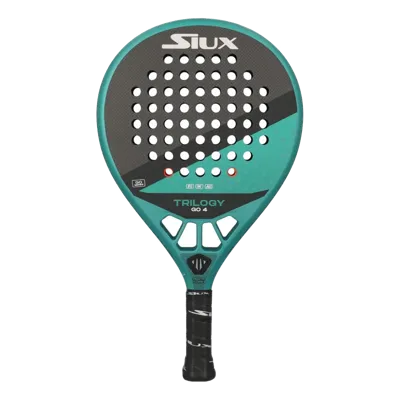
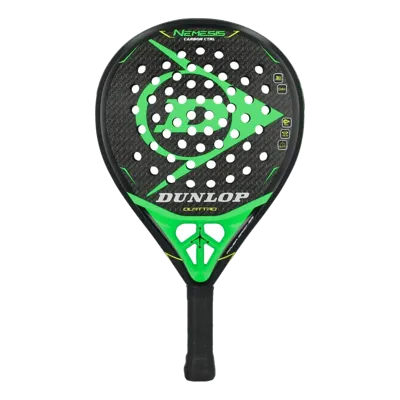
Siux Trilogy Go 4, Dunlop Nemesis Carbon Control or this Head
The closest alternatives use a similar recipe. Round shape, low balance, soft core, high control and low power.
The Siux Trilogy Go 4 is a 2024 round model for beginners and intermediates. It pairs a Soft EVA core with a 3K carbon face. Its profile ratings match the Head across control, comfort, maneuverability and sweet spot. It is the nearest like-for-like option. Its weight is not published here, so the lightest choice between them is an open question.
The Dunlop Nemesis Carbon Control uses an EVA super soft core and 3K carbon. It is listed for advanced players. If your level is higher and you still want a light control racket, that comparison is the useful one.
The Vibor-A Yarara Evo Pro sits a step firmer. Its comfort and sweet spot rate Medium rather than High. Pick it if soft rackets feel too muted to you. Pick the Head if you want maximum ease, the softest feel and the most forgiving contact of this group.
 At Padel Nuestro · 10 shops
 At Pádel Ibérico · 2 shops