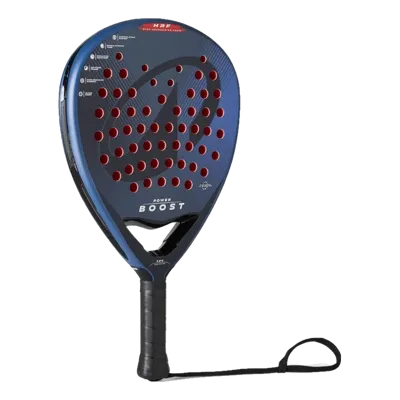
The Kuikma Power Boost is a diamond-shaped racket with High balance, a fixed 360 g weight and an Advanced label from Kuikma. On paper that means high power and low control, but the fiberglass face softens the hit the name promises. No independent review has played it yet, so every judgement here comes from the specs alone.
RBy Ruud Caris · facts checked 30 September 2026Choose it if
- you are an advanced player who finishes points with smashes and overheads
- you want a head-heavy diamond that swings at a steady 360 g
- you accept a small sweet spot in exchange for power on clean contact
Skip it if
- you defend a lot and need quick reactions at the net, look at a round or teardrop racket instead
- you are still building technique, since the Low control and Low sweet spot punish off-center hits
- you want a published balance figure in millimetres, the Bullpadel Pearl 2027 lists 260 mm
How it plays
Line = the average of all rackets ▲ above ▼ below
Everything below comes from the specs, because nobody has published a court test of this racket.
- Control Low on paper, the diamond shape and High balance make placement harder, especially on defensive balls.
- Power High on paper, the head-heavy build adds mass to smashes, though the fiberglass face takes some edge off.
- Comfort Medium, the EVA core and fiberglass face absorb some shock, but the high balance loads the wrist and elbow.
- Handling Low, a diamond with High balance swings slowly, so fast net exchanges and late blocks cost effort.
- Forgiveness Low, the diamond shape concentrates the effective hitting area, and mishits lose pace quickly.
Specifications
Not published by the brand: thickness, head size, surface, handle
Specs from the brand's own site · checked 26 September 2026 · Spotted a wrong spec? Report it →
The price is followed as soon as a shop in your market sells it.
The Kuikma Power Boost has a 100% carbon frame and a fiberglass face. That combination says more about this racket than the word Power in its name. Kuikma lists it as a diamond shape with High balance, fixed at 360 g, aimed at advanced players. No independent reviewer has published a court test, so this article works from the specs and says so where it matters.
Power in the name, fiberglass on the face
The frame is 100% carbon, which gives a stiff, stable structure. The face is fiberglass, not carbon. That matters more than the frame for how the ball leaves the racket.
Fiberglass flexes more than a carbon face. It gives a softer contact and a bit more ball output on slow swings, but it returns less energy when you swing hard at full pace. On a racket called Power Boost, that is a curious choice. Not wrong, but notable.
The core is EVA, a medium-density foam by Kuikma's own listing. It sits between the soft foams that launch the ball for you and the hard foams that demand a full swing. On paper, the build reads as a head-heavy diamond with a friendlier contact than its shape suggests.
Fixed at 360 g with the balance high: one build, no window
Kuikma lists the weight as 360 g, minimum and maximum the same. Many rackets publish a range because production varies. Here there is one number, so there is no lighter or heavier version to pick from.
360 g is a standard adult weight. Combined with the High balance, though, it swings heavier than the scale suggests. The mass sits toward the head, which helps overheads and smashes and hurts quick changes of direction.
If 360 g head-heavy sounds demanding, there is no lighter Power Boost to fall back on. That is the catch of a single fixed spec.
High power, Low control, Low sweet spot: the trade in one read
The profile is consistent. Power rates High, driven by the diamond shape and High balance. Control rates Low, pulled down by the same two factors. The sweet spot rates Low too, because diamond shapes concentrate the effective hitting area in a smaller zone.
Comfort lands at Medium. The EVA core and fiberglass face absorb some vibration, but the head-heavy balance puts more load on your wrist and forearm over a long match.
Maneuverability is Low. At the net, in fast exchanges, this racket asks for early preparation. You win with it by ending points, not by surviving them.
That is the trade in one sentence: clean contact gets rewarded, everything else gets taxed. The fiberglass face softens the penalty slightly, but it does not remove it.
Advanced on the label, Power in the player profile: who Kuikma built it for
Kuikma labels the Power Boost for advanced players, and the player profile attached to it reads Power. The specs agree with both. A Low control, Low sweet spot diamond is not a racket that forgives developing technique.
If you finish points with smashes and overheads, and your timing holds under pressure, the profile fits. If your game is built on patience and placement, a diamond with this balance works against you.
One honest caveat. Brand level labels are marketing as much as measurement. Kuikma says Advanced, and the specs back it, but nobody has verified it on court.
Specs only, no court test: what that means for you
There is no independent review of the Power Boost published yet. No tested source, no video review, no player thread to quote. Everything in this article follows from the shape, balance, weight and materials that Kuikma publishes.
That is useful to know before you buy. Specs predict direction well: this will play head-heavy, powerful on clean contact, demanding in defense. What specs cannot tell you is how the racket holds up after months of play, or how it behaves on off-center contact in a long match. Those answers only come from court time.
If a court test appears later, it can confirm or correct all of this. Until then, treat the profile as a well-founded sketch, not a finished picture.
Power Boost, Pearl 2026 or Hack 05 Comfort 27: picking a head-heavy diamond
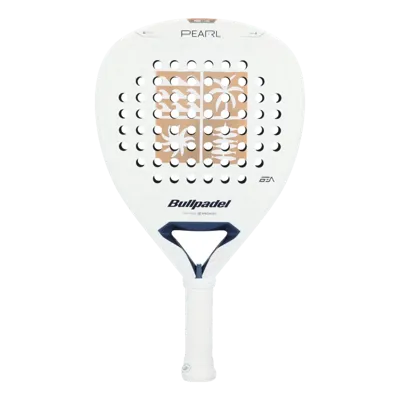
The closest neighbours in the same spec family come from Bullpadel. The Bullpadel Pearl 2026 matches this racket meter for meter: High power, Low control, Low sweet spot, diamond shape, high balance. Its face is Fibrix and its core is MultiEVA. Its weight window runs 355 to 365 g. It is the racket Beatriz González plays.
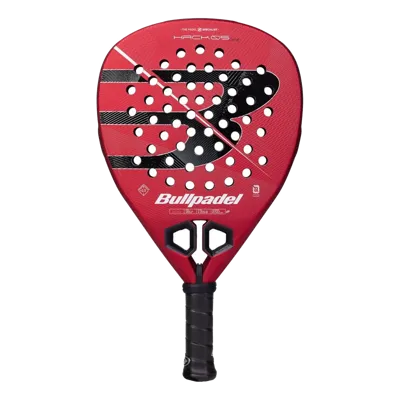
The Bullpadel Hack 05 Comfort 27 sits one level up, labeled Professional, also diamond with High power and Low control, at 360 to 370 g. Paquito Navarro's name is on it.
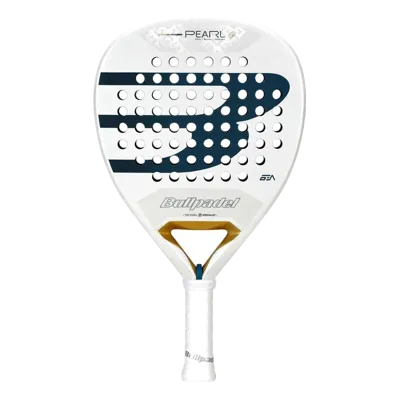
The Bullpadel Pearl 2027 differs on one meter: its power rates Medium where the Power Boost rates High. If the full-power read appeals but you want a published balance figure, the Pearl 2027 lists 260 mm. The comparison is worth a look.
Similar rackets
Questions before you buy
Is the Kuikma Power Boost good for beginners?
No. Kuikma labels it Advanced, and the specs agree: Low control, Low sweet spot and a head-heavy diamond build punish off-center hits. Developing players should look at round or teardrop shapes first.
How does the Power Boost compare to the Bullpadel Pearl 2026?
On paper they are very close: both diamond, high balance, High power and Low control. The Pearl 2026 uses a Fibrix face and MultiEVA core. The Power Boost is fixed at 360 g with a fiberglass face, while the Pearl 2026 runs 355 to 365 g.
Does the fiberglass face make it less powerful?
It softens the contact compared to a carbon face, returning less energy on full swings. The power meter still rates High thanks to the diamond shape and High balance, but expect a friendlier hit than a full carbon diamond.
Has anyone tested the Kuikma Power Boost on court?
Not that has been published. There are no independent reviews or video tests yet, so everything known about it comes from the specs Kuikma lists.
What is the closest alternative?
The Bullpadel Pearl 2027 plays most alike. Differences: handling +2.0, control +1.5. Today: € 265.49.
Compare side by side →Who should not buy it?
Skip it if you rely on placement and long rallies (control 3.0/10), or if you are still learning: it is not very forgiving (3.5/10).
How heavy is it really?
The brand gives 360 g. That counts as medium. Each racket can differ within that range.
Why a range? →