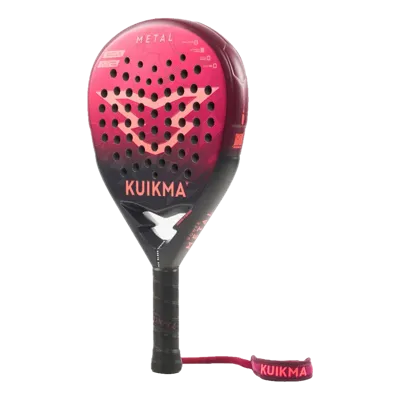
Kuikma Power Metal
7.9padell.io scoreSpecs + 1 review source- Shape
- Diamond
- Weight
- 365 g
- Balance
- Head-heavy
- Core
- Soft EVA
The Kuikma Power Metal is a fixed 365 g head-heavy diamond. It has a soft EVA core and a fiberglass face, so despite the name there is no metal or carbon in the hitting surface. On paper it is built for power, and the one court test available gives it 78 out of 100. The catch: modest forgiveness on off-center hits.
RBy Ruud Caris · facts checked 30 September 2026Choose it if
- you want easy pace on overheads without a full swing
- you have a consistent swing and rarely miss the middle of the face
- you like a head-heavy diamond but prefer a soft, dampened feel on contact
Skip it if
- you are still building technique, since off-center contact gets little help here
- you defend deep from the back glass and need fast racket recovery
- you want more comfort per hour, which the Bullpadel Indiga Power 26 rates higher for
How it plays
Line = the average of all rackets ▲ above ▼ below
A soft, head-heavy diamond that swings slow and hits hard, if your timing holds up.
- Control Low on paper: the diamond shape and high balance work against placement, though the soft EVA gives you some dwell time on the ball.
- Power The strongest trait in the build: diamond shape, fixed heavy weight and head-heavy balance all push pace, especially on overheads.
- Comfort Medium, the soft EVA and fiberglass face soften impact, but the heavy, top-weighted setup adds strain over a long session.
- Handling Low, this racket moves slowly at the net and in quick defensive scrambles.
- Forgiveness Low, with the tested review noting modest forgiveness when you miss the middle.
Specifications
Not published by the brand: head size, surface, handle, frame
Specs from decathlon.fr · checked 28 September 2026 · Spotted a wrong spec? Report it →
The price is followed as soon as a shop in your market sells it.
What reviewers say
Exactly one source has put this racket on court: padel.how, with 78 out of 100. Their testers praise a high attacking ceiling and accessible pace. They also call the head-heavy setup manageable for precise placement. They recommend it to intermediate and advanced attackers who favour power over mishit tolerance. The clear reservation is modest forgiveness on off-center contact, which lines up with the Low sweet spot and Low control the specs suggest. There is no second court test, no metareview and no player chatter to weigh against it, so where reviewers agree or differ is impossible to say. What you have is one informed opinion that matches the spec sheet. That is better than nothing, but it is not a consensus, and you should read the rating as a single data point.
The Kuikma Power Metal has Metal in its name and not a gram of carbon on its face. The hitting surface is fiberglass, laid over a soft EVA core. That combination tells you most of what you need to know before the first smash: this is a soft-feeling power racket, not a stiff one.
Metal in the name, fiberglass on the face
Do not let the label mislead you. There is no metallic material listed anywhere in the construction. The face is fiberglass, the core is soft EVA, and the frame comes in at the standard 38 mm thickness.
What does that mean on court? Fiberglass flexes more than carbon. Soft EVA compresses on contact. Together they give a dampened, elastic response. The ball stays on the face a fraction longer, which helps you launch it without a full swing. On volleys and tray shots you get a softer, more muted impact than a carbon face would give.
The trade-off is feedback. A soft face is less precise about where on the racket you made contact. If you like to feel exactly what happened, this build blurs that picture a little.
Fixed at 365 g with the weight high: one build, class="no window"
The weight is 365 g. Not a range, a single figure: minimum 365 g, maximum 365 g. The balance is head-heavy.
Two consequences follow. First, 365 g is a solid adult weight, and with the mass shifted toward the head it swings heavier than the number suggests. Flat and kick smashes benefit, because the moving mass is up where you hit the ball. Second, there is no lighter variant to step down to.
If 365 g head-heavy is too much for your shoulder, there is nothing else in this line to switch to. The same holds if it is too slow for your net game.
Quick reactions at the net are where you pay. The racket needs a longer backswing and more forearm work in fast exchanges. Not a problem if you set up early. A real one if your game depends on last-instant blocks.
78 out of 100 from the one court test: attacking ceiling praised, mishits punished
One source has actually played this racket: padel.how, which gave it 78 out of 100. Their testers describe a high attacking ceiling with accessible pace, and call the head-heavy setup manageable for precise placement. Their verdict: "Choose Power Metal for a high attacking ceiling with useful accessibility and handling."
Their reservation matters more for most buyers: modest forgiveness on off-center contact. In other words, the racket rewards clean timing and gives you little help when the ball meets the frame instead of the middle. They point it at intermediate to advanced attacking players who put power above mishit tolerance.
One review is one review. Treat the rating as a single informed opinion, not a consensus.
Low control, Low sweet spot, Low maneuverability: what a soft head-heavy diamond asks of you
Put the spec sheet together and a clear picture forms. Diamond shape, head-heavy balance, 365 g fixed. On paper that adds up to high power with low control, a small sweet spot and slow handling.
The soft EVA and fiberglass push back a little. They add comfort and some ball dwell, which softens the harshest edges of the diamond format. But they do not change the physics. This racket asks you to bring your own precision.
What does that demand in practice? A repeatable swing, good footwork to get behind the ball, and the honesty to aim at big targets when you are stretched. If that sounds like your game, the power output is the reward. If you are still grooving your strokes, the same build will show every wobble in your timing. The fix is simple but not quick: play within yourself, or pick a friendlier shape.
Power Metal or the Bullpadel Indiga Power line: picking a soft diamond
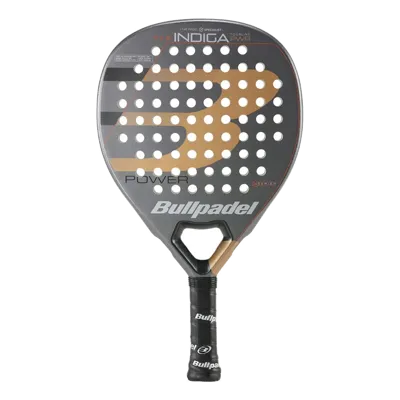
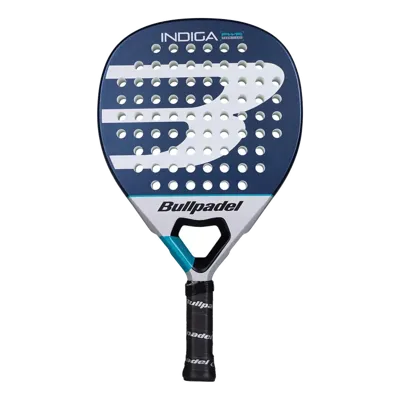
If you like this recipe but want a different seasoning, Bullpadel's Indiga Power family is the obvious comparison. The Bullpadel Indiga Power Grey runs the same soft EVA and diamond idea. It rates High on comfort against the Kuikma's Medium. Its weight also spans 360 to 370 g instead of a single fixed figure. The Bullpadel Indiga Power 26 follows the same pattern: softer on the arm, with a weight window rather than one number.
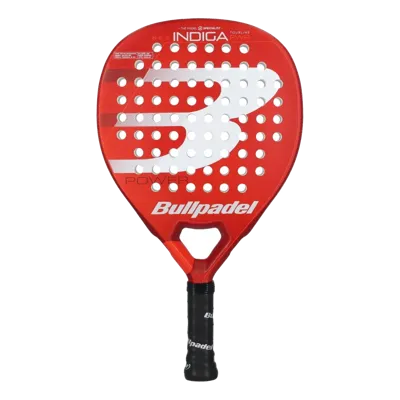
The Bullpadel Indiga Pwr 2024 is the closest sibling in construction, with a fiberglass face just like the Kuikma, and it too rates comfort High. Bullpadel labels that line for beginner to intermediate players, which hints at a gentler learning curve than the Kuikma's spec sheet suggests.
So the choice is not power or no power. Both lines hit hard. It is about how much forgiveness and comfort you want wrapped around the same attacking idea.
Similar rackets
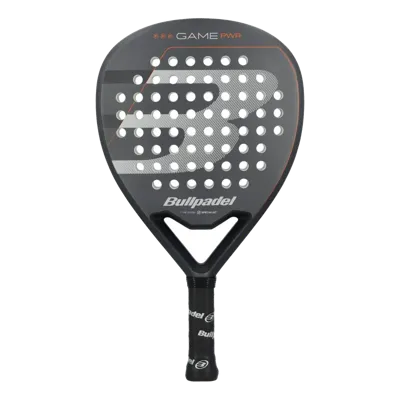
Questions before you buy
Does the Kuikma Power Metal actually have metal or carbon in it?
No. The face is fiberglass and the core is soft EVA. No carbon or metallic material is listed in the construction, so the Metal in the name refers to the model line, not the materials.
What level of player is the Power Metal suited to?
The one court test, from padel.how, points it at intermediate to advanced attacking players. The diamond shape and head-heavy balance demand reliable timing. So does the Low sweet spot on paper. It suits players who already hit the middle of the face consistently.
Is the Kuikma Power Metal comfortable for your arm?
Comfort sits at Medium. The soft EVA and fiberglass face dampen impact well, but the fixed 365 g weight with head-heavy balance loads the arm over long sessions. If comfort is a priority, the Bullpadel Indiga Power line rates High on comfort with a similar build.
How does the Power Metal compare to the Bullpadel Indiga Pwr 2024?
Both are soft EVA diamonds with high balance and a fiberglass face. The Indiga Pwr 2024 has a 360 to 370 g weight range and rates High on comfort. The Power Metal is fixed at 365 g and rates Medium. Only the Power Metal has a documented court test, so beyond the specs there is no basis to rank them.
What is the closest alternative?
The Bullpadel Indiga Power Grey plays most alike. Differences: power -1.0, forgiveness +1.0.
Compare side by side →Who should not buy it?
Skip it if you rely on placement and long rallies (control 3.5/10), or if you are still learning: it is not very forgiving (3.0/10).
How heavy is it really?
The brand gives 365 g. That counts as medium. Each racket can differ within that range.
Why a range? →