The Kuikma PR React is a light teardrop racket with an even balance and an unusual build: flax woven into the face next to fiberglass. On paper it reads as a comfortable, all-round racket for players from beginner to advanced, with High comfort and Low power in the profile. The catch: nobody has published a review yet, so everything here comes from the specs.
RBy Ruud Caris · facts checked 30 September 2026Choose it if
- you want a light teardrop that forgives off-center hits rather than punishes them
- you play a patient all-round game and get your points from placement, not raw smash power
- you are curious about the flax and fiberglass face and accept that no independent test exists yet
Skip it if
- you want free power on overheads; the power meter sits at Low, so look at a head-heavy option instead
- you only buy after reading independent tests; nothing has been published on this racket yet
- you already know you want a stiffer, harder racket; Kuikma itself rates this core as soft
How it plays
Line = the average of all rackets ▲ above ▼ below
On paper this is a soft, light teardrop built for comfort and all-round play, not for finishing power.
- Control The teardrop shape, even balance and medium EVA core point to steady, predictable ball placement at medium pace.
- Power The fiberglass and flax face plus the low weight keep power low, so you supply the speed yourself on attacking shots.
- Comfort A soft core, a flexible face and a light frame make this the kindest part of the spec sheet, gentle on arm and elbow.
- Handling Light weight and even balance make it quick to move at the net and easy to get back in defense.
- Forgiveness The teardrop shape gives a medium sweet spot, forgiving enough for developing technique without being a round racket.
Specifications
Not published by the brand: thickness, surface, handle
Specs from the brand's own site · checked 26 September 2026 · Spotted a wrong spec? Report it →
The price is followed as soon as a shop in your market sells it.
The Kuikma PR React has something you do not see on the spec sheets of its closest rivals: flax in the face. That plant fiber sits woven in next to the fiberglass. This single detail is the whole story of this racket, because there is no test, no video review and no player thread to lean on. Everything you read here comes from the spec sheet, and the spec sheet is honest enough to work with.
Flax in the face: what the build tells you
The face is a mix of flax and fiberglass. The frame goes further: 37.5% fiberglass, 32.5% carbon, 25% EVA and 5% flax. The brand does not publish what the flax is supposed to do here, so the safe reading is simple: this is a soft, flexible construction. Fiberglass faces flex more than carbon faces, and the profile agrees. Comfort is High, power is Low. If you are hoping the flax secretly adds punch, nothing on the sheet supports that.
341 to 360 g, teardrop, even balance: the all-round numbers
The weight runs from 341 to 360 g, which puts it in the light class. The shape is teardrop, the balance is even, and the head measures 558 cm2. Translated to the court: easy to swing, easy to place, nothing extreme in any direction. The teardrop shape shifts the sweet spot slightly higher than a round racket would. The even balance keeps it neutral in the hand. This is a racket you swing fast, not a racket that swings for you.
Zacht and Polyvalent: Kuikma's own two words
Kuikma describes the core density as Zacht, Dutch for soft, and the player profile as Polyvalent, meaning all-round. Those are the brand's own words, not measurements. But they line up with the rest of the sheet. A soft EVA core absorbs more of the ball's speed. That gives you dwell time and control at low pace, and asks more of your arm when you want a winner. Polyvalent fits the numbers too: every meter sits at Medium or High except power.
High comfort, Low power: the trade in one read
The profile is a classic comfort build. High comfort from the soft core, the flexible face and the low weight. Medium control, maneuverability and sweet spot. And Low power, pulled down by the face and the weight class. What you notice on court: defending and placing feel easy, finishing takes effort. If your smash already lacks speed, this racket will not fix that. The answer is technique and a full swing, not a different spec on this frame.
No reviews yet: the spec sheet carries the whole argument
No independent review, video test or player discussion of the PR React has been published. That matters for how you buy. With most rackets you can check whether the specs match reality. Here you cannot. The upside: the specs are internally consistent. Shape, balance, weight, core and face all point the same way, toward a soft and comfortable all-round racket. The risk is in the details only a court test reveals, like how the flax face responds on a hard smash or a hot day.
PR React, Astra Hybrid Air or Air Origin: picking a soft teardrop
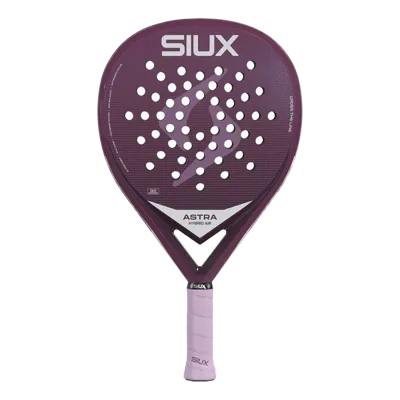
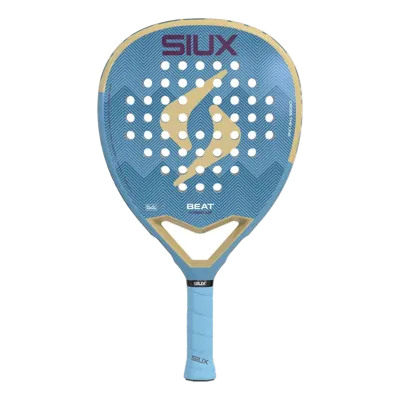
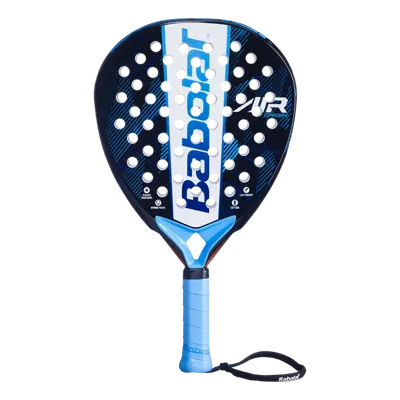
The closest alternatives read almost identically on paper. The Siux Astra Hybrid Air is also a teardrop with EVA, fiberglass and a 340 to 360 g range, aimed at beginner to intermediate players. The Babolat Air Origin runs slightly lighter at 335 to 355 g with a published balance of 265 mm. The Siux Beat Hybrid 3 Air mirrors the PR React's profile meter for meter. The difference is the flax. None of the three rivals uses it. If the material experiment appeals to you, the PR React stands apart. If you want a more familiar construction, the rivals keep it simple.
Similar rackets
Questions before you buy
Has anyone tested the Kuikma PR React?
No. No independent review, video test or player thread has been published. Everything known about it comes from Kuikma's own specifications.
What level is the PR React for?
Kuikma labels it Beginner / Advanced and describes the player profile as Polyvalent, meaning all-round. The soft, light build suits players who value comfort and control over finishing power.
Is the PR React good for a sensitive arm?
On paper, yes. The brand rates the core as soft, the face is flax and fiberglass, and the weight is light at 341 to 360 g. The comfort meter is High. No test has confirmed this on court yet.
How does it compare to the Babolat Air Origin?
Both are soft, light teardrop rackets with EVA cores and fiberglass-based faces. The Air Origin runs slightly lighter at 335 to 355 g and publishes a 265 mm balance. The PR React is the only one with flax in the build.
What is the closest alternative?
The Siux Astra Hybrid Air plays most alike. On paper the differences are under one point. Today: € 119.95.
Compare side by side →Who should not buy it?
Skip it if you want easy power for smashes (power 5.0/10), or if you are still learning: it is not very forgiving (5.5/10).
How heavy is it really?
The brand gives 341 to 360 g. That counts as light. Each racket can differ within that range.
Why a range? →