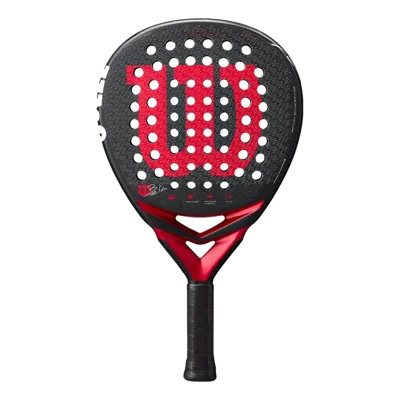
Wilson Bela V3
7.9padell.io scoreSpecs + 1 review source- Shape
- Teardrop
- Weight
- 365 g
- Balance
- Slightly head-heavy
- Core
- Firm EVA
The Wilson Bela V3 is the middle model of Wilson's three Bela V3 rackets. Wilson gives it a teardrop shape, 365 g, a medium-high balance, a firm EVA core and a face of 3K carbon and fiberglass. On paper it is built for power, with low comfort and maneuverability. Shops list it for every level, but the specs point to experienced players.
RBy Ruud Caris · facts checked 26 September 2026Choose it if
- you attack from the back and want the racket to add weight behind the smash
- you want the attacking Bela character with a face that mixes carbon and fiberglass instead of the Pro's 24k carbon
- a rough face for extra spin is part of how you finish points
Skip it if
- your arm is sensitive, the [Wilson Bela LS V3](/rackets/wilson/bela-ls-v3/) weighs 355 g, has a medium balance and rates higher on comfort
- you are a beginner, since the head-heavy balance and the low comfort rating leave little margin
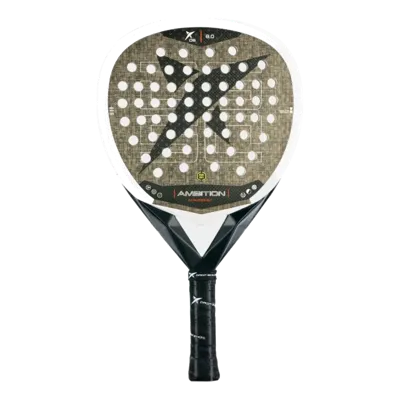
- you want the same attacking idea with more comfort, the [Drop Shot Explorer 8.0](/rackets/drop-shot/explorer-8-0/) is a medium-high teardrop rated higher on comfort
How it plays
Line = the average of all rackets ▲ above ▼ below
The specs describe an attacking teardrop with its weight toward the head.
- Control The teardrop shape and the core help precision, while the head-heavy balance makes placement depend more on your technique.
- Power Weight, a medium-high balance and the teardrop shape all push power up, the clearest strength of this build.
- Comfort The mixed face and the core help a little, but the weight and the head-heavy balance load the arm.
- Handling With the weight toward the head, it is slow to redirect when volleys come fast.
- Forgiveness The teardrop shape keeps the good zone at an average size, neither wide nor narrow.
Specifications
Not published by the brand: thickness, head size, handle
Specs from padelnuestro.com · checked 25 September 2026 · Spotted a wrong spec? Report it →
Video reviews
4 videos from independent channels and shopsPrice history
Lowest price per day across the shops in your market. Checked every night.
What reviewers say
Wilson's Bela range for 2025 has three V3 models, and they step up in weight. The Bela LS V3 weighs 355 g, this Bela V3 365 g and the Bela Pro V3 2025 370 g. The Bela V3 lists a teardrop shape, a medium-high balance and a firm EVA core. The face mixes 3K carbon and fiberglass, the frame is C2 tubular carbon and the surface is rough. Neither the balance point nor the thickness is published. Fernando Belasteguín is listed as the player for both this racket and the Pro.
The middle of three Belas
The three V3 models differ in more than weight. The LS uses Power Foam and a carbon and fiberglass face, with a medium balance at 265 mm, and its profile rates comfort high. The Pro uses Power Foam and a Carbon 24k face with a high balance. The Bela V3 sits between them on weight, but in character it leans toward the Pro. On the five meters of this page the two come out the same: power high, control medium, comfort and maneuverability low.
If you want the attacking Bela without the 24k face, this is the one. If you want an easier ride with the Bela name, the Wilson Bela LS V3 is the gentler option.
A firm core with a mixed face
The core is listed as firm EVA. A firmer foam deforms less at impact. That gives a direct response and returns pace on full swings, but it forgives less on off-center hits. The profile here classes this core as medium rather than hard. That is why the core counts slightly in favour of comfort there.
The face combines 3K carbon with fiberglass. That mix sits between a full carbon face and plain fiberglass: some of the precision of carbon, some of the give of fiberglass. The product copy credits the combination with better durability and playability. The frame is C2 tubular carbon.
Comfort claims against the meters
The product page lists a Shock Shield grip, and it says one of the racket's technologies improves feel and prevents arm discomfort. The profile says comfort is low. Both points can hold at once. Damping can take some vibration out, but it does not change where the weight sits.
At 365 g with a medium-high balance, the head carries a lot of mass into every hit. Your arm has to stop that mass on every volley and block. If your elbow is fine, that weight is what gives the smash its drive. If it is not, look at the LS first.
A label for every level
Shops put the Bela V3 in every level category, beginner included. The product page speaks of intermediate and advanced players. The specs point to the second group. A head-heavy teardrop with low comfort and low maneuverability rewards a clean, full swing and punishes late preparation. One retailer calls the player profile offensive and tactical, which fits better than beginner.
Rackets with the same idea
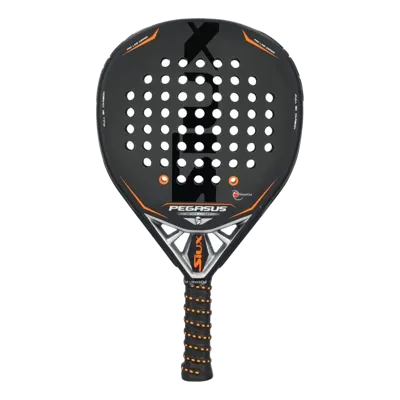
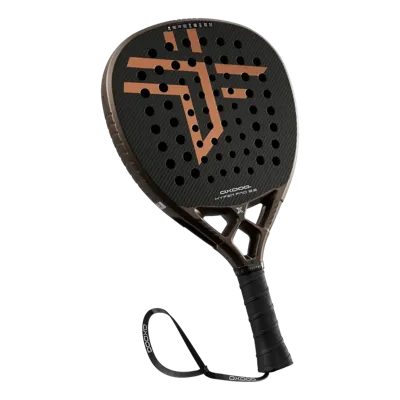
The Oxdog Hyper Pro 2.0 comes out identical on paper. Both are teardrops at 365 g, the Oxdog with a high balance, and all five ratings match. The Siux Pegasus Revolution 3K and the Drop Shot Explorer 8.0 keep the attacking teardrop and rate comfort medium instead of low.
No reviews to lean on
No independent review, video or player thread covers the Bela V3. The balance point and the thickness are missing from the listings. For balance, the medium-high label is all there is to go on.
Similar rackets
Questions before you buy
What is the difference between the Wilson Bela V3 and the Bela Pro V3 2025?
The Pro weighs 370 g and has a high balance, Power Foam and a Carbon 24k face. The Bela V3 is 365 g with a medium-high balance, a firm EVA core and a face of 3K carbon and fiberglass. Their profiles come out the same: power high, comfort low.
Is the Wilson Bela V3 suitable for beginners?
Shops list it for beginners, but the specs point to experienced players. The head-heavy balance and low comfort rating leave little margin. The Bela LS V3 is the easier option in this line.
Does Fernando Belasteguín play the Bela V3?
Shops list him as the player for both the Bela V3 and the Bela Pro V3 2025. Which one he uses in matches is not stated.
Is the Bela V3 good for a sensitive arm?
Not really. The profile rates comfort low because of the weight and the head-heavy balance. The product page promises less arm discomfort, but the Bela LS V3 rates higher on comfort.
Is the Bela V3 worth the money right now?
Today's price is labelled "Fair price" compared with the rackets that play most alike. Which shops deliver, and what shipping costs, depends on your country. The price comparison shows it for yours.
See all pricesWhat is the closest alternative?
The Siux Pegasus Revolution 3K plays most alike. Differences: comfort +1.0. Today: € 114.90.
Compare side by side →Who should not buy it?
Skip it if your elbow or shoulder complains (comfort 4.5/10).
How heavy is it really?
The brand gives 365 g. That counts as medium. Each racket can differ within that range.
Why a range? →