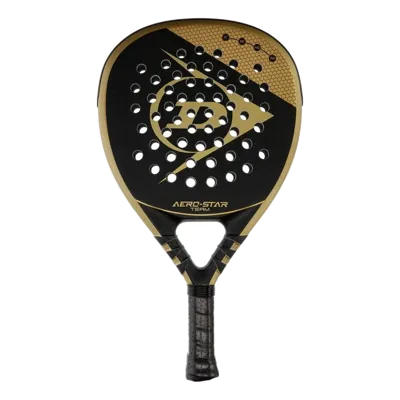
The Dunlop Aero-Star Team is a diamond-shaped carbon racket with an EVA core, listed at 355 to 375 g. On paper it reads as a power racket for advanced players, with low comfort and a small sweet spot. No review has been found yet, and balance in mm and head size are not published, so treat this as a spec-sheet read.
RBy Ruud Caris · facts checked 5 November 2026Choose it if
- you are an advanced player who wants a heavy, power-led diamond
- you already handle a heavy racket in the 355 to 375 g range
- you hit the ball cleanly and can live with a small sweet spot in exchange for power
Skip it if
- you want a softer, more forgiving racket, in which case the Dunlop Aero-Star Lite reads easier on the arm
- you need a quick, easy-to-swing racket for long defensive rallies
- you want a racket listed at Professional level, which the Bullpadel Vertex 05 27 is
How it plays
Line = the average of all rackets ▲ above ▼ below
On paper this is a heavy, power-first diamond racket, and no court test has been found yet.
- Control Medium, because the EVA core, carbon face and medium balance help, while the diamond shape pulls it down.
- Power High, as the carbon face, diamond shape and heavy build all push in that direction.
- Comfort Low, since the weight outweighs what the EVA core adds.
- Handling Low, because a diamond head and a heavy frame are slow to swing around.
- Forgiveness Low, which is typical of a diamond shape and means off-centre hits give you less help.
Specifications
Not published by the brand: head size, handle, frame
Specs from padelnuestro.com · checked 30 September 2026 · Spotted a wrong spec? Report it →
Price history
Lowest price per day across the shops in your market. Checked every night.
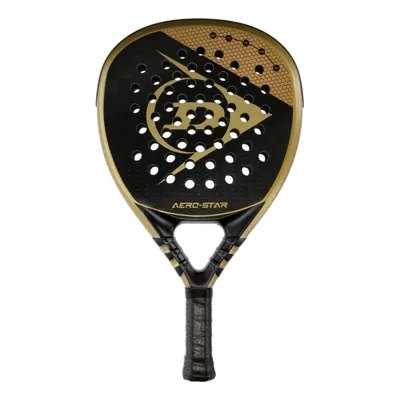
Put the Aero-Star Team next to the plain Aero-Star and you will struggle to find a difference. Apart from the weight listing, it is the same EVA core, the same carbon face, the same diamond head and the same 38 mm thickness. No review of the Team has been found yet. Everything below comes from the specs, and the specs have gaps.
Team or plain Aero-Star: one weight range apart
The Dunlop Aero-Star is listed at a fixed 365 g with a 260 mm balance. The Team is listed from 355 g to 375 g. In published values, weight is the only difference. The balance in mm is missing for the Team. Its Medium balance label matches, and the five meters are identical: medium control, high power, low comfort, low maneuverability, low sweet spot.
What does the range mean? The sources do not say, so do not read more into it. If weight matters to you, check what your own racket weighs when it arrives.
The lower figure, 355 g, comes from tennisnuts.com. The upper figure, 375 g, comes from us.dunlopsports.com. Treat the exact range with some care.
Why the Lite has Medium comfort
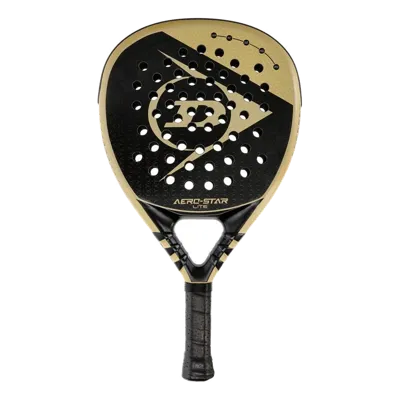
The Dunlop Aero-Star Lite shares the EVA core, carbon face, diamond shape and 38 mm thickness. It is listed at a fixed 355 g, and it is aimed at beginners and intermediates. The Team goes up to 375 g. Its comfort meter reads Medium, against Low for the Team.
The difference likely relates to weight, but the data does not show it. For the Team, the heavy class lowers comfort. If your elbow or shoulder complains easily, the Lite is the Dunlop to look at first.
Diamond, carbon and a heavy build: what a power racket asks of an advanced arm
Diamond heads usually put the balance toward the top. Dunlop's own label here is Medium, though, and the balance in mm is not published for the Team. A retailer also lists the surface as rough.
The cost is plain. A heavy diamond racket is slower to bring around, so late preparation hurts. The sweet spot is small, so mishits show. Not a racket for learning technique. Retailers list it as Advanced, and that fits the spec.
You also need a sound arm. Heavy and low comfort is a combination that can tire a weak elbow.
Total power, says the product page: what the meters back and what they do not
The product page calls it the racket for total power and says the diamond shape suits full-power players. That is marketing, not a measurement. The meters partly agree: power is High, driven by the carbon face, the diamond shape and the weight. A retailer also tags the player profile as Power.
The meters do not show how much power you get when you hit off-centre. No test covers that yet. Control is Medium, and the diamond shape holds it back.
A Bullpadel Vertex 05 27 reads the same: what changes at professional level
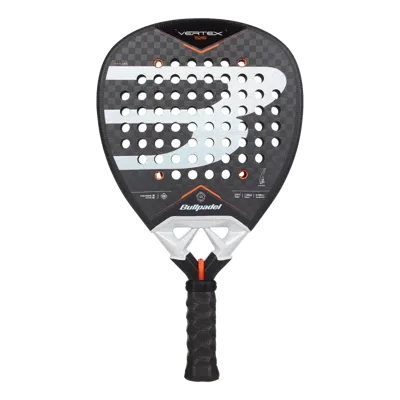
The Bullpadel Vertex 05 27 lands on the same meters: medium control, high power, low comfort, low maneuverability, low sweet spot. It is also a diamond, 38 mm, with a Medium balance label. The weight is listed at 365 to 375 g.
The differences are in the materials and the listed level. Bullpadel lists MultiEVA and X Tend Carbon 12K, and the level is Professional, linked to Juan Tello. The Dunlop is Advanced with plain EVA and carbon. On paper, the Bullpadel is listed at a higher level.
Not published: balance in mm, head size, frame, handle and any court test
Several things you may want are missing. Balance in mm, head area, frame material, handle details and the weight system are all not published for the Team. No review has been found either.
So this page cannot tell you how the racket feels in the first session or how it ages. If a key spec decides your purchase, ask the shop or Dunlop before you commit.
Similar rackets
Questions before you buy
Is the Aero-Star Team different from the plain Aero-Star?
Only in one published value: the Team is 355 to 375 g, the plain Aero-Star a fixed 365 g. Balance in mm is missing for the Team. Core, face, shape, thickness and meters match.
Is the Dunlop Aero-Star Team good for beginners?
Not on paper. Retailers list it as Advanced, and the heavy diamond build gives low comfort and a small sweet spot. The Aero-Star Lite is listed for beginners and intermediates.
Is it hard on the arm?
The meters rate comfort as Low, mainly because of the heavy build. No tester has confirmed it, so judge by your own arm and start with short sessions.
How does it compare with the Bullpadel Vertex 05 27?
The meters match. The Bullpadel is listed at Professional level with MultiEVA and X Tend Carbon 12K, while the Dunlop is Advanced with EVA and carbon.
Is the Aero-Star Team worth the money right now?
Today's price is labelled "Good value" compared with the rackets that play most alike. Which shops deliver, and what shipping costs, depends on your country. The price comparison shows it for yours.
See all pricesWhat is the closest alternative?
The Dunlop Aero-Star plays most alike. On paper the differences are under one point. Today: € 124.90.
Compare side by side →Who should not buy it?
Skip it if you rely on placement and long rallies (control 5.5/10), or if your elbow or shoulder complains (comfort 5.0/10), or if you are still learning: it is not very forgiving (3.5/10).
How heavy is it really?
The brand gives 355 to 375 g. That counts as medium. Each racket can differ within that range.
Why a range? →