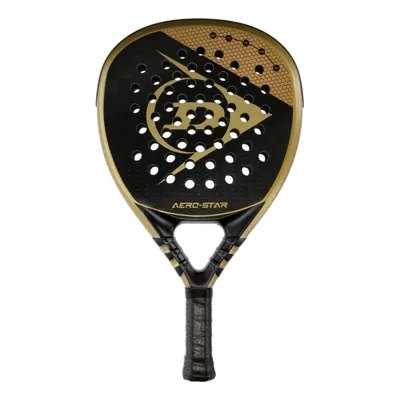
The Dunlop Aero-Star is a diamond-shaped attacking racket at a fixed 365 g. It has carbon faces, a carbon frame and a Medium balance backed up by a 260 mm measurement. No independent court test exists yet, so everything here comes from the spec sheet. On paper it suits advanced hitters, but comfort reads Low, so treat your elbow kindly.
RBy Ruud Caris · facts checked 9 October 2026Choose it if
- you want extra power and do not mind a heavy, direct racket
- your arm is healthy and you prefer a firm response off the face
- you trust specs more than hype and accept a racket nobody has independently tested on court
Skip it if
- you are still building technique and would do better with the Dunlop Aero-Star Lite
- your elbow or shoulder has a history, because comfort reads Low here
- you want quick hands at the net, because maneuverability reads Low on this build
How it plays
Line = the average of all rackets ▲ above ▼ below
Specs only, no court test: here is how the sheet reads.
- Control Medium on paper, with the diamond shape pulling it down and the medium balance and EVA core pulling it back up.
- Power High, driven by the carbon face, the diamond head and the heavy build.
- Comfort Low, because the weight class drags it down even with EVA in the middle.
- Handling Low, as the diamond shape and the weight work against quick adjustments at the net.
- Forgiveness Low, the usual cost of a diamond, so off-centre hits get punished more.
Specifications
Not published by the brand: head size, handle
No longer on padelnuestro.com
Specs from padelnuestro.com · checked 30 September 2026 · Spotted a wrong spec? Report it →
Video reviews
3 videos from independent channels and shopsPrice history
Lowest price per day across the shops in your market. Checked every night.
The Dunlop Aero-Star is a diamond-shaped racket at a fixed 365 g, and no independent reviewer has published a court test of it. That matters for how you read this page. Everything below comes from the specifications, listed by Dunlop and by shops, not from anyone swinging it. On paper the picture is clear: this is an attacking build for advanced players, with a firm feel and real weight behind the ball.
Medium balance and 260 mm: the label and the number agree
Balance labels are often vague. Here they are not. Dunlop lists the balance as Medium, and a shop lists the actual figure at 260 mm. The racket is 38 mm thick. The label and the measurement point the same way. That is rarer than you would think.
What does that mean on court? Not a head-heavy hammer, but not head-light either. You get some help from the head on overheads without the racket dragging through fast volleys. For a diamond, that is a moderate setup. The attacking character comes more from the shape and the weight than from an extreme balance point.
365 g fixed, diamond, carbon on carbon: the attacking build in full
The weight is listed at 365 g with no range, so there is no lighter or heavier option on the shelf. That is heavy by current standards. You notice it in two places. There is more mass through the ball on smashes and bandejas. There is also more work for your wrist in quick exchanges at the net.
The frame is carbon, the faces are carbon, and shops list the surface as rough. A rough face helps you grip the ball for spin on kick smashes and sliced volleys. The product page claims the full-carbon construction resists dents and scratches. That is a brand claim, not a measured fact. Still, carbon on carbon usually means a solid, durable shell.
The profile meters based on these specs read High for power, and Low for maneuverability and sweet spot. That is the classic diamond trade. You gain punch, you give up forgiveness.
Hard EVA over a rough face: why comfort reads Low and power reads High
The core is EVA, and a retailer lists the density as Hard. A hard EVA core returns energy quickly, which helps the ball fly off the face with little effort on flat shots. The flip side is a firmer impact. Vibration damping is limited, and mishits travel up your arm.
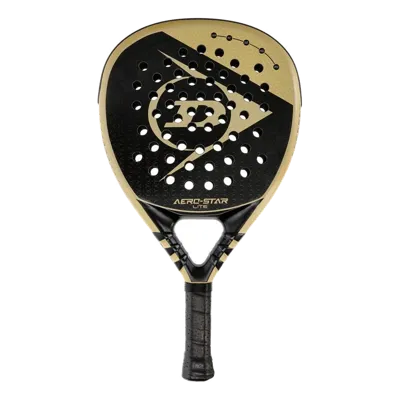
That explains the comfort rating. The meter reads Low, and the listed drivers point at the heavy weight class as the thing dragging it down. The EVA core actually works the other way on the meter, pushing comfort up. So the weight is the main problem here, not the core. Compare it with the Dunlop Aero-Star Lite: same diamond shape, same EVA and carbon recipe, but 355 g, and its comfort reads Medium. Ten grams makes that difference on paper.
If your elbow has ever complained, take this seriously. A softer or lighter racket is the simple fix.
No court test, no head size, no handle spec: what you cannot check
Some things are simply not published. There is no head size in square centimetres, no handle specification, no weight system, and no pro player attached to this model. The year of release is not published either.
More importantly, there are no independent reviews or video tests to draw on. Nobody has reported how the rough surface actually bites, how the hard core feels on cold mornings, or how the sweet spot behaves in play. The Low sweet spot and maneuverability ratings are computed from the shape and weight, not observed on court. If you can demo this racket before buying, do it. The specs sketch an attacking diamond, but they cannot tell you whether the feel suits your hand.
Aero-Star, Aero-Star Team, Aero-Star Lite or Bullpadel Vertex 05 27: picking your attacking diamond
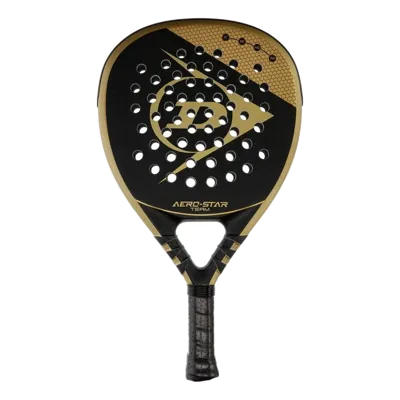
Within Dunlop's own line the choice is mainly about weight. The Aero-Star sits fixed at 365 g. The Dunlop Aero-Star Team runs 355 to 375 g. It is also labelled Advanced. That gives you room to go lighter or heavier within one model. The Aero-Star Lite is 355 g, rated for Beginner / Intermediate, and the only one of the three with Medium comfort on the meter.
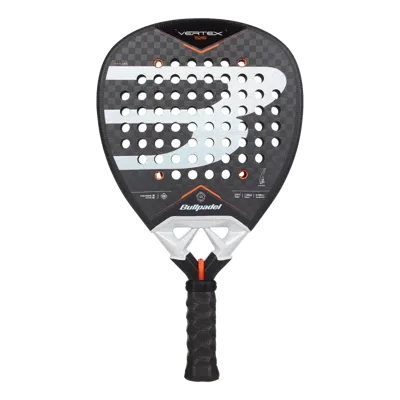
Outside the brand, the obvious rival is the Bullpadel Vertex 05 27, the diamond associated with Juan Tello. It runs 365 to 375 g with a multi-density core and is labelled Professional. You can compare it directly with the Aero-Star spec by spec. On the meters they read nearly identically: High power, Low comfort, Low maneuverability, Low sweet spot. The real differences are in materials and in how much weight choice you want.
Similar rackets
Questions before you buy
Is the Dunlop Aero-Star the same as the Aero-Star Team or Aero-Star Lite?
No. They are three separate models in the same line. The Aero-Star is fixed at 365 g. The Team runs 355 to 375 g. The Lite is 355 g and aimed at Beginner / Intermediate players.
What level of player is the Aero-Star for?
Shops list it as Advanced. That fits the specs: a heavy diamond with Low sweet spot and maneuverability ratings punishes inconsistent technique.
Is the Aero-Star comfortable for a sensitive elbow?
On paper, no. The comfort meter reads Low, the weight class is heavy and a retailer lists the EVA core as Hard. The Aero-Star Lite reads Medium for comfort and is the kinder option.
Has anyone independently tested the Aero-Star?
Not that is published. There are no independent reviews or video tests yet, so every judgement on this page comes from the specifications rather than on-court experience.
Is the Aero-Star worth the money right now?
Today's price is labelled "Good value" compared with the rackets that play most alike. Which shops deliver, and what shipping costs, depends on your country. The price comparison shows it for yours.
See all pricesWhat is the closest alternative?
The Dunlop Aero-Star Team plays most alike. On paper the differences are under one point. Today: € 69.95.
Compare side by side →Who should not buy it?
Skip it if you rely on placement and long rallies (control 5.5/10), or if your elbow or shoulder complains (comfort 5.0/10), or if you are still learning: it is not very forgiving (3.5/10).
How heavy is it really?
The brand gives 365 g. That counts as medium. Each racket can differ within that range.
Why a range? →