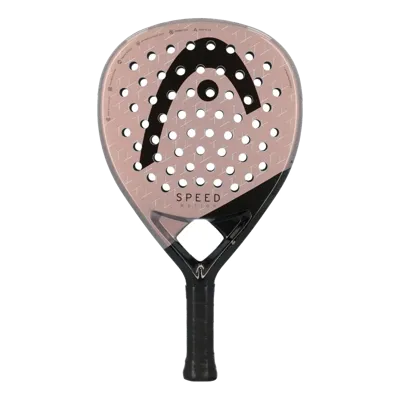
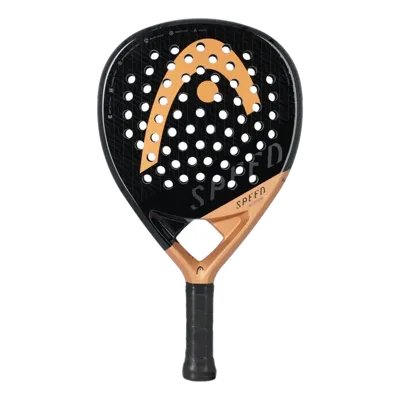
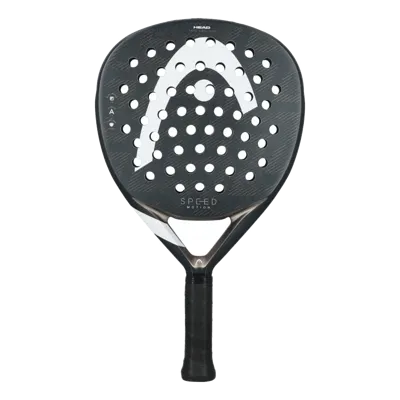
The Head Speed Motion 2025 fixes its weight at 355 g. Shops list it as Ari Sánchez's racket. It is a teardrop with a medium 270 mm balance, Power Foam in the core and a mixed carbon and fiberglass face. On paper that is a friendly recipe: quick to swing, forgiving on contact, with enough punch for attacking play. One source put it on court and rated it 77 out of 100. Here is what the specs and that test tell you.
Ari Sánchez's racket, fixed at 355 g
Retailers list the Speed Motion 2025 as Ari Sánchez's racket, aimed at advanced and professional players. The product page calls it a women's racket that adapts to any style. Treat that adaptability talk as a claim; the weight is a fact.
355 g is light. Not extreme, but light for a racket with this construction. There is no weight range: minimum and maximum are both 355 g, and no weight system is published. What you buy is what you swing.
On court that means fast preparation. Volleys come around quickly, and overheads accelerate without a long wind-up. If you have ever felt a racket arrive late to a fast exchange, this one addresses exactly that. The trade-off of a light build is plow-through on the hardest smashes. You generate pace with swing speed here, not with mass.
Power Foam under carbon and fiberglass: the medium-medium recipe
The core is Power Foam, a soft foam that answers quickly and forgives off-center contact. Above it sits a hybrid face of carbon and fiberglass, with a Graphene Inside and Smart Bridge frame. The head measures 465 cm2 and the frame is 38 mm thick, the standard for this category.
What does that add up to? On paper, balance in every direction. The soft core and teardrop shape lift control and the sweet spot. The same soft core caps raw power compared to harder cores. Every meter on this page lands on medium, and that is the honest summary: nothing extreme, nothing neglected.
Not a cannon, not a pillow. A racket that asks you to supply the technique and gives you consistency back. That suits advanced players who construct points rather than end them with one blow.
77 out of 100 from the one court test: repeatable attack, grip criticism
One source, padel.how, actually played this racket and rated it 77 out of 100. The headline finding: repeatable attacking performance across all phases of play, with a quick net approach and fast overhead acceleration. Their summary line captures it well: "Motion produces attacking speed in more rallies, and still produces it in a third set."
That third-set point matters. A light racket keeps performing when your arms tire. That is when its weight stops being a spec and becomes a real advantage deep into a match.
The same test marked the grip as negative. Comfort and durability came out neutral. If the stock grip bothers you, an overgrip or two changes the feel in the hand for almost nothing. If you have sensitive wrists or elbows, note that comfort here is medium, not high. Several softer rivals below do better on that front.
Flat surface and the spin you give up
The hitting surface is flat, with no texture. The court test found one clear consequence: limited spin generation. Smooth faces simply grip the ball less.
If your game leans on sliced bandejas, kicked smashes or heavy topspin lobs, you will notice this. You can adapt by playing flatter and placing rather than bending the ball, which is exactly how many advanced attackers play anyway. But if spin is your signature, a textured face will serve you better. This is the clearest downside of the racket, and it is structural, not something an overgrip fixes.
The 2023 comparison you should not trust
You will see the Head Speed Motion 2023 presented as the predecessor. Be careful. The 2023 model was linked to a differently spelled player name. That suggests it may be a different model rather than a true earlier version of this one.
The listed changes are mostly labels. The level moved from advanced to professional. The balance label moved from high to medium, while the balance in millimeters stayed at 270 mm. The listed weight dropped from 360 g to 355 g. A changed label is a changed label, not a measured change in how the racket plays. Buy the 2025 on its own merits, not because of a supposed upgrade story.
Motion, One X, Team or Wilson Bela LS V3: picking your teardrop
Within Head's 2025 Speed family, retailers position the Motion as the light option. Only the Speed One 2025 is lighter at 345 g. The Head Speed One X 2025 weighs 365 g and rates higher on control but lower on maneuverability and sweet spot. The Speed Team 2025 shares the same Power Foam core but rates high on comfort and low on power.
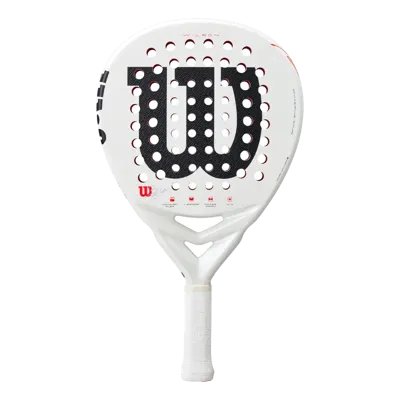
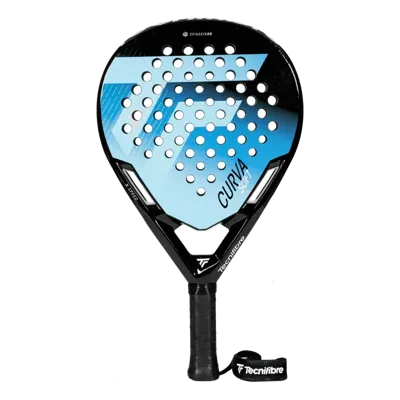
Outside the family, the closest rival on paper is the Wilson Bela LS V3. Same 355 g, same teardrop shape, same Power Foam and mixed face. The difference: the Wilson rates high on comfort and low on power, where the Motion sits at medium on both. Choose the Wilson if your arm comes first, the Motion if you want more reply on attacking shots. The Siux Valkiria Elite 2 and Tecnifibre Curva Soft 2026 also rate high on comfort with medium control, if you want to widen the shortlist.