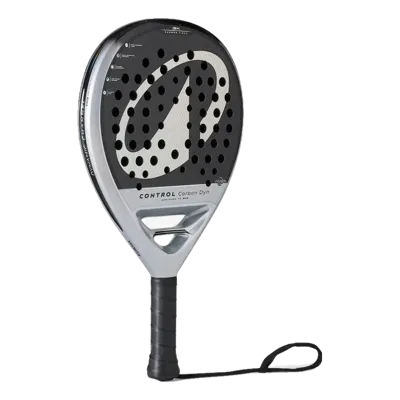
A round control racket at a fixed 355 g, with a 3K carbon face over a plain EVA core. Control rates High, power Low, and comfort, maneuverability and sweet spot sit at Medium. No court tests exist yet, so this judgement rests on specs alone, and the Babolat Counter Origin beats it on three meters.
RBy Ruud Caris · facts checked 30 September 2026Choose it if
- you build points with placement and want control rated High on paper
- you prefer a carbon face over the fiberglass on rivals like the Babolat Counter Origin
- you know 355 g suits you and do not need a weight window
Skip it if
- you want easy depth from the back of the court, power is rated Low
- your elbow needs a softer racket, look at the Babolat Counter Origin with comfort rated High
- you value fast reactions at the net, the Dunlop Galactica OS rates High on maneuverability
How it plays
Not enough specs yet for a play profile.
- Control The round shape and medium EVA core push control to High, so placement is the whole point of this racket.
- Power The round shape keeps power Low, so you generate your own pace on every attacking ball.
- Comfort A medium EVA core and a soft carbon face give Medium comfort, decent but not arm friendly.
- Handling Medium maneuverability means it moves fine but not quickly in fast net exchanges.
- Forgiveness The round head gives a Medium sweet spot, so off centre hits lose more than on the softest round rivals.
Specifications
Not published by the brand: balance, thickness, head size, surface, handle, frame
Specs from the brand's own site · checked 26 September 2026 · Spotted a wrong spec? Report it →
The price is followed as soon as a shop in your market sells it.
The Kuikma PR Control Carbon Dynamic is a round racket with a 3K carbon face, a plain EVA core and one fixed weight of 355 g. That carbon face is the only thing on the spec sheet above entry level. Everything else is simple. No balance, no thickness and no level label appear anywhere in the specs, and nobody has court tested it yet. So this article works with five brand specs and what they mean on court. Nothing more.
3K carbon over plain EVA: the one premium ingredient
The face is 3K carbon. The core is EVA, with no softer or harder variant named. That pairing tells you the design idea. Carbon on the outside for a firm, precise contact. A standard foam inside that does the absorbing.
It is a simple build with one serious material. Not a criticism, but it sets expectations. You are not getting layered foams or a named foam type here.
What you notice on court, in theory, is a crisp response off the face with a moderate amount of give from the core. Volleys and bandejas should come off clean. Slow balls will not spring off by themselves.
Fixed at 355 g: one weight, no window, no balance on the sheet
The weight is 355 g. Not a range from 355 to 365, just 355 g, minimum and maximum identical. That is the light end of what most adult rackets weigh, and it suits players who find 360 g and up sluggish.
Two things are missing from the specs: the balance and the frame thickness. So nobody can tell you from the sheet whether this racket runs head-light or even. A round shape usually leans towards an even or low balance, but that is an inference, not a fact you should buy on.
The fixed weight has a practical side too. If 355 g is right for you, every copy of this racket is right. If you wanted 360 g, there is no heavier option. That is the trade.
Control in the name, High on the meter, Medium everywhere else
The name says Control, and the control meter agrees: High. The round shape and the medium EVA core both push it there. This is a racket for keeping the ball in play and putting it where you want it.
Power is Low. The round shape pulls it down, and there is nothing else on the sheet to lift it back. Smashes need your arm, your timing and your legs. The racket adds little.
The other three meters all sit at Medium. Comfort, maneuverability, sweet spot. That is an honest but unremarkable middle. For comparison, the Babolat Counter Origin, also round, rates High on all three. Its fiberglass face and head-light balance do what this carbon and unknown balance do not, at least on paper.
What carbon gives you that fiberglass does not, and what it takes away
Carbon faces are firmer than fiberglass. That firmness rewards clean technique. When you hit the ball well, a carbon face gives a direct, predictable response, which is exactly what a control racket should do.
The cost is forgiveness. Stiffer faces are less kind on late or off centre contact, and the Medium sweet spot rating fits that picture. Fiberglass round rackets like the Counter Origin rate High on sweet spot and comfort partly because the face flexes more.
So the carbon face is a choice, not an upgrade. It suits you if your timing is reliable. It works against you if you are still grooving your swing or if your arm complains after long sessions.
No court test anywhere: five specs carry the whole argument
There are no independent reviews of this racket. No tested sources, no algorithmic ratings from reviewers, no video reviews, nothing players have posted that could be found. Every judgement here comes from the specs and from how the profile meters read them.
That matters more than usual, because so little is published. With no balance figure and no thickness, the on-court behaviour is genuinely uncertain. Two rackets with identical shape, core, face and weight can play very differently once balance enters the picture.
Treat this page as a starting filter, not a verdict. If the profile fits your game, try to hit with it before you decide.
PR Control Carbon Dynamic, Galactica OS or Counter Origin: picking a round carbon control racket
Three round rivals frame the choice. The Dunlop Galactica OS matches this racket on control, power, comfort and sweet spot, but rates High on maneuverability, one step above the Kuikma's Medium. It runs 360 g fixed, with an EVA Pro core and a published low balance.
The Babolat Counter Origin goes the other way: fiberglass face, head-light balance, and High ratings on comfort, maneuverability and sweet spot. It gives you a weight range of 345 to 365 g. Easier on the arm, easier to move, less crisp off the face.
The Kuikma's case is its 3K carbon face combined with a 355 g fixed weight. If you want carbon firmness in a light, round frame, that combination is the reason to look at it. If you want forgiveness first, the Counter Origin beats it on three meters. And if you want the same carbon idea with a published balance and quicker handling, the Galactica OS is the more complete sheet.
Similar rackets
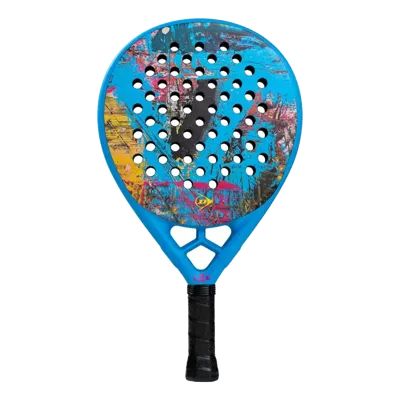
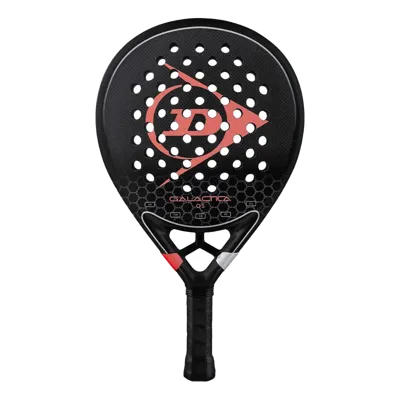
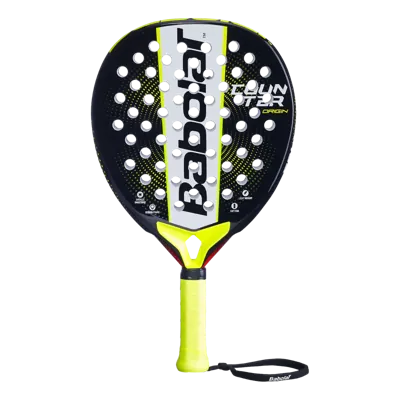
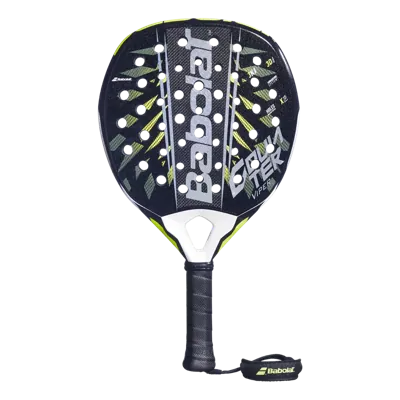
All rackets that play like the Kuikma PR Control Carbon Dynamic →
Questions before you buy
Has anyone reviewed the Kuikma PR Control Carbon Dynamic?
No. There are no independent court tests, video reviews or player reports to draw on. Everything on this page is read from the five published specs.
Is the Kuikma PR Control Carbon Dynamic good for beginners?
On paper it is manageable: round shape, 355 g and High control. But the carbon face is firm, and the sweet spot only rates Medium. A softer fiberglass racket like the Babolat Counter Origin is kinder while you learn.
What is the balance of the Kuikma PR Control Carbon Dynamic?
No balance figure appears in the specs, and the same goes for frame thickness. The round shape suggests an even or low balance, but that is an inference, not a measured fact.
How does it compare to the Dunlop Galactica OS?
Both are round control rackets with carbon faces and Low power. The Galactica OS rates High on maneuverability against Medium here. It also publishes a low balance and an EVA Pro core, and weighs 360 g fixed against 355 g.
How heavy is it really?
The brand gives 355 g. That counts as medium. Each racket can differ within that range.
Why a range? →