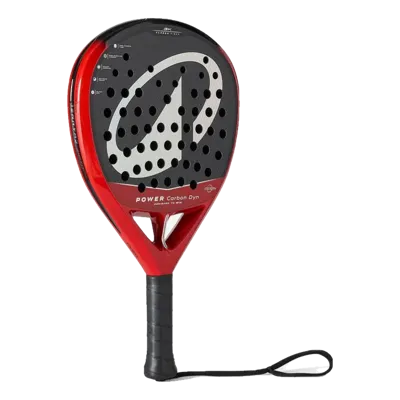
The Kuikma PR Power Carbon Dynamic is a diamond racket with a 3K carbon face and a medium EVA core. On paper it rates Medium power and Low control. Its only published weight, 355 g, comes from a review site, not from Kuikma. The catch: nobody has tested it on court yet, so everything here is a reading of the specs.
RBy Ruud Caris · facts checked 30 September 2026Choose it if
- you want a carbon face without a heavy frame
- you already play a diamond and want to stay near 355 g
- you accept a small sweet spot in exchange for more punch on smashes
Skip it if
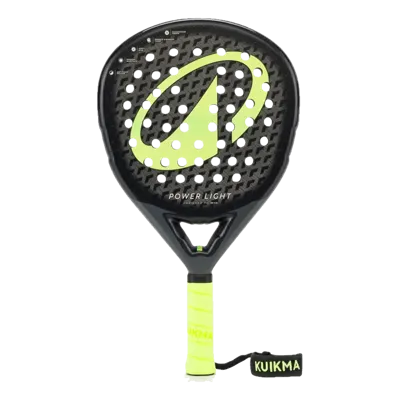
- you defend a lot at the back and need quick wrist reactions, look at the Kuikma PR Power Light instead
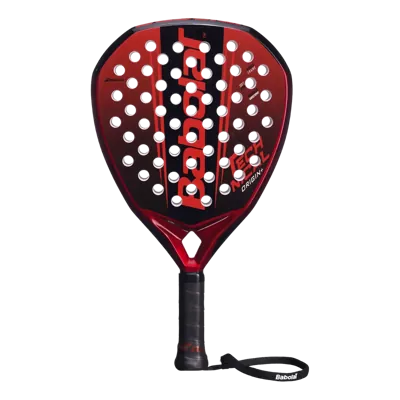
- you want a softer, more forgiving contact at the same weight, look at the Babolat Technical Origin + instead
- you are still building technique and mishit balls toward the frame regularly
How it plays
Not enough specs yet for a play profile.
- Control Low, the diamond shape pulls the effective hitting zone away from your hand, so placed balls need a clean, repeatable swing.
- Power Medium, the diamond shape adds leverage on overheads, but the medium EVA core keeps it short of a pure hammer.
- Comfort Medium, the EVA core and the softer 3K carbon layup take some sting out of contact, though off-center hits will still feel firm.
- Handling Low, a diamond balance sits toward the head, so fast blocks and late reactions at the net cost you effort.
- Forgiveness Low, typical for the shape, it rewards contact in one spot and punishes the rest.
Specifications
Not published by the brand: balance, thickness, head size, surface, handle, frame
Specs from the brand's own site · checked 26 September 2026 · Spotted a wrong spec? Report it →
The price is followed as soon as a shop in your market sells it.
The Kuikma PR Power Carbon Dynamic is a diamond racket with a 3K carbon face. Its only weight on record, 355 g, comes from a review site rather than from Kuikma itself. That detail matters more than it sounds. It tells you how thin the public information on this racket is. Five facts are published: diamond shape, 3K carbon face, EVA core, 355 g, and nothing else. No balance figure, no frame construction, no thickness. And no reviewer has played it yet. What follows is an honest reading of what those five facts add up to.
355 g, and the number comes from a review site
Both the minimum and maximum weight are listed at 355 g, and the source is padeliq.ru, a review site, not the brand. Kuikma has not published an official weight for this model.
355 g sits in the normal adult range. It is not a feather and not a brick. Most men and many women can swing it without trouble. But a single fixed figure from one source leaves open questions. There may be real spread between individual rackets, and there is no official tolerance to check against.
What can you do with that? If you buy one, weigh it. A kitchen scale tells you in ten seconds whether your copy matches the listing. If it comes in well above 355 g, the whole character shifts toward slower and harder to move.
Diamond, 3K carbon, medium EVA: where the Medium power comes from
Three materials do the work here. The shape is diamond, which concentrates mass toward the top of the head. The face is 3K carbon, a relatively soft carbon weave. The core is medium EVA.
Put those together and the power rating lands at Medium, not High. The diamond shape pushes it up. The medium EVA core pulls it back. A soft core absorbs energy on slow balls. It gives that energy back on fast swings. So the racket hits hard when you swing hard and stays calm when you do not.
That is a usable kind of power. Your smash gets help from the head weight. Your bandeja does not fly long because the core stays controlled at medium pace. Not a hammer, but a racket that rewards a full swing.
Low control, Low maneuverability, Low sweet spot: what a carbon diamond asks of you
The other three meters all read Low, and the diamond shape is the driver each time.
Low control means the racket does not forgive a lazy swing. With mass high in the head, small timing errors turn into bigger direction errors. You need to hit through the ball with a stable wrist, point after point.
Low maneuverability means the racket is slow to redirect. At the net, when a ball comes at your body, you feel the head weight. Defensive lobs under pressure take more forearm than they would with an even or head-light balance.
Low sweet spot means one contact zone works and the rest does not. Hit it and the ball goes exactly where you aimed. Miss it by a few centimeters and the shot dies or floats. That is the honest price of the diamond format, and this racket pays it in full.
Who absorbs that price comfortably? Players with a grooved technique who generate their own placement and want help finishing points. Who pays it twice? Players still learning to find the middle of the face.
The carbon sibling of the PR Power Light: same name, different trade
Within Kuikma's own range, the closest relative is the Kuikma PR Power Light. Same diamond shape, same EVA core family. The face differs: fiberglass and carbon there, full 3K carbon here. The weight differs too: 341 to 360 g there, a fixed 355 g here.
The profiles split in two places. The Power Light rates Medium control against Low here, and High maneuverability against Low here. Its low balance keeps the weight near your hand, which is exactly what the Power Carbon Dynamic does not do.
So the choice inside the family is clean. Want the livelier, quicker racket that helps in defense? The Power Light. Want the firmer carbon face and the head weight for overheads? This one. Neither is objectively better. They trade the same grams in opposite directions.
Technical Origin + or Vertex 04 Comfort: two directions around it
Two rackets in the index frame this one well, and like the Power Carbon Dynamic their profiles are readings of the specs rather than court tests.
The Babolat Technical Origin + matches it closely on paper: diamond shape, EVA core, the same 355 g, and an even balance at 265 mm. The big difference is comfort, rated High there against Medium here, thanks to a fiberglass face. If you want this general recipe with a softer, friendlier contact, that is the spec-based option.
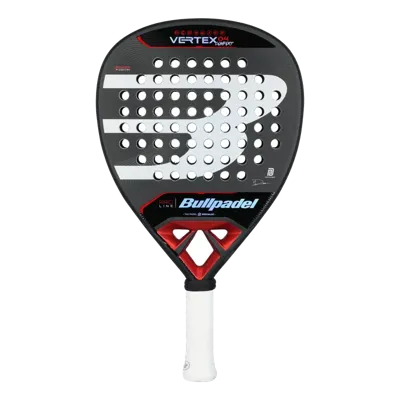
The Bullpadel Vertex 04 Comfort goes the other way. Diamond, high balance, 360 to 370 g, and a High power rating against Medium here. It is the racket you pick when Medium power is exactly the problem.
Between those two poles sits the Power Carbon Dynamic: less forgiving than the Babolat on paper, less violent than the Bullpadel on paper. If the spec sheet fits your game and you are comfortable buying on specs alone, it is a coherent package. If you would rather wait until someone has played it, that caution is reasonable too.
Similar rackets
All rackets that play like the Kuikma PR Power Carbon Dynamic →
Questions before you buy
Has anyone reviewed the Kuikma PR Power Carbon Dynamic?
No court test or video review is published yet. Everything known about it comes from the brand's spec sheet plus a weight listed by the review site padeliq.ru. Judgements here are readings of the specs, not played experience.
What is the difference between the PR Power Carbon Dynamic and the PR Power Light?
Both are diamond Kuikma rackets with EVA cores. The Carbon Dynamic has a 3K carbon face and a fixed 355 g, with Low control and Low maneuverability. The Power Light uses fiberglass and carbon, runs 341 to 360 g, and rates Medium control and High maneuverability.
Is the PR Power Carbon Dynamic good for beginners?
On paper, no. A diamond shape with Low control, Low maneuverability and a Low sweet spot punishes inconsistent contact. It suits intermediate to advanced players who already find the middle of the face reliably.
Is 355 g heavy for a padel racket?
It is a normal adult weight, neither light nor heavy. But the figure comes from a review site, not Kuikma, so weighing your own copy after purchase is a sensible check.
How heavy is it really?
The brand gives 355 g. That counts as medium. Each racket can differ within that range.
Why a range? →