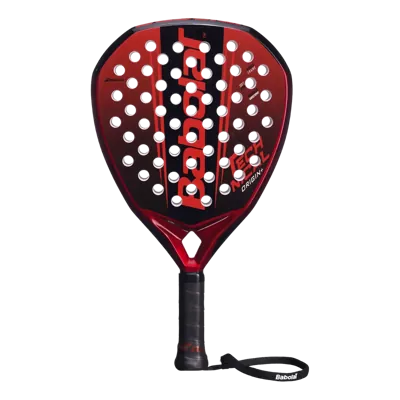
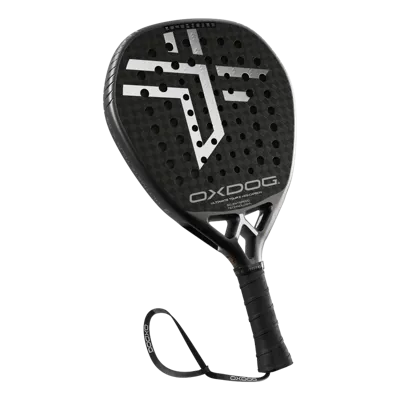
The Babolat Technical Origin + has the diamond shape of Babolat's attacking Technical family. It has almost nothing else in common with its siblings. The face is fiberglass, not carbon. The balance is even, not head-heavy. And the weight is fixed at 355 g, where the rest of the family ranges from 360 g to 370 g. The Origin + reads differently from its name. On paper it is the friendly entrance to that family, not the flagship.
A diamond without the diamond build: what sets the Origin + apart in the Technical family
Look at the same-year siblings and the gap is obvious. The Babolat Technical Veron 3.0, the Technical Viper 3.0 and the Technical Viper Soft 3.0 share one recipe. All three use a head-heavy balance at 270 mm, carbon-based faces and weights from 360 g to 370 g. Their profiles are built for power, and their comfort ratings are Low. The Origin + goes the other way. Fiberglass over an EVA core, even balance, 355 g. Same silhouette, different intent. Babolat's own product page describes a racket for attacking players who want power with comfort, using flexible materials to reduce arm fatigue. That framing fits the specs: this is the attacking racket for players still building their attacking game.
355 g fixed, 265 mm, fiberglass over EVA: the friendly numbers in full
The spec sheet is short and honest. The weight is 355 g, and the minimum and maximum are the same figure, so there is no lighter version to hunt for. That is moderate for a diamond racket. The balance sits at 265 mm, a medium, even balance, at least according to the retailer listing; more on that disagreement below. The face is fiberglass over an EVA core, a combination known for a soft, elastic response. The profile is 38 mm, standard thickness. The grip is Babolat's Syntec Uptake. Head size and surface texture are not published. The frame is listed as hybrid construction. What does this mean on court? A racket that swings lighter than its shape suggests. It absorbs impact well and gives back energy without demanding clean timing.
The product page says high balance, the shop sheet says 265 mm: which to trust
Here the sources disagree. Babolat's own marketing text describes a high balance and a diamond shape to speed up the ball. The balance label from the brand site says Even Balance. The only millimetre figure available, 265 mm from a retailer listing, supports a medium, even balance. Treat the product page as a claim, because it is one. A 265 mm balance is what you should expect in the hand: not head-heavy, not head-light. For you that means two things. The racket does not pull through the swing like a Viper. And it does not punish your wrist after an hour of play.
68 out of 100 from padel.how: easy power praised, spin potential missing
The one independent court test comes from padel.how, which played the racket and scored it 68 out of 100. Their testers found a broad sweet spot with accessible pace and a soft, forgiving response suited to developing players. Their phrase for the power output was "easy power rather than elite finishing power". That is the whole racket in seven words. Their main criticism: limited spin potential without a textured surface. They recommend it for beginners and lower intermediates developing attacking technique. A video review from Padel-Point also tested the racket on court. It lands in the same place. An oversized sweet spot, an even balance, easy power and a good feel, recommended for players on their way up. Two court tests, one conclusion.
Low control, Low maneuverability: what the diamond still asks of your technique
Do not mistake friendly for easy. The diamond shape still shapes the racket. Control comes out Low, because a diamond with a fiberglass face gives you a lively, less predictable response on soft touches. Maneuverability is Low too: at the net, quick blocks and late adjustments take more effort than they would with a round racket. The sweet spot meter reads Low, even though both reviewers found it generous in practice. What can you do about it? Play a fraction earlier. Keep your preparation short at the net. And accept that defensive lobs from the back glass need a clean contact. The racket forgives, but it does not decide for you.
Origin +, Tristorm Lite or Coello Team: picking your first attacking diamond
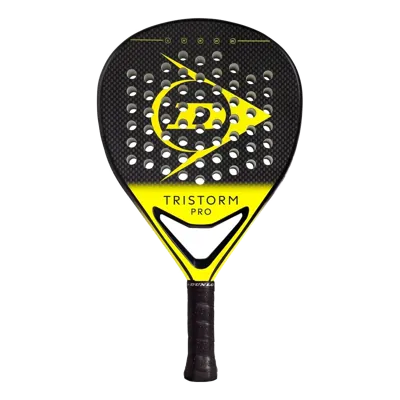
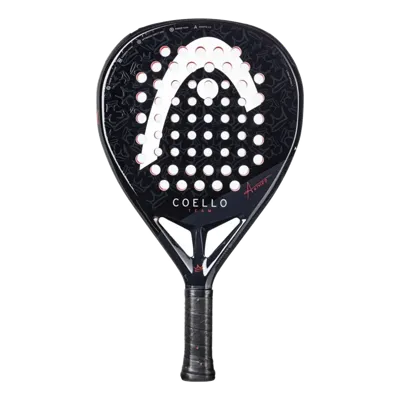
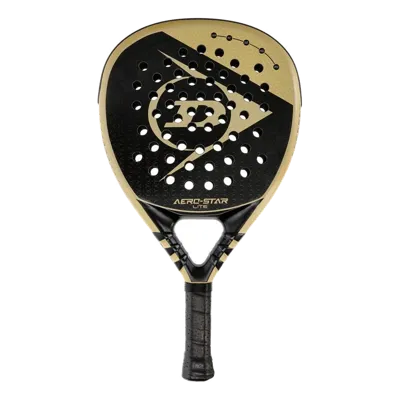
The closest rivals sit in the same beginner-friendly diamond corner. The Dunlop Tristorm Lite 2025 is lighter at 350 g with a Soft EVA core. It also moves more easily at the net, the one profile difference between the two. The Dunlop Tristorm Pro 2025 goes heavier at 365 g and gives up some comfort for it. The Head Coello Team 2025 matches the Origin + closely on paper: diamond, fiberglass, High comfort, a Beginner to Advanced level label and a 360 g weight. You can compare the two directly. If you want the softest ride of the group, the Origin + and its High comfort rating make a clear case. If fast hands at the net matter more, the Tristorm Lite is the safer pick.