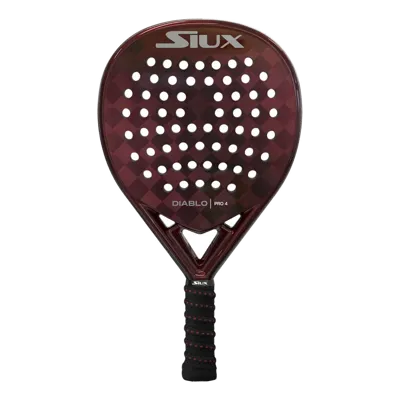
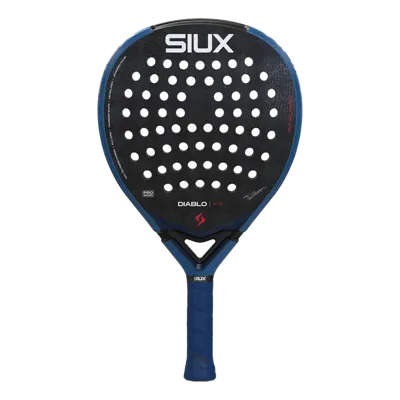
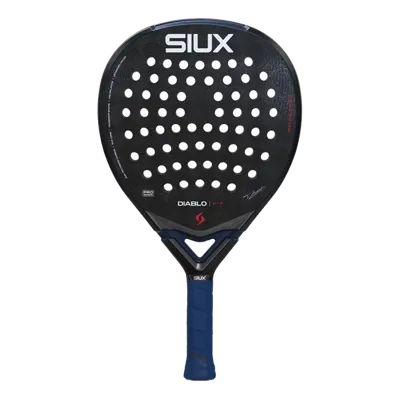
Two testers who both played the Siux Diablo Pro 2026 gave it 74 and 91 out of 100. They also disagree on whether the sweet spot is forgiving. That gap is the most useful thing on this page. It tells you the racket is not an easy all-rounder, and that your own game decides how good it is.
74 and 91 out of 100: why two court tests of one racket land so far apart
Both sources actually played the racket. Their wording shows what each one wanted from it.
padel.how recommends it for advanced players who value placement, tempo control and structured point construction. It praises firm, direct contact and a predictable response, and it calls the net stability composed. Its criticism is short: not maximally forgiving or comfortable for all players. In its own summary, padel.how says it would pick this racket for organised all-court play. That means calm defense, an early step up to the net, then steady pressure there.
Padelvergleich, a German test, focuses on acceleration. It describes the 24K face as very reactive. The ball leaves the racket explosively once you speed up your swing. It rates power and sweet spot as positive.
So one tester values calm point building, the other values what happens when you swing hard. Neither is wrong. The higher rating comes from the attacker's view. The lower one comes from a tester who found the racket more neutral.
Forgiving sweet spot or neutral one: reading the dispute against the Low meter
The sweet spot meter on this page reads Low. The teardrop shape pushes it up. The negative review tone pulls it down. That is the same split the two testers show.
Padelvergleich calls the sweet spot generous. padel.how rates it neutral and mentions composed handling off-center. Neither says it is small. A fair reading: the sweet spot is workable, but it pays off when you hit cleanly. Head area is not published, so you cannot check the hitting surface on paper.
Hard or softer than expected: what four video reviews say about the feel
The video reviewers also disagree, and in an instructive way.
One video from Dani 13 finds the feel drier and harder than the previous version. It notes good control and good ball output on slower shots. A second video from the same channel adds that it needs a more aggressive swing in fast play. It also says the sound and response change off-center. Roberto Cardi finds high-level handling, strong attacking shots and a good sweet spot. He misses a little maximum power. Zona de Pádel calls it very easy to handle with a generous sweet spot. It also finds it softer than expected for a pro model and short of power near the net.
Two points matter. First, the feel verdicts run from hard to softer than expected, so the racket is not unanimously stiff. Second, several of these reviewers rate the handling more highly than the Low maneuverability meter suggests. A heavy racket can still be easy to move for a strong player.
24K TeXtreme over EVA, 355 to 375 g: what the build asks of your arm
The face is Carbon 24K TeXtreme with a rough surface, and the frame is listed as 100% carbon. The core is EVA rubber of medium density, thickness is 38 mm, and the balance is 260 mm, labelled Medium. The weight range is 355 to 375 g.
That is heavy. Not a racket for a tired arm. The stiff face and the weight are why the comfort meter reads Low. If you play long sessions or have had elbow trouble, take this seriously. The weight system and the handle are not published, so you cannot adjust the build from the listing.
The product page claims the 3D relief texture helps spin control and that the face gives a dry feel. A video review also mentions a sandy texture for spin. Treat the first as a claim, and the second as one player's impression.
Diablo Pro 4 is probably another model: why this page does not tell a version story
The nearest link in the line is the Siux Diablo Pro 4. The labels differ: Advanced against Professional, hybrid against teardrop, 18K against 24K. That looks more like a different model than a revision. So do not read it as a changed generation. A changed label is not a measured change.
Diablo Pro 2026, Babolat Air Viper 2.6 or Drop Shot Axion Attack 1.0: picking your teardrop
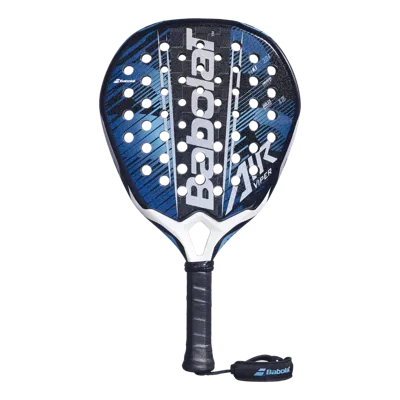
The Babolat Air Viper 2.6 is lighter at 345 to 365 g. It has an even balance at 265 mm, and its maneuverability reads Medium. Its comfort meter reads Low, like the Diablo, so do not expect it to be kinder to your arm. It is the easier choice if the Diablo looks like too much racket on paper.
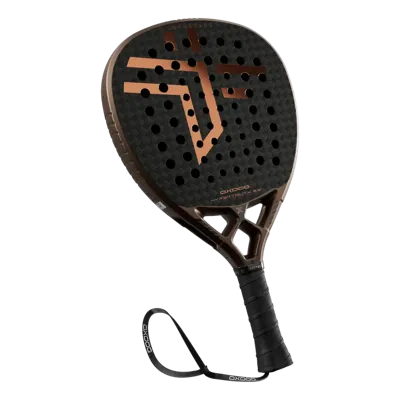
The Drop Shot Axion Attack 1.0 also has a 24K face and a heavy range, 360 to 370 g. Its power reads High, but its control reads Medium, one step below the Diablo.
Pick the Diablo if control and a firm response matter most, and you accept the weight.
 At Pádel Ibérico · 7 shops
 At Padel Nuestro · 4 shops