Three Siux rackets share the same basics: 355 to 375 g, a 38 mm profile, a 12K carbon face and a teardrop head. Yet only the Pegasus Pro 2026 reads High on power, while the other two read Medium. That gap is the story of this page.
Three near-twins, one higher power reading
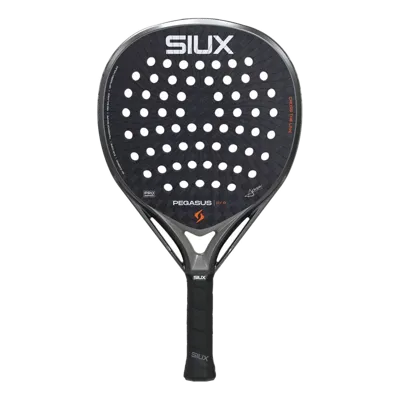
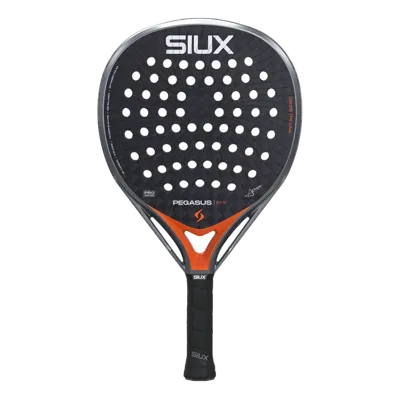
The Pegasus Pro 2026 is listed as a professional-level racket with an EVA core, a 3D surface and a medium balance label. The frame is a Bitube Carbon Frame. The linked pro is Álex Chozas.
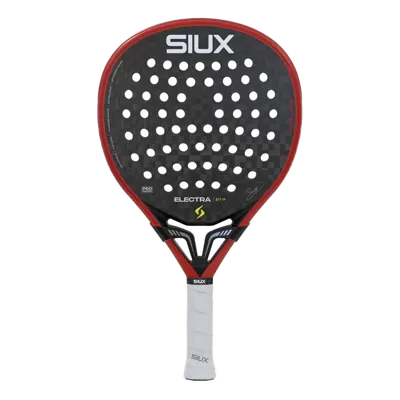
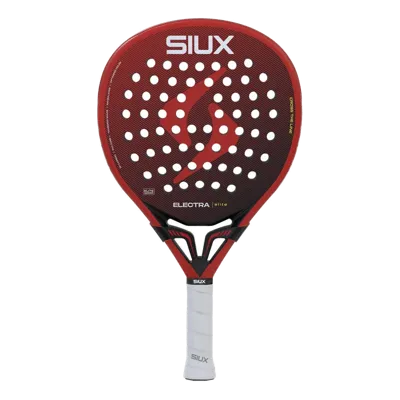
The Siux Electra Pro 2026 and the Siux Electra Elite 6 list the same weight range, thickness, face material and balance label. Both read Medium for power and Medium for sweet spot. The Pegasus reads High and Low. On paper the three look like twins. The meters say they are not.
Assertive overhead, limited cushioning
padel.how is the only source that played this racket, and it gave 75 out of 100. Its pros were strong attacking power and overhead potential, plus useful handling with a medium balance. Its con was limited cushioning and impact tolerance.
The tester's advice is specific. The racket suits an advanced player who values an assertive overhead and can live with limited cushioning. That is a clear brief. It is not a racket for everyone.
One review is thin evidence. Treat it as a first read, not a final ruling.
Neutral on court, Low on the meter
Here the sources do not fully agree. padel.how rated the sweet spot as neutral. The meter reads Low, and it is pulled down by the review inputs. The teardrop shape works in the racket's favour.
The practical reading is simple. You do not get a wide, forgiving hitting zone here. Mis-hits cost you more than on the Electra pair. If your contact is clean and you hit with intent, that matters less. If it is not, expect it to show.
Where the sweet spot sits in the head is not stated by any source, so this page does not guess.
What 355 to 375 g asks of your arm
That is heavy. The range is also wide, so check the weight of the exact racket you buy if the shop lists it.
Heavy weight helps with stability and power through the ball. It also tires the arm over a long match and passes more shock on. That fits the negative comfort note from padel.how and the Low comfort reading.
The balance label is Medium, which is what keeps handling usable. The balance in mm, the head size, the handle details and the weight system are not published. Without them you cannot judge how head-heavy it really feels in the swing. Not knowing is better than guessing.
What can you do about it? Build up to it. Play shorter sessions at first, and keep your technique compact on overheads rather than muscling every ball.
What the brand claims
The product page calls it a hybrid and power racket and says it was made for professional players. It also claims a high hardness rating, a solid feel and a quick response. Treat all that as marketing, not as measurement. The padel.how test does line up with the power part.
The listed anti-vibration system is the Switch Strap. The product page describes it as an interchangeable strap for hygiene and comfort. That is a strap, not a damping core, so do not expect it to fix the low cushioning.
The same page also describes the maneuverability as great. The weight range and the Low maneuverability reading say otherwise, so read that line with some doubt.
Picking your 12K teardrop
If you want the power and can handle the weight, the Pegasus Pro 2026 is the one to try. If you want the same frame family with a more forgiving read, look at the Electra Pro 2026. It trades some power for a Medium sweet spot.
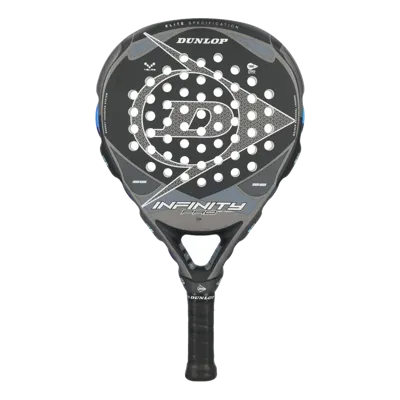
The Dunlop Infinity Pro G1 HL Black is a different brand with a similar profile: carbon face, teardrop head, 38 mm, 360 to 375 g. It also reads Medium for power and sweet spot. It is a fair outside comparison.
The Pegasus Elite 2026 and Pegasus Elite 4 use a 3K carbon face and read Medium for comfort and control. They are the softer step down inside the Pegasus line.
 At PadelShop.com · 6 shops
 At Padel Nuestro · 5 shops