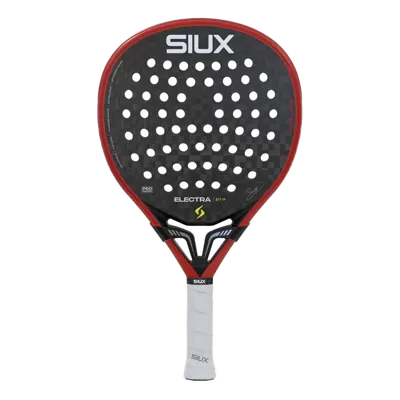
Siux Electra Pro 2026
Played by Franco Stupaczuk
7.4padell.io scoreSpecs only- Shape
- Teardrop
- Weight
- 355 to 375 g
- Balance
- Even
- Core
- EVA
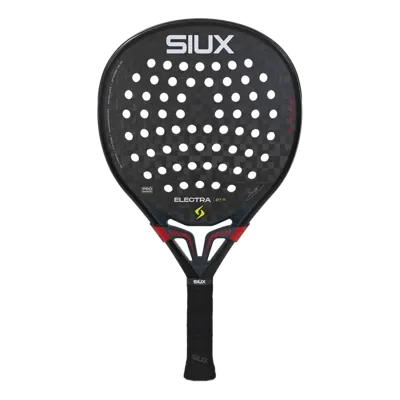
Available in 2 colours
Same racket, same specs; only the design differs. Prices per colour, delivered to your country.
 At Pádel Ibérico · 7 shops
The Siux Electra Pro 2026 is a teardrop with a 12K carbon face, EVA core and medium balance, listed at 355 to 375 g. On paper it reads as control first, power in the middle. The catch: no reviews exist yet, head size is not published, and the Electra Elite 6 shares almost the same listed specs.
RBy Ruud Caris · facts checked 9 October 2026Choose it if
- you already play at professional level and want a teardrop that leans towards control
- you like a racket with a firm carbon face and can handle a weight range of 355 to 375 g
- you are curious about the racket linked to Franco Stupaczuk and accept that no independent test exists yet
Skip it if
- you want more raw power from the same family, because the Siux Pegasus Pro 2026 reads High on power
- your elbow or shoulder complains easily, since the specs point to low comfort
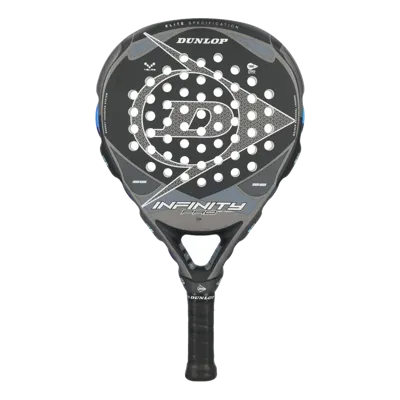
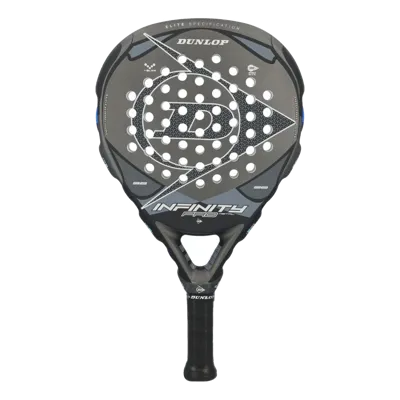
- you prefer another brand, such as the Dunlop Infinity Pro G1 HL Black, an advanced-level teardrop at 38 mm
How it plays
Line = the average of all rackets ▲ above ▼ below
On paper this is a control-leaning teardrop with a medium power output and a heavy, firm build.
- Control The specs point to high control, helped by the teardrop shape, medium balance and carbon face.
- Power Power sits in the middle, so you shape points more than you blast them.
- Comfort Comfort reads low, mainly because of the heavy weight class, so your arm does the work.
- Handling It reads low as well, since the weight outweighs the help of the medium balance.
- Forgiveness The sweet spot reads medium, an average forgiveness for a racket at this level.
Specifications
Not published by the brand: head size
Specs from padelnuestro.com · checked 25 September 2026 · Spotted a wrong spec? Report it →
Video reviews
12 videos from independent channels and shopsPrice history
Lowest price per day across the shops in your market. Checked every night.
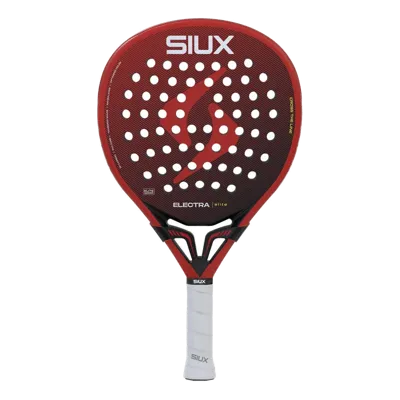
Set the Siux Electra Pro 2026 beside the Electra Elite 6 and the numbers barely separate them. Both run 355 to 375 g. Both are 38 mm thick. Both are teardrops with a medium balance and a 12K carbon face. No reviewer has published a test of this racket yet, so everything below comes from the listed specs. None of it comes from court time.
Pro on the label, identical on the sheet: Electra Pro 2026 next to the Elite 6
Shops list the Electra Pro 2026 as a professional-level racket. The Electra Elite 6 is listed as advanced. That is the clearest gap between them. The core is written as EVA for one and EVA rubber for the other. The wording differs, and no source explains whether that reflects a real material change.
The five meters match as well: high control, medium power, low comfort, low maneuverability, medium sweet spot. So the level tag tells you the listed level, not how the racket behaves differently. If you are choosing between the two, the direct comparison shows the same rows side by side.
355 to 375 g with no weight system published: what the range means for your arm
The weight is listed as a range, 355 to 375 g. Which end you receive is not explained by any source, and none says how Siux sorts them.
A weight system, meaning removable or adjustable weights, is not published for this racket. So do not count on tuning it yourself. Plan around the range as it is.
The meters read this as a heavy racket. That helps stability and drives power, but it lowers comfort and maneuverability. Not a racket for a rested-arm warm-up. If your arm is not used to this weight, build up your sessions gradually.
Why the Pegasus Pro 2026 reads High power and Low sweet spot while this one sits at Medium
The Siux Pegasus Pro 2026 shares the same sheet: teardrop, 12K carbon, EVA core, medium balance, 355 to 375 g, 38 mm. Yet its meters read High on power and Low on sweet spot. The Electra Pro 2026 reads Medium on both.
The listed specs do not explain that. They are the same. So treat the gap as a pointer, not proof. If you want to see which way the two lean, the Pegasus comparison lays them out.
What does it mean for you? Read the Pegasus as the more aggressive pick, with less margin when you miss the centre. Read the Electra Pro as the calmer one. Both stay low on comfort.
Franco Stupaczuk plays it on the left: what the pro link tells you and what it does not
Shops link this racket to Franco Stupaczuk, who plays on the left side. The product page calls it his choice. That is a brand claim, nothing more.
It does not tell you the racket in the shop is identical to his. Nothing here says whether his own racket is customised. It also says nothing about which side suits you. Treat the link as a label, not as a test result.
Switch Strap handle, sandy surface: what the shops list and the brand claims
The handle is listed as the Switch Strap system. Shops give no detail on what that means in practice, so there is not much to say beyond the name. The surface is listed as sandy. The product page describes it as matte and sandy and praises the touch. That is marketing wording, not a measurement.
The same page claims a balance of explosive power and total control, with great maneuverability. The spec-based reading is more modest: control high, power medium, maneuverability low. The brand's wording and the meters do not fully agree. When a page says something the numbers do not back, trust the numbers.
Open questions: review, head size and balance in millimetres
Three gaps matter. No independent review is available yet. Head size is not published. Balance is listed only as medium, with no figure in millimetres. Those are the numbers that tell you how a racket swings and how big the hitting area is. Without them, the sweet spot and the swing weight are guesses.
What can you do? Try to hit with it before you commit, or wait for a first test. You could also look at a similar racket from another brand. The Dunlop Infinity Pro G1 HL Black lists a teardrop shape, carbon face, medium balance and 38 mm thickness. It is rated advanced rather than professional. Its weight range starts at 360 g.
Similar rackets
Questions before you buy
Is the Siux Electra Pro 2026 different from the Electra Elite 6?
On the published specs, hardly. Weight, thickness, balance, face, shape and all five meters match. The listed level differs: professional for the Pro, advanced for the Elite 6. The core wording also differs, EVA against EVA rubber, and no source says whether that is a real change.
Is the Electra Pro 2026 a racket for beginners?
No. Shops list it as professional level, and the meters read low on comfort and maneuverability. The heavy build asks for a trained arm and good technique.
Will it be hard on your elbow?
The specs point that way. Comfort reads low, mainly because of the heavy weight class, and the weight range is 355 to 375 g. No reviewer has tested arm comfort yet, so try it first if you have had pain before.
How does it compare with the Siux Pegasus Pro 2026?
The listed specs are the same. The meters differ: the Pegasus reads High on power and Low on sweet spot, while the Electra Pro reads Medium on both. That makes the Pegasus the more aggressive of the two on paper.
Is the Electra Pro 2026 worth the money right now?
Today's price is labelled "Good value" compared with the rackets that play most alike. Which shops deliver, and what shipping costs, depends on your country. The price comparison shows it for yours.
See all pricesWhat is the closest alternative?
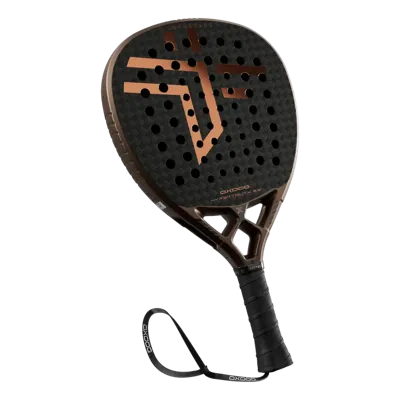
The Oxdog Hyper Tour X 2.0 plays most alike. Differences: comfort +1.0.
Compare side by side →Who should not buy it?
Skip it if your elbow or shoulder complains (comfort 5.0/10), or if you are still learning: it is not very forgiving (5.5/10).
How heavy is it really?
The brand gives 355 to 375 g. That counts as medium. Each racket can differ within that range.
Why a range? →