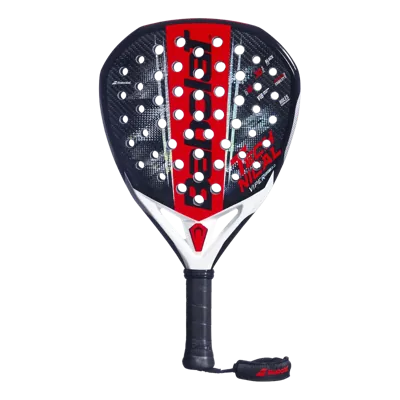
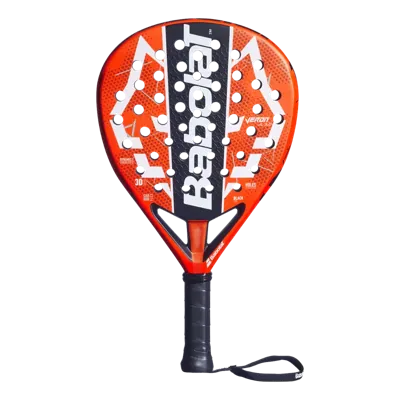
Babolat Technical Viper Soft 3.0
Played by Alejandra Alonso
7.8padell.io scoreSpecs + 1 review source- Shape
- Diamond
- Weight
- 365 g
- Balance
- Head-heavy
- Core
- Black EVA
The Technical Viper Soft 3.0 is a 365 g diamond-shaped Babolat with a head-heavy balance of 270 mm and a Black EVA core. On paper it is built for attack: power reads High, everything else reads Low. A padel.how review found it more manageable than the hard Technical Viper. Expect to prepare early and hit the middle.
RBy Ruud Caris · facts checked 9 October 2026Choose it if
- you attack from the net, smash often and want a heavy, head-heavy frame behind the ball
- you already hit centred and like a diamond shape, but find the hard Technical Viper too dry
- you play on the left and win points with repeated viboras, volleys and overheads
Skip it if
- you are new to padel or want forgiveness on off-centre hits, in which case look at the Babolat Technical Origin +
- you want a racket you can swing quickly in defence, because 365 g and a diamond shape are slow to bring around
- you want the harder response of the Babolat Technical Viper 3.0 and are only tempted by the word Soft
How it plays
Line = the average of all rackets ▲ above ▼ below
Think of it as a hard-hitting attacking racket with a slightly softer face, not a gentle one.
- Control On paper control is low, because the diamond shape asks you to place the ball yourself.
- Power Power is the strong point, helped by the heavy build, the diamond shape and the Black EVA core.
- Comfort Comfort reads low, since the hard core and the weight outweigh what the Soft Carbon face adds.
- Handling It is slow to swing, as the diamond shape and the weight work against quick hands.
- Forgiveness The sweet spot is small, so contact in the centre of the face matters.
Specifications
Not published by the brand: head size, handle
Specs from the brand's own site · checked 25 September 2026 · Spotted a wrong spec? Report it →
Video reviews
11 videos from independent channels and shopsPrice history
Lowest price per day across the shops in your market. Checked every night.
What reviewers say
Only one review exists so far, from padel.how, which played the racket. It rated it 73 out of 100. Its reviewer found the power accessible and the response more manageable than the hard Technical Viper. The condition is early preparation and centred contact. The reviewer recommends it for advanced attackers who want sustainable finishing power from overheads and volleys, especially on the left side.
Here the sources differ a little. The review rates control and sweet spot as neutral, while the meters on this page read both as Low. The advice is the same in both: it is a demanding racket, but not a punishing one if you hit the middle.
Two Babolat rackets share a shape, a balance of 270 mm and the same five meter readings, yet only one is called Soft. The Technical Viper Soft 3.0 is listed at 365 g. The Technical Viper 3.0 is listed at 370 g. Core and face are named differently too. So does "soft" change anything for you? A little, and mostly in how the hit is delivered, not in what the racket asks of you.
Same meters as the hard Viper, so what does Soft change?
The Technical Viper 3.0 has a Hard EVA core and a 3K carbon face. This racket has a Black EVA core and a Soft Carbon face. Both are diamond-shaped, both are 38 mm thick, and both sit at 270 mm balance. Control, power, comfort, maneuverability and sweet spot read the same on both: power High, the other four Low.
That tells you the two share a character. The Soft label points to a gentler hit, not a different type of racket. If you want the details side by side, there is a comparison with the Technical Viper 3.0.
Soft Carbon over Black EVA: high power, low comfort
The face is listed as Soft Carbon. The core is listed as Black EVA, and the meters treat that core as a hard one. The two pull in opposite directions. The soft face is the reason comfort is not even lower. The hard core, the heavy weight and the diamond shape are the reasons it is not higher.
Power gets help from the core, the shape and the weight. That is why it reads High. Not a racket that hides effort, but one that returns what you put in.
The product page claims this racket combines power, comfort and responsiveness, and that it protects your arm during smashes. Treat that as the brand's pitch. The meters say something more specific: strong power, low comfort, low control. So expect a hard-hitting racket with a slightly kinder impact. Do not expect a soft, forgiving one.
What padel.how found
padel.how rated it 73 out of 100. Its reviewer liked the accessible power from medium-speed swings, and the less dry response compared with the hard Technical Viper. The downside: you need to prepare early and make contact in the middle of the face. Grip and comfort were rated positive. Control and sweet spot were neutral, which is milder than the Low meters. That is the one place where the review and the meters do not line up.
The review names advanced attackers as the target, and a retailer lists the playing profile as attacking. The brand does not publish a level for it.
Alejandra Alonso is listed as a left-side user of this exact model. That fits the review, which recommends it for aggressive left-side play. It tells you the racket suits an attacking player who wins points with finishing shots. It does not tell you how it will work at your level. A pro hits the centre far more often than most club players.
365 g and 270 mm: what the heavy head asks of you
The weight is listed at 365 g, and the balance label is Head Heavy, with 270 mm given by a retailer. On paper this means momentum. A slow, full swing should send the ball through. A late, rushed swing will not.
The cost shows up in defence and at the net. Quick blocks and fast volley exchanges are harder with a heavy head. You can reduce the problem by preparing the racket early, which is exactly what the review asks for. A short backswing helps too. If your arm already complains after long sessions, this weight deserves respect.
Viper Soft, Technical Viper or Technical Veron
The Technical Viper 3.0 is the harder, slightly heavier option at 370 g. Choose it if you want a firmer response and are comfortable with that. The Technical Veron 3.0 is lighter at 360 g, with a Carbon Flex face. The Viper Soft Juan Lebrón 3.0 is listed with the same core, face, weight and shape as this racket. Check carefully before you assume any difference between them.
What you cannot check
The handle, head size and weight system are not published. Without the head size you cannot judge the face area directly. Without the handle you cannot know how it sits in a small hand. If those matter to you, hold one before deciding.
Similar rackets
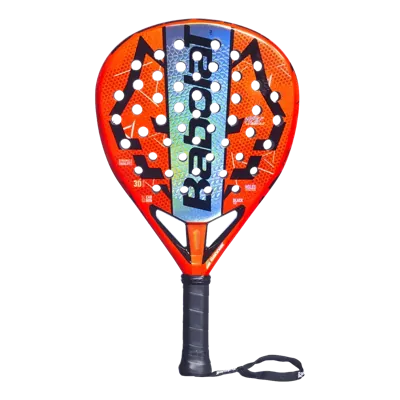
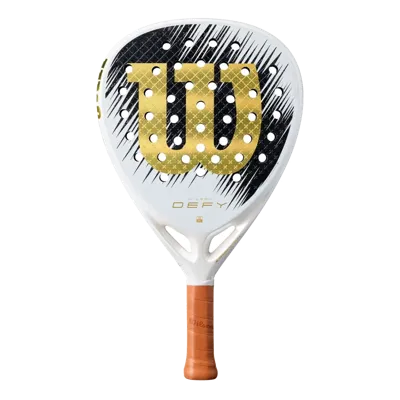
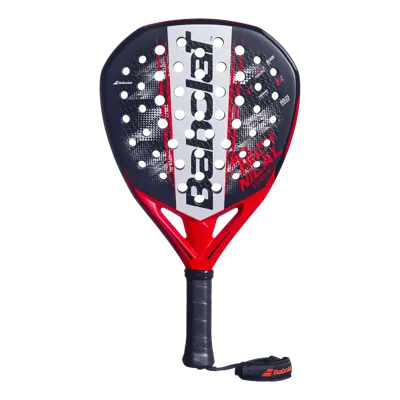
All rackets that play like the Babolat Technical Viper Soft 3.0 →
Questions before you buy
Is the Technical Viper Soft 3.0 much softer than the Technical Viper 3.0?
On paper the differences are the Soft Carbon face and Black EVA core, and 365 g against 370 g. The meters read the same. A padel.how review found the response more manageable than the hard Technical Viper.
Is it a racket for beginners?
Not on paper. It is diamond-shaped, head-heavy and heavy at 365 g, and the review recommends it for advanced attackers. The brand does not publish a level.
Will it be gentle on an arm?
Do not assume so. Comfort reads Low because of the hard core and the weight. The Soft Carbon face and the review's positive comfort rating help, but a heavy head still loads the arm.
Is it the same as the Viper Soft Juan Lebrón 3.0?
The listed specs match: core, face, shape, thickness, weight and balance label. The Lebrón version is linked to a pro player. Whether anything else differs is not stated, so compare the two pages.
Is the Technical Viper Soft 3.0 worth the money right now?
Today's price is labelled "Fair price" compared with the rackets that play most alike. Which shops deliver, and what shipping costs, depends on your country. The price comparison shows it for yours.
See all pricesWhat is the closest alternative?
The Babolat Viper Soft Juan Lebrón 3.0 plays most alike. Differences: control -2.0, comfort -2.0. Today: € 174.90.
Compare side by side →Who should not buy it?
Skip it if you rely on placement and long rallies (control 4.0/10), or if your elbow or shoulder complains (comfort 5.0/10), or if you are still learning: it is not very forgiving (2.0/10).
How heavy is it really?
The brand gives 365 g. That counts as medium. Each racket can differ within that range.
Why a range? →