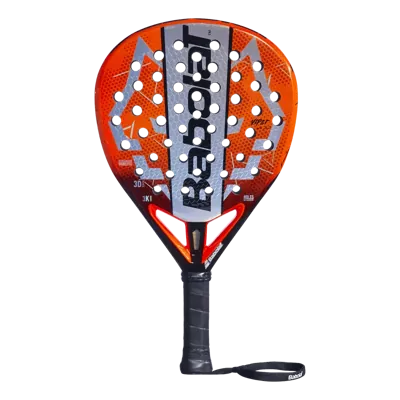
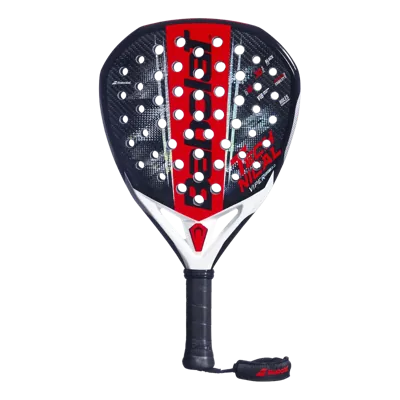
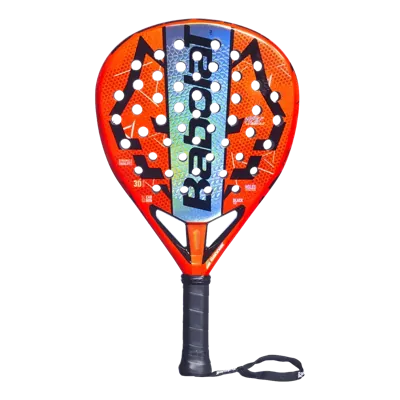
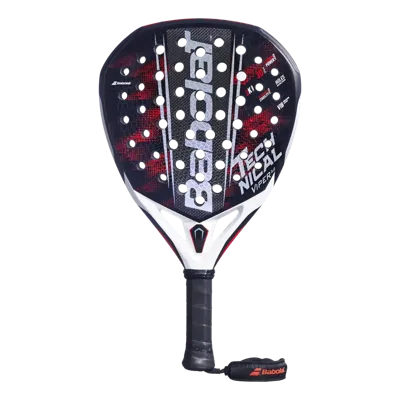
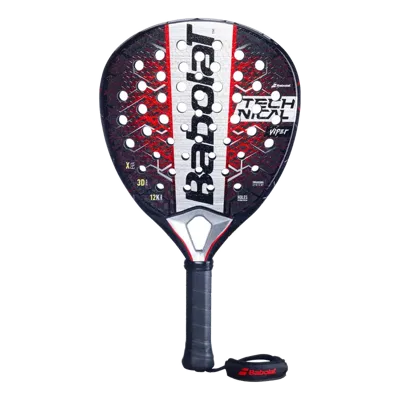
Babolat Technical Viper 3.0
2026

Babolat Technical Viper 3.0

8.1padell.io scoreSpecs + 2 review sources
Shape
Diamond
Weight
370 g
Balance
Head-heavy
Core
Hard EVA
Does it suit your game?Seven quick questions, with this racket as the starting point.
Question 1 of 7

What is your level?

The short answer

The Babolat Technical Viper 3.0 is a 370 g diamond built for attack. On paper it has a hard core and a head-heavy balance. Two testers rated it 74 and 92 out of 100, and both found it powerful and unforgiving off-centre. Not a racket for building a game. It suits advanced players who already hit the ball cleanly.

RBy · facts checked 9 October 2026

Choose it if

  • you are an advanced attacker who finishes points with smashes and heavy volleys
  • you strike the ball in the middle of the face almost every time and want a racket that rewards it
  • you already handle a 370 g diamond and want a stiffer, harder-hitting step up from the 2025 Viper

Skip it if

  • you still mishit often or have a sore arm, because the Technical Origin + has a fiberglass face and a High comfort meter
  • you want a slightly lighter attacker with a different core and face, in which case look at the Technical Viper Soft 3.0 at 365 g
  • you win points by placing the ball and keeping rallies long, since this racket reads Low on control and sweet spot

How it plays

8.1
padell.io score 8.1Play 7.8 (60%) and reviews 8.5 (40%). Based on 2 review sources. How the score works
Control3.5below average▼
Power10.0above average▲
Comfort2.5below average▼
Handling4.0around average●
Forgiveness1.5below average▼

Line = the average of all rackets ▲ above ▼ below

A hard-hitting specialist that asks for clean contact and gives little back when you miss.

  • Control Low on paper, and the two testers disagree, so expect to earn precision with good timing.
  • Power High, and both testers call smashes and aggressive volleys the strength of this racket.
  • Comfort Low, because a hard core and heavy frame send more of the impact to your arm.
  • Handling Low, since a diamond head with this weight is slow to bring around in fast exchanges.
  • Forgiveness Low, and both testers describe it as small, so off-centre balls lose a lot.

Specifications

Launched2026The newest version of this racket
Weight370 gHeavy: stable and powerful, tiring over long matches
BalanceHead-heavy according to the brand, 270 mmHead-heavy: more power overhead, slower to move
Face3K carbonSoft carbon: more feel and easier ball exit
CoreHard EVAHard: control and power at speed, more vibration
Thickness38 mmThe maximum the rules allow
SurfaceRough finishRough: helps with spin
FrameCarbon

Not published by the brand: head size, handle

Specs from the brand's own site · checked 25 September 2026 · Spotted a wrong spec? Report it →

Video reviews

10 videos from independent channels and shops

What 10 video reviewers say

9 played it on court, 1 discusses the specs

Often mentioned
Plus points
  • Lots of power10 of 10
  • Good feel6 of 10
  • Strong overheads3 of 10
  • Good spin3 of 10
  • Good at the net3 of 10
Minus points
  • Demanding, needs good technique9 of 10
  • Small sweet spot4 of 10
  • Vibration, hard on the arm3 of 10
  • Harder to handle2 of 10
  • Expensive2 of 10
Summaries by padell.io, based on what each reviewer says in the video. Tap a time to watch that moment.
Tested on court

The racket is a powerful and demanding tool for advanced players. It requires high technical skill to manage its stiff and responsive nature effectively. It is well suited for aggressive players who prioritize power and precision in their game.

Tested on court

The Babolat Technical Viper 3.0 features a new geometric mold and a harder EVA core compared to its predecessor. It incorporates a carbon power layer for increased reactivity and a structural reinforcement in the heart for added stability.

Tested on court

The reviewer finds this racket to be a highly reactive and powerful option that offers a better feel than previous versions. It is a demanding racket that is best suited for advanced players who can handle its technical nature.

Tested on court

The reviewer finds this racket to be a powerful and offensive option that excels in aerial play. It is a demanding racket that requires a high level of technique and is not recommended for players who need assistance in defense.

Discusses the specs

The reviewer evaluates the Babolat Technical Viper 3.0 2026, highlighting its high power and good spin capabilities. It is a demanding racket that requires a skilled player with good technique to fully utilise its potential.

Tested on court

The reviewer finds this racket to be a demanding model that requires good technique and rhythm to perform well. It offers significant power and ball output, making it suitable for advanced players who can handle its rigid feel and smaller sweet spot.

2025Different specs€ 179.95
2026This racket€ 216.32

Against the 2025 model, the core changed from X-EVA to Hard EVA and the face from 12K carbon to 3K carbon. Weight went from 365 g to 370 g. Shape, frame and thickness at 38 mm are the same. The balance label moved from High to Head Heavy. No balance figure is published for the 2025 racket, so treat that as a change of wording. If you want a stiffer, heavier, more direct racket, look at this 3.0. If you want a less hard core and lower weight, look at the 2025 version.

Price history

Today€ 216.32Lowest in 30 days€ 203.75vs 30-day average+2%
23 Sept€ 203.75 · € 228.0014 Nov

Lowest price per day across the shops in your market. Checked every night.

What reviewers say

Padel.how rates the Technical Viper 3.0 at 74 out of 100. Padelvergleich rates it 92 out of 100. Both are court tests, and both treat it as an attacker's racket. They agree on strong power, a small sweet spot and an advanced target player. They differ on control, where padel.how is positive and Padelvergleich negative. They also differ on comfort, where padel.how is negative and Padelvergleich neutral. Padelvergleich also likes the spin from the surface texture. Both name the unforgiving sweet spot, yet the ratings sit far apart. That is a reminder to read the pros and cons, not just the number.

Two reviewers rated the Babolat Technical Viper 3.0 at 74 and 92 out of 100. Yet they agree on almost everything that matters. It hits very hard and it punishes a mistimed ball. The gap in the numbers says more about how each reviewer weighs the trade-offs than about the racket itself.

74 and 92 out of 100: two ratings, one shared warning

Read the pros and cons side by side and the picture is consistent. Both praise power on smashes and heavy volleys. Both name a small sweet spot as the main problem. Padel.how calls it a compact sweet spot that demands precise contact. Padelvergleich talks about a high entry barrier for technical errors.

So the two ratings do not describe two different rackets. They describe the same racket, scored with different weight on forgiveness and comfort.

Hard EVA and 3K carbon: what changed against the 2025 Viper

This is a real change, not a new label. Against the Technical Viper 2025, the core goes from X-EVA to Hard EVA and the face from 12K carbon to 3K carbon. Weight rises from 365 g to 370 g. Shape, frame and 38 mm thickness stay the same.

One change is only a label. The 2025 racket is listed with a High balance, this one as Head Heavy. No balance figure is published for the older model, so you cannot say the balance moved. A harder core normally means a stiffer, more direct response. The Low comfort and sweet spot meters on this page point the same way.

The Technical familySame year, from most power (left) to most control (right)

370 g, diamond, 270 mm: what the heavy head asks of your arm and timing

370 g is heavy. The diamond shape puts the mass toward the top of the head. A retailer lists the balance at 270 mm, and the brand calls it Head Heavy. On court that means momentum on overheads and volleys. It also means slower hands when you must defend or change direction fast.

The handle and the head size are not published, and neither is a weight system. So you cannot judge grip fit or face area from the sheet. If you are unsure, hold one in a shop first.

The cost is on your arm. Hard core, heavy frame, small sweet spot: every mishit travels to your elbow. You can reduce the risk with a proper warm-up, a fresh overgrip and sensible court time. But if you have arm trouble already, this is the wrong tool.

Control positive or negative: where the two reviewers part ways

Padel.how lists control as positive. Padelvergleich lists it as negative. Comfort splits too: negative against neutral. Sources disagree here, and that is useful.

A likely reading is that control depends on your contact. If you strike the middle, the racket answers directly. If you do not, it gives you little help. The meters here read Low for control. The diamond shape and the reviews pull it down. The 270 mm balance pulls it up a little.

Babolat's power pitch against a Low sweet spot meter

Babolat's product page says the racket is built for maximum power and energy transfer, with a rough finish to help spin. Those are brand claims. The reviewers back the power part. Padelvergleich also praises spin potential with its 3D Spin+ texture.

The same page says the racket gives you control over every point. The reviewers and the meters do not clearly support that. Treat it as marketing.

Technical Viper 3.0, Viper Soft 3.0 or Juan Lebrón 3.0: picking your power diamond

The Technical Viper Soft 3.0 is the closest relative. It has a Black EVA core, a Soft Carbon face and 365 g, and it reads the same on the meters. It is the natural next stop if you like the idea but want a different core and face.

The Viper Juan Lebrón 3.0 lists the same core, face, shape, thickness and weight as this racket. It is tied to the player Juan Lebrón. On paper the two are very close, so the choice may come down to which one you prefer.

Choose the Technical Viper 3.0 if you want a hard, heavy attacker. Be ready to pay for it with good timing and a sturdy arm.
Written byPadel player and founder of padell.io

Bought, played and sold more rackets than was good for him, and built padell.io to bring it all together.

About padell.io →

Was this page useful?

Similar rackets

All rackets that play like the Babolat Technical Viper 3.0 →

Questions before you buy

Is the Technical Viper 3.0 suitable for intermediate players?

Probably not yet. Both testers point to advanced, attack-first players, and the 370 g weight, small sweet spot and hard core leave little margin for mishits.

What is different from the Technical Viper 2025?

The core is Hard EVA instead of X-EVA, the face is 3K carbon instead of 12K, and weight rises from 365 g to 370 g. The balance label changed from High to Head Heavy, but that may be a wording change.

Is it hard on the arm?

It is likely to be. Comfort reads Low, padel.how rates it negative and Padelvergleich neutral. A hard core and heavy frame transmit impact, so players with arm problems should look elsewhere.

Is there a more comfortable Babolat option?

The Technical Viper Soft 3.0 has a Black EVA core, a Soft Carbon face and 365 g, but its comfort meter also reads Low. The Technical Origin + has a fiberglass face and a High comfort meter.

Is the Technical Viper 3.0 worth the money right now?

Today's price is labelled "Fair price" compared with the rackets that play most alike. Which shops deliver, and what shipping costs, depends on your country. The price comparison shows it for yours.

See all prices
What is the closest alternative?

The Babolat Viper Juan Lebrón 3.0 plays most alike. Differences: handling -2.0, control -1.5. Today: € 219.00.

Compare side by side →
Who should not buy it?

Skip it if you rely on placement and long rallies (control 3.5/10), or if your elbow or shoulder complains (comfort 2.5/10), or if you are still learning: it is not very forgiving (1.5/10).

How heavy is it really?

The brand gives 370 g. That counts as heavy. Each racket can differ within that range.

Why a range? →