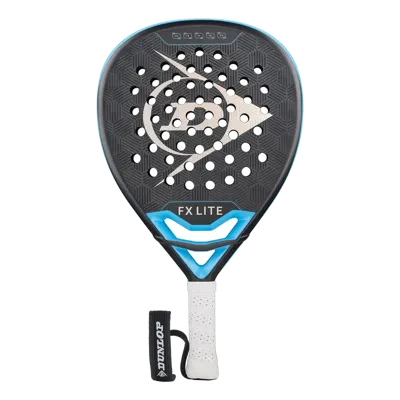
Dunlop FX Lite
7.8padell.io scoreSpecs + 1 review source- Shape
- Diamond
- Weight
- 355 g
- Balance
- Even
- Core
- Soft EVA
The Dunlop FX Lite is a 2026 attacking racket: diamond shape, 12K carbon face and 355 g, aimed at advanced players. It is 15 g lighter than the FX Pro while keeping a high power ceiling. The catch: the one court test so far found the Soft EVA core less cushioning than the recipe suggests.
RBy Ruud Caris · facts checked 5 October 2026Choose it if
- you want a diamond racket at 355 g instead of the 370 g of the FX Pro
- your attacking technique is complete and you generate your own ball speed
- you want carbon stiffness on the face without giving up a soft core feel on contact
Skip it if
- you defend a lot and need help controlling the ball, look at the Dunlop Aero-Star Lite
- your elbow is sensitive and cushioning decides your purchase, because the FX Lite's comfort was questioned in testing
- you are an intermediate player, the Advanced label and the Low sweet spot rating will punish off-center hits
How it plays
Line = the average of all rackets ▲ above ▼ below
On paper this is an attacking racket made easier to swing, not a friendly one.
- Control The diamond shape pulls the control meter to Low, so placement depends on your technique, not the racket.
- Power High, the diamond shape and the 12K carbon face reward full attacking swings with pace.
- Comfort Medium, the soft core should absorb vibration, but the one court test found the cushioning thin.
- Handling Low despite the medium balance, the diamond shape still asks for early preparation at the net.
- Forgiveness Low, so hits outside the center lose quality fast and demand clean contact.
Specifications
Not published by the brand: head size, handle, frame
Specs from padelnuestro.com · checked 24 September 2026 · Spotted a wrong spec? Report it →
Video reviews
1 video from an independent channel or shopPrice history
Lowest price per day across the shops in your market. Checked every night.
What reviewers say
Only one source has played the Dunlop FX Lite so far. Padel.how, a site that tested it on court, rated it 72 out of 100. Its verdict splits cleanly in two. On power it is positive, praising the high power ceiling and the direct contact on complete attacking strokes. On comfort it is negative, reporting that the racket lacks cushioning despite the Soft EVA core. Control and sweet spot came out neutral in that test.
Because there is just one court test, there is no real agreement or disagreement between reviewers to report. The interesting tension is internal: the specs suggest a comfortable attacking racket, while the test found the comfort thinner than promised. More court tests would be needed to know whether that finding holds.
Compared with the Dunlop FX Pro, the Dunlop FX Lite shares the diamond shape and the 12K carbon face but weighs 355 g instead of 370 g. The Advanced label stays too. What changes is the load you swing. That is the whole idea of this racket, and it defines who should buy it.
The 355 g route into Dunlop's attacking FX line
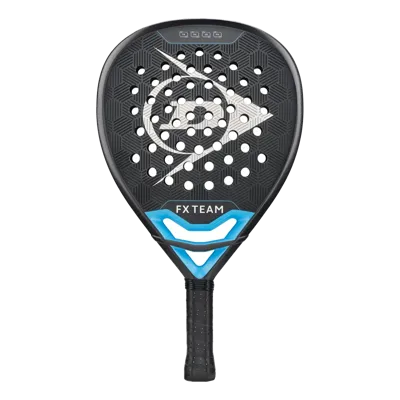
At 355 g the FX Lite is light for a diamond racket. Most attacking frames at this level sit at 365 g or more, like the FX Team at 365 g and the FX Pro at 370 g. Fifteen grams sounds small. On court it is the difference between arriving late to a fast ball at the net and arriving on time.
That weight is listed at 355 g nominal, both minimum and maximum, so there is no weight range to pick from. What you see is what you get.
The target is clear: the retailer lists the level as Advanced. This is not a racket that forgives. It is a racket that responds.
Soft EVA under 12K carbon: a comfort recipe the one court test questions
The build reads well on paper. A Soft EVA core usually means a softer, more dampened contact. A 12K carbon face adds stiffness and rebound. Together they should give you a firm hit with some protection for the arm.
The one source that played it disagrees with the comfort part. Padel.how, which tested the racket on court, found that it lacks cushioning despite the Soft EVA core. That is worth knowing if your elbow or shoulder is sensitive. The spec sheet promises one thing, the court test found another.
What can you do about it? Not much in the racket itself. Honest self-assessment helps more. If you have had arm trouble, a racket with questioned cushioning is a gamble.
72 out of 100 from padel.how: power praised, cushioning thin
Padel.how rated the FX Lite 72 out of 100 after playing it. The praise goes to the attack: a high power ceiling with manageable head preparation, and a direct contact that rewards complete attacking strokes. Read that carefully. Complete strokes. If your smash or vibora is technically sound, the racket gives you pace. If it is not, the racket gives you nothing extra.
The same test was neutral on control and the sweet spot, and negative on comfort. So the picture is consistent: a racket for attackers who hit clean, not for players who need help.
One test is one test. There is only a single court review of this racket so far, so treat the conclusions as a first reading, not a settled verdict.
Diamond with medium balance: why the maneuverability meter still reads Low
The balance is listed as Medium, which normally helps a racket feel agile. Here the maneuverability meter still reads Low, because the diamond shape works against it. The weight distribution of a diamond frame concentrates mass toward the head even when the nominal balance label says medium.
In practice: at the net, in fast exchanges, you need to prepare the racket early. That asks more of your footwork and anticipation than a round shape does.
The upside is the same coin's other side. That head-oriented feel is exactly what produces the power the testers praised.
Gaps on the FX Lite spec sheet: what is not published
Some things about this racket are simply not published. There is no balance figure in millimetres, only the Medium label from the retailer. The frame material is not published. The head size in square centimetres is not published. There is no weight system.
That limits how precisely you can compare it on paper. The Medium label comes from one retailer, and without a millimetre figure you cannot verify where the balance point really sits. If those details matter to you, try the racket before buying, because the spec sheet will not answer those questions.
FX Lite, Aero-Star Lite or Oxdog Ultimate Tour X: picking your attacking diamond
The closest rivals share the 355 g weight and the diamond shape, so the choice is in the character.
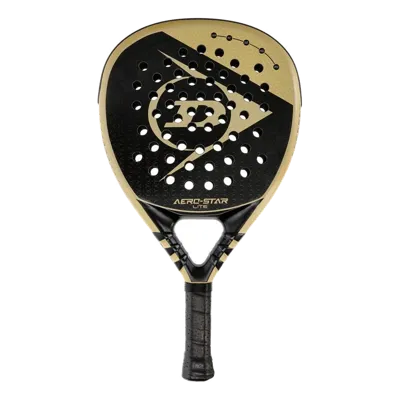
The Dunlop Aero-Star Lite matches the FX Lite's high power but rates Medium on control, where the FX Lite sits at Low. It is also labeled Beginner / Intermediate. If you like the idea of this racket but doubt your consistency, that is the safer door.
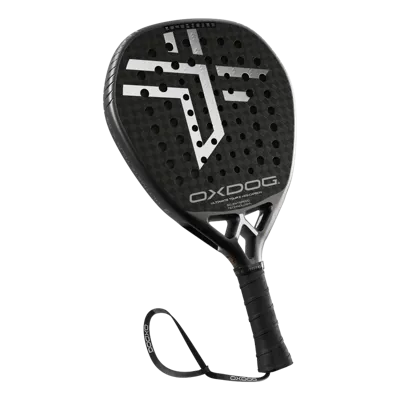
The Oxdog Ultimate Tour X goes the other way: Medium power instead of High, and Low comfort where the FX Lite is Medium. It is the harsher, more controlled option.
And within the family, the FX Pro is the same idea at 370 g, with an Advanced / Professional label. If 355 g feels too light and your arm handles the load, that is the step up.
So the FX Lite's slot is precise: the attacking diamond for the advanced player who wants power but not the 370 g swing weight. On that brief it delivers, as long as your strokes are complete and your arm is healthy.
Similar rackets
Questions before you buy
Is the Dunlop FX Lite the same as the FX Pro?
No. Both are diamond-shaped attacking rackets with a 12K carbon face. The FX Lite weighs 355 g against 370 g for the FX Pro, and the FX Pro is labeled Advanced / Professional with a high balance.
What level is the Dunlop FX Lite for?
The retailer lists it as Advanced, and the ratings support that: control and sweet spot both read Low, so it punishes off-center hits. Intermediate players would get more from the Dunlop Aero-Star Lite or the FX Hybrid Team.
Is the Dunlop FX Lite comfortable for a sensitive elbow?
Uncertain. The Soft EVA core suggests yes, but the one court test found it lacked cushioning despite that core. If you have arm issues, treat it as a risk and try before buying.
How does the FX Lite compare to the Oxdog Ultimate Tour X?
Both are 355 g diamonds from 2026. The FX Lite rates higher on power and comfort, the Oxdog rates higher on control but drops comfort to Low. Attackers fit the FX Lite, controllers fit the Oxdog.
Is the FX Lite worth the money right now?
Today's price is labelled "Good value" compared with the rackets that play most alike. Which shops deliver, and what shipping costs, depends on your country. The price comparison shows it for yours.
See all pricesWhat is the closest alternative?
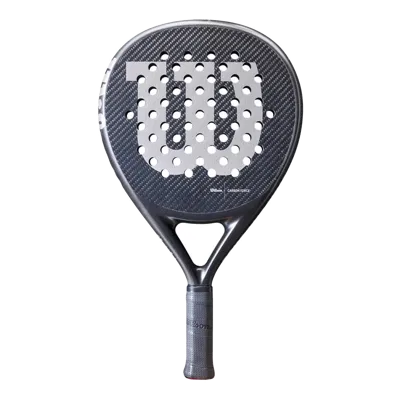
The Wilson Carbon Force LT 2023 plays most alike. Differences: power -1.0, comfort +1.0. Today: € 112.90.
Compare side by side →Who should not buy it?
Skip it if you rely on placement and long rallies (control 5.0/10), or if you are still learning: it is not very forgiving (3.0/10).
How heavy is it really?
The brand gives 355 g. That counts as medium. Each racket can differ within that range.
Why a range? →