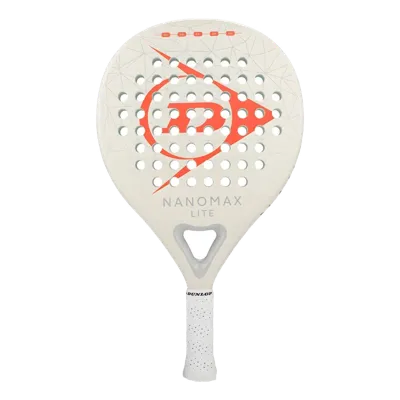
The Dunlop Nanomax Lite is a soft, light hybrid aimed at beginners and early intermediates. It weighs 355 g and has a soft EVA core. On paper every meter reads Medium, so nothing is extreme. That suits a first racket. The catch: no review exists yet, and head size and handle are not published.
RBy Ruud Caris · facts checked 9 October 2026Choose it if
- you are buying your first padel racket and want nothing demanding
- your arm is sensitive and a soft core matters to you
- easy handling in defence matters more to you than raw power
Skip it if
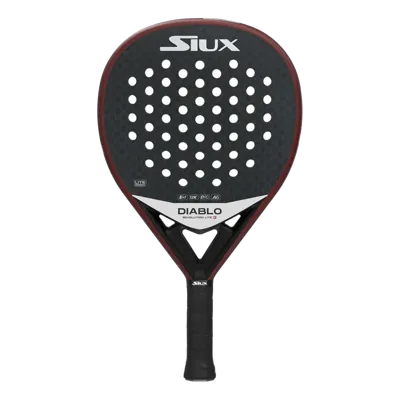
- you want a firmer, less forgiving racket. Then look at the Siux Diablo Revolution Lite 3, which reads Low on comfort, maneuverability and sweet spot
- you want a racket with published head size and handle details before you commit
- you are a settled intermediate and prefer a racket listed for intermediates only, such as the Stiga 18K LW Cybershape Amanda Girdo Edition
How it plays
Line = the average of all rackets ▲ above ▼ below
On paper this is an even, forgiving racket with no strong leanings.
- Control Medium, helped by the hybrid shape and the mid balance, so placing the ball should come without much fuss.
- Power Medium, because the soft core takes some punch out while the carbon-type face and hybrid shape add some back.
- Comfort Medium, and the soft EVA core is the reason.
- Handling Medium, and the mid balance is the one thing that drives it.
- Forgiveness Medium, again thanks to the soft core.
Specifications
Not published by the brand: head size, handle
Specs from padelnuestro.com · checked 25 September 2026 · Spotted a wrong spec? Report it →
Video reviews
1 video from an independent channel or shopPrice history
Lowest price per day across the shops in your market. Checked every night.
Every meter on the Dunlop Nanomax Lite reads Medium, and for a first racket that is less dull than it sounds. A beginner does not need a racket that excels at one thing. You need one that does not punish mistakes. On paper, this one is built that way.
Medium on all five meters: what a racket with no extremes gives a beginner
Control, power, comfort, maneuverability and sweet spot all land in the middle. Nothing here is a weakness, and nothing is a headline feature.
What does that mean on court? You get a racket that should not run away from you. It will not send every ball long, and it should not feel dead either. Your technique does most of the work, and that is what you want while you learn. Not a racket that flatters, but one that stays out of the way.
355 g and 260 mm: a light build, a balance label that hesitates, and a bold product page
The weight is fixed at 355 g, with no range. The balance is 260 mm, and the meter reads that as medium. The retailer's label says "Medium, Low", though. Those two do not say the same thing. One source calls it mid-balanced, the other hints at lower.
The practical reading is simple. Either way, the racket is not head-heavy, which should make it quick to bring round in defence. If you want a racket that drives the ball through by its own mass, this is not that.
The frame is carbon and the thickness is 38 mm. The shape is hybrid, so it sits between round and diamond.
The product page claims the racket is outstanding for maneuverability and speaks of quick reactions in defence. Treat that as marketing. The specs partly back it up: the maneuverability meter reads Medium because of the balance. Medium is easy to handle, not exceptionally quick. The same page claims a balance of control and power. The meters agree, though only in the sense that both sit in the middle.
Soft EVA under a Glaphite face: where the comfort comes from and what it costs in power
The core is soft EVA. That one choice drives three of the meters. It raises comfort and sweet spot, and it lowers power, because a soft core gives the ball less snap back.
The face is listed as Glaphite, a retailer spelling. The meter treats it as a medium carbon face, which pushes power up a little and balances the core. The hybrid shape adds a bit more.
The cost is clear. You will need to generate your own power, because the racket will not add much. For a beginner that is a fair trade, since learning to swing properly matters more than borrowed power. If your arm is sensitive, the soft core is the main point in the racket's favour.
Nanomax Lite next to the FX Start: 355 g against 360 g, and a sweet spot that reads Medium
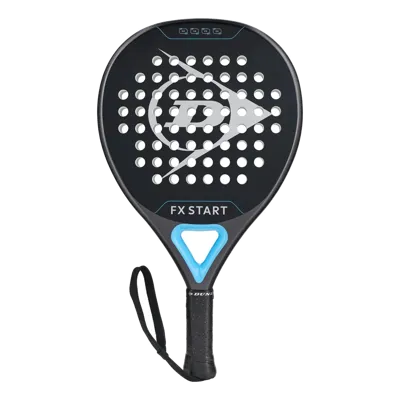
The closest relative on the list is the Dunlop FX Start. It is also a Glaphite-faced hybrid for Beginner / Intermediate players, at 38 mm thick, and it weighs 360 g. Its core is listed as EVA Pro rather than soft EVA.
The meters differ in one place. The FX Start reads Low on sweet spot, the Nanomax Lite reads Medium. The soft core is the stated driver on this racket. If forgiveness on off-centre hits matters to you, that gap is worth knowing about. The weight gap between the two is small.
No review, no head size, no handle spec: what you cannot check
No review exists for this racket yet. Nothing here comes from a court test, so every statement is a reading of the specs. Head size, handle and weight system are not published either. Handle size matters for grip comfort, and you cannot judge it from the listing. Check it in a shop if you can.
A listing called Dunlop NANOMAX LITE 2025 also exists, with no specs attached. Nothing shows that it differs from this racket.
Nanomax Lite, Stiga Girdo Edition or Siux Diablo Revolution Lite 3: picking your first hybrid
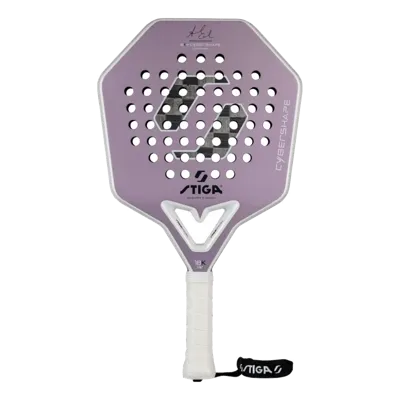
The Stiga 18K LW Cybershape Amanda Girdo Edition is listed at 350 g with a Hypersoft Foam core and an 18K Carbon Duplex face. It is aimed at intermediates, and every meter also reads Medium. The materials differ, but the profile on paper does not.
The Siux Diablo Revolution Lite 3 is an advanced racket with a 12K carbon face. Its comfort, maneuverability and sweet spot meters all read Low, while control and power read Medium like this racket. That is a less forgiving racket, and a poor first choice.
If you are starting out, the Nanomax Lite is the gentlest of the three on paper.
Similar rackets
Questions before you buy
Is the Dunlop Nanomax Lite good for beginners?
On paper, yes. It weighs 355 g, has a soft EVA core and reads Medium on every meter. Retailers list it for Beginner / Intermediate players. No review has tested it yet.
Is the Nanomax Lite head-heavy?
No. The balance is 260 mm and the meter reads it as medium. One retailer labels it "Medium, Low". Either way, it is not a head-heavy racket.
How does it differ from the Dunlop FX Start?
The FX Start weighs 360 g and has an EVA Pro core. Its sweet spot reads Low, against Medium for the Nanomax Lite. The other meters are the same.
Is it gentle on the arm?
The soft EVA core raises the comfort meter to Medium, and that is the only driver listed. No one has tested it for arm comfort yet, so treat that as a reading of the specs.
Is the Nanomax Lite worth the money right now?
Today's price is labelled "Good value" compared with the rackets that play most alike. Which shops deliver, and what shipping costs, depends on your country. The price comparison shows it for yours.
See all pricesWhat is the closest alternative?
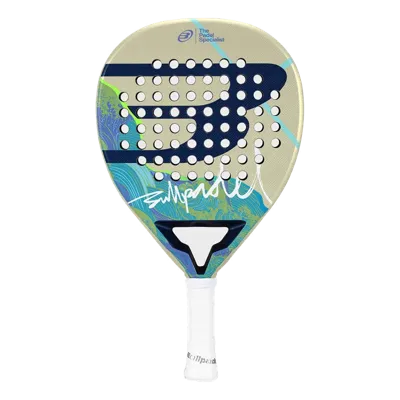
The Bullpadel Ionic Light 2026 plays most alike. Differences: comfort -1.5.
Compare side by side →Who should not buy it?
Skip it if you want easy power for smashes (power 5.5/10), or if you are still learning: it is not very forgiving (5.5/10).
How heavy is it really?
The brand gives 355 g. That counts as medium. Each racket can differ within that range.
Why a range? →