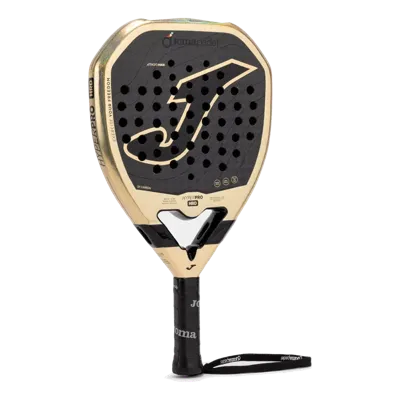
Joma Hyper Pro HRD
7.6padell.io scoreSpecs only- Shape
- Diamond
- Weight
- 360 to 370 g
- Balance
- Head-heavy
- Core
- Black EVA
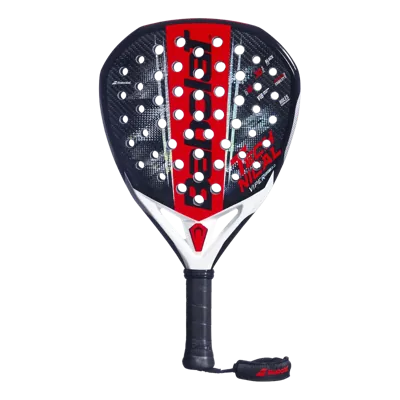
The Joma Hyper Pro HRD is a diamond-shaped racket with a high balance. It has a 12K carbon face and a Black EVA core, listed at 360 to 370 g. On paper it suits attacking players who already swing a heavy frame. Control, comfort and sweet spot all read low, and no court test exists yet.
RBy Ruud Caris · facts checked 8 November 2026Choose it if
- attacking is your default, the brand calls the profile offensive, and you already swing a heavy diamond
- clean contact matters more to you than forgiveness
- the Hyper Pro line appeals but you want a heavier option than the SFT
Skip it if
- you are new to padel, since Joma lists this racket as Advanced / Professional
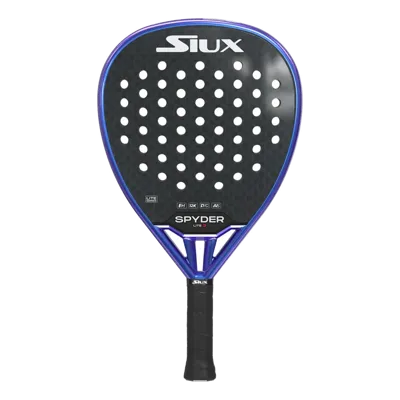
- an off-centre hit needs rescuing, since this and the Siux Spyder Lite 3 Hard both read low on sweet spot
- quick handling is the goal, since the Joma Hyper Pro SFT is only 10 g lighter and its maneuverability meter also reads Low
How it plays
Line = the average of all rackets ▲ above ▼ below
On paper this is a racket for attacking players who are used to a heavy frame.
- Control Low, because the diamond shape and high balance lower it.
- Power High, as the hard Black EVA, 12K carbon face, diamond head, weight and high balance all push in that direction.
- Comfort Low, since the hard core, heavy weight and high balance lower it.
- Handling Low, as the diamond shape, heavy weight and high balance all lower it.
- Forgiveness Low, as the hard core and diamond shape lower it, so contact needs to be precise.
Specifications
Not published by the brand: head size, handle
Specs from the brand's own site · checked 25 September 2026 · Spotted a wrong spec? Report it →
Price history
Lowest price per day across the shops in your market. Checked every night.
The Joma Hyper Pro HRD sits next to the Hyper Pro SFT on the spec sheet, and almost everything matches. Same pro player, same diamond head, same high balance, same 12K carbon. The HRD is listed heavier at both ends of its weight window. For a racket the brand calls offensive, that gap matters more than it looks.
HRD or SFT: 360 to 370 g against 350 to 360 g
The HRD is listed at 360 to 370 g. The Hyper Pro SFT is listed at 350 to 360 g. Both are brand figures, and the HRD does not publish a weight system, so you cannot tell how the weight is distributed.
What does the extra mass do? More weight behind the ball usually means more stability on contact and more effort over a long match. You get a steadier hit on a fast ball. You also tire sooner if your shoulder is not used to it.
The meters show the same picture for both rackets: high power, and low control, comfort, maneuverability and sweet spot. The sheet cannot separate them beyond the grams. Treat the HRD as the heavier option on paper, not as a different type of racket.
Vero Virseda's diamond: what the shared build tells you
Joma lists Vero Virseda as the pro player for this racket, and the level as Advanced / Professional. The brand also calls the player profile offensive. None of that is a surprise once you see the shape.
A diamond head and a high balance fit that offensive profile. This is a racket built for attacking play, not for players who want the frame to do the work for them.
That is also why control reads low. Not because the racket is badly made, but because the diamond shape and high balance lower it.
Black EVA, 12K carbon and VIBRA-OUT: what your arm is asked to take
The core is Black EVA, the face is 12K carbon and the frame is listed as 100% carbon. Joma's surface is called 3D Spin. A retailer lists the thickness at 38 mm, which is a single shop source, so take it with care.
The brand also lists VIBRA-OUT as anti-vibration technology. The product page claims the carbon structure with its dense core absorbs vibration and gives a more stable impact. That is a marketing claim, and no independent review is available to confirm it.
The meters point the other way on comfort. The hard core, the heavy weight class and the high balance all lower it. If your elbow or shoulder already complains, a damping claim is not enough reason to pick a heavy, hard racket. Warm up properly before long sessions.
A sweet spot high in the head, says Joma: what the meters say instead
The product page says the racket has a sweet spot displaced towards the upper part of the face and favours attacking shots. It also says performance in defence and transition is not compromised. Those are brand claims.
The meters tell a more cautious story. Sweet spot reads low, driven by the hard core and the diamond shape. Maneuverability reads low as well. The page mentions AEROBUMP grooves meant to improve aerodynamic flow, yet the maneuverability meter still reads Low despite that claimed benefit.
So the fair reading is this. If you make clean contact high in the face, the claim may suit you. The meters still read low, and a low sweet spot rewards precise contact.
Hyper Pro HRD, Siux Fenix Pro 2026 or Nox EA10 Ventus Attack: three Low-control diamonds
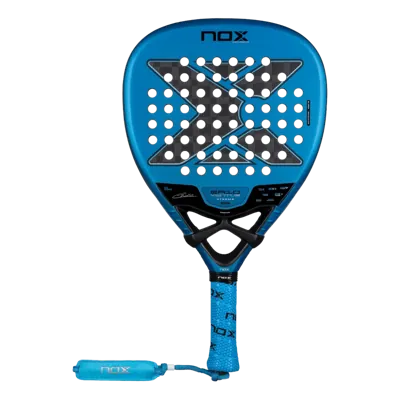
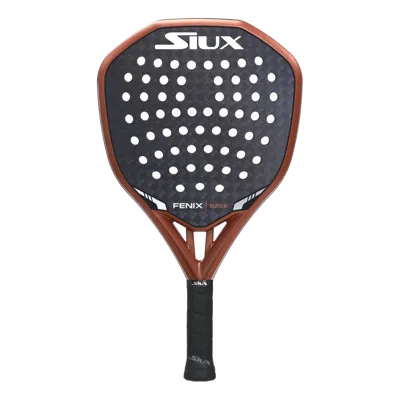
The field around it is similar. The Siux Fenix Pro 2026 is a professional-level diamond at 355 to 375 g with a high balance. The Nox EA10 Ventus Attack 12K XTREM is also a diamond with a high balance, at 360 to 375 g.
All three show the same meters: high power, low everything else. The HRD has the narrowest published weight window of the three, at 360 to 370 g. Choose between them on brand, handle feel and how you handle the weight, not on the meters.
No court test, no head size: what the sheet leaves open
No review of this racket is available yet, so everything here comes from the specs. Nobody has court-tested it for this page.
Several things are not published: the balance in millimetres, the handle details, the head area and the weight system. Without them you cannot compare grip feel or swing weight precisely. If you can, try the racket before you commit. A heavy diamond is the type of racket where a demo tells you more than a table.
Similar rackets
Questions before you buy
What is the difference between the Joma Hyper Pro HRD and the Hyper Pro SFT?
On paper, weight. The HRD is listed at 360 to 370 g, the SFT at 350 to 360 g. Shape, balance, core, face, pro player and level label match, and the meters are identical.
Is the Joma Hyper Pro HRD suitable for intermediate players?
Probably not. Joma lists it as Advanced / Professional, so it suits advanced players better. An intermediate player would find the low control and low sweet spot demanding.
Is it hard on the arm?
The specs suggest it can be. A hard Black EVA core, a heavy weight class and a high balance all lower comfort. Joma lists VIBRA-OUT damping, but no independent review confirms the effect.
How does it compare with the Siux Fenix Pro 2026?
Very closely on paper. Both are high-balance diamonds with 12K carbon and the same meters. The Siux window is 355 to 375 g, the Joma 360 to 370 g.
Is the Hyper Pro HRD worth the money right now?
Today's price is labelled "Good value" compared with the rackets that play most alike. Which shops deliver, and what shipping costs, depends on your country. The price comparison shows it for yours.
See all pricesWhat is the closest alternative?
The Siux Spyder Lite 3 Hard plays most alike. On paper the differences are under one point. Today: € 144.90.
Compare side by side →Who should not buy it?
Skip it if you rely on placement and long rallies (control 3.5/10), or if your elbow or shoulder complains (comfort 2.5/10), or if you are still learning: it is not very forgiving (3.0/10).
How heavy is it really?
The brand gives 360 to 370 g. That counts as medium. Each racket can differ within that range.
Why a range? →