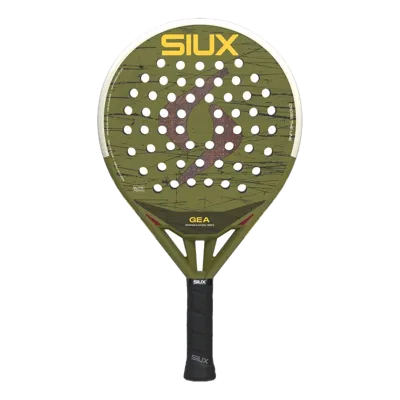
The Siux Gea 2 is a round, low-balance racket weighing 355 to 375 g, listed for advanced players. On paper it reads High for control and Low for power. It suits patient, defensive play. No review exists yet, so this page rests on the specs alone, and balance in mm and head size are not published.
RBy Ruud Caris · facts checked 9 October 2026Choose it if
- you are an advanced player who builds points from the back and wins by placing the ball
- you want a round shape with a low balance and a medium-comfort carbon-soft face
- you liked the idea of the first Gea but want the Advanced tag and a different build
Skip it if
- you need a forgiving racket, because the Head Gravity Pro 2024 lists High comfort and High sweet spot against Medium here
- you are new to padel, because the first Siux Gea is the one tagged Beginner / Intermediate
- you want more power behind your shots, because this racket reads Low power and so does the Siux Trilogy Elite 6
How it plays
Line = the average of all rackets ▲ above ▼ below
On paper this is a controlled, defensive racket, and you will have to bring the pace yourself.
- Control The round shape, low balance and Bio EVA core all push control to High.
- Power A round head and a low balance hold power down to Low, even with a heavy weight class.
- Comfort The carbon-soft Amplitex 3K face and the Bio EVA core help, while the weight pulls it back to Medium.
- Handling The round shape and low balance help, the weight takes some away, so it reads Medium.
- Forgiveness The round shape is the only listed driver, which gives a Medium sweet spot.
Specifications
Not published by the brand: head size, handle
Specs from padelnuestro.com · checked 25 September 2026 · Spotted a wrong spec? Report it →
Every version
Compare all versions →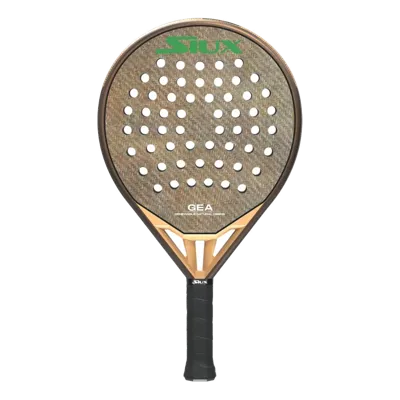
The Siux Gea and the Siux Gea 2 are listed as two rackets in one line. The first Gea shows an EVA core, a flax face, a Beginner / Intermediate tag and 355 to 370 g. The Gea 2 shows a Bio EVA core, an Amplitex 3K face, an Advanced tag and 355 to 375 g. Both are round with a low balance. These are listed differences, not measured ones, and no source explains why they changed. If you are a beginner or intermediate player, look at the first Gea. If you are advanced and want a controlled, defensive racket, the Gea 2 is the one the sheet points to.
Price history
Lowest price per day across the shops in your market. Checked every night.
Put the Siux Gea 2 next to the first Gea and the name suggests a small update. The sheet tells another story: face, core, level and top weight all changed. Treat it as a different racket that shares a line name.
No review of the Gea 2 exists yet. Everything below comes from the listed specs and the meters built on them. The racket has not been played for this page, so read it as a reading of the sheet, not a court report.
Gea to Gea 2: a new face, a new core and a higher level tag
The first Gea is listed with an EVA core, a flax face and a Beginner / Intermediate tag. Its weight runs from 355 to 370 g. The Gea 2 is listed with a Bio EVA core, an Amplitex 3K face and an Advanced tag, at 355 to 375 g. Both are round with a low balance.
So the shape and balance stayed. Almost everything else on the sheet moved. If you own the first Gea and liked it, do not assume the Gea 2 plays the same. If you are a beginner, do not assume the Gea 2 is a friendly step up. The first Gea is on its own page.
Eco-friendly, says the product page: what Bio EVA and Amplitex 3K list
The product page calls the racket eco-friendly and describes the Amplitex 3K face as a hybrid of flax and fiberglass. That is the brand's own claim. The sheet itself lists only the names: Bio EVA for the core, Amplitex 3K for the face, carbon for the frame.
What can you read from that? The core is rated medium and the face is rated carbon-soft, and both raise comfort in the meters. Whether the sustainability story matters is up to you. What the specs do not tell you is how much of the racket is plant-based, or how it ages. Those details are not published here.
Round, low balance, heavy class: control High, power Low, maneuverability Medium
Three things drive control up: the Bio EVA core, the round shape and the low balance. A low balance keeps the weight toward your hand. That makes the racket calm and predictable in defence.
Power goes the other way. The round shape and low balance both lower it. The weight class raises it a little, but not enough to change the label. Expect to generate pace with your swing. Not a racket that does the work for you.
The product page promises outstanding maneuverability. The meters say Medium. The round shape and low balance help. The weight class works against it.
That is not a flaw, only a gap between marketing and sheet. A low-balance racket is easy to hold and steady. Still, 375 g at the top of the range is some mass to move at the net. If quick exchanges up front decide your matches, think about that before you buy.
A defensive racket for an advanced player: who the paper profile fits
One retailer lists a defensive player profile, and the Advanced level tag fits the product page's talk of players who build the point from the back. The meters agree: High control, Low power, Medium comfort.
That suits you if you rely on patience, depth and placement. It suits you less if you want the racket to add speed. You will have to create that pace with technique, because the racket will not add much.
Gea 2 next to the Trilogy Elite 6 and the Head Gravity Pro 2024
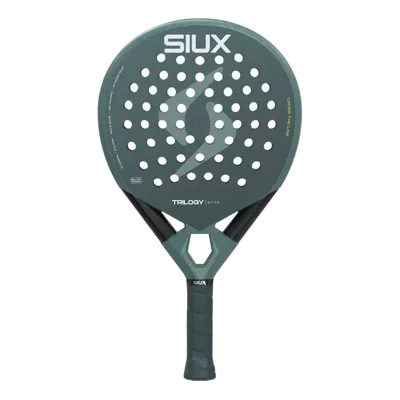
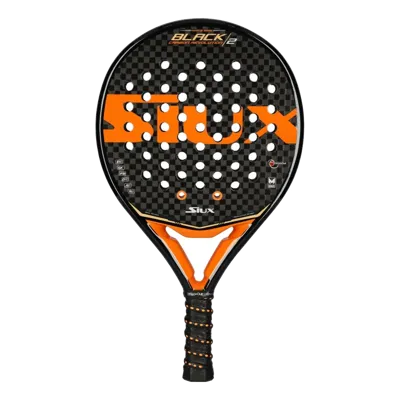
The Siux Trilogy Elite 6 shares the Gea 2's meters on paper: High control, Low power, Medium comfort, Medium maneuverability, Medium sweet spot. It also lists 38 mm thickness and 355 to 375 g, with an EVA core and a 3K carbon face. On the sheet they are close.
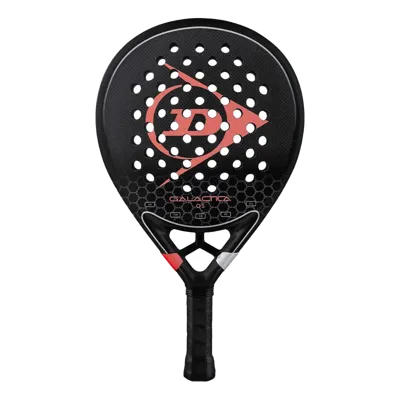
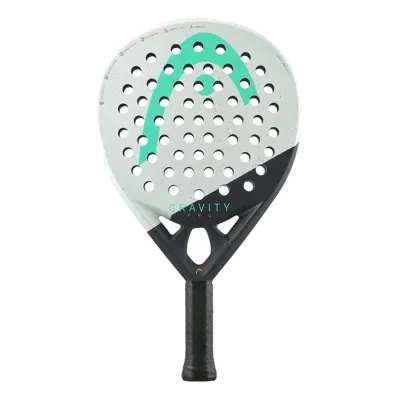
The Head Gravity Pro 2024 is round and low-balance too, at 365 g with a 265 mm balance. Its meters read High comfort and High sweet spot, but Low maneuverability. Choose it if forgiveness matters more than quickness. Choose the Gea 2 if you want the Medium maneuverability reading.
Balance in mm, head size, handle: what the sheet leaves out
The balance is listed only as Low. The balance in mm, the head area, the handle and the weight system are not published. The pro player is not published either. The thickness is listed at 38 mm, from one retailer.
That matters. Two rackets labelled low balance can sit differently in the hand. If you can test one before buying, do it, and look at the balance point in particular.
Similar rackets
Questions before you buy
Is the Siux Gea 2 just an updated Siux Gea?
Not on the sheet. The core, face, level tag and top weight all differ. Only the round shape and low balance are listed the same.
Is the Siux Gea 2 good for beginners?
It is listed as Advanced, with Low power and High control. A beginner is better served by the first Gea, which is tagged Beginner / Intermediate.
How does the Gea 2 compare with the Siux Trilogy Elite 6?
Their meters match on paper: High control, Low power, Medium for the rest. Both list 38 mm and 355 to 375 g. The cores and faces are named differently.
Is the Gea 2 comfortable for the arm?
The comfort meter reads Medium. The Bio EVA core and carbon-soft face help, the weight takes some away. No review confirms how it plays.
Is the Gea 2 worth the money right now?
Today's price is labelled "Fair price" compared with the rackets that play most alike. Which shops deliver, and what shipping costs, depends on your country. The price comparison shows it for yours.
See all pricesWhat is the closest alternative?
The Siux Trilogy Elite 6 plays most alike. On paper the differences are under one point. Today: € 112.90.
Compare side by side →Who should not buy it?
Skip it if you want easy power for smashes (power 3.5/10).
How heavy is it really?
The brand gives 355 to 375 g. That counts as medium. Each racket can differ within that range.
Why a range? →