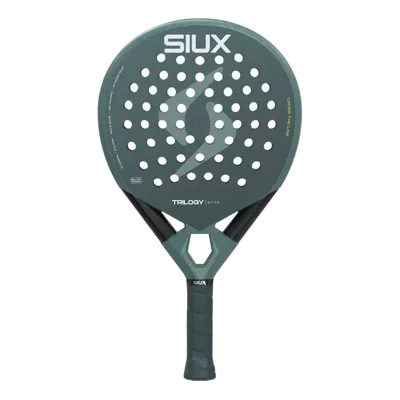
Siux Trilogy Elite 6
7.9padell.io scoreSpecs only- Shape
- Round
- Weight
- 355 to 375 g
- Balance
- Head-light
- Core
- EVA
The Siux Trilogy Elite 6 is a round, low-balance racket for advanced players, listed at 355 to 375 g. On paper it leans hard towards control and gives little free power. No review exists yet and head size is not published, so treat the fit as an informed reading of the specs, not a tested result.
RBy Ruud Caris · facts checked 9 October 2026Choose it if
- you play at an advanced level and win points by placing the ball, not by hitting through it
- you want a round shape and low balance because you value a predictable response over raw pop
- you are coming from a Trilogy Elite 5 and want the same weight range and shape with a different face and core
Skip it if
- you need easy power from a slow swing and would be better served by a head-heavy racket
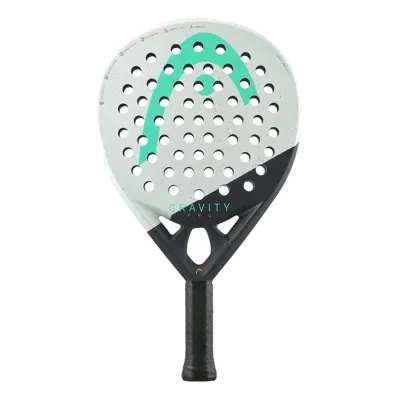
- you want a more forgiving, higher-comfort racket, because the Head Gravity Pro 2024 is rated higher for comfort and sweet spot on paper
- you want tested reviews before buying, since none exist yet for this racket and the Siux Gea 2 is the closest sibling to compare
How it plays
Line = the average of all rackets ▲ above ▼ below
On paper this is a control racket with a calm, round character.
- Control High, because the round shape, the low balance and the EVA core all point towards precision.
- Power Low, since a round head and a low balance give you little help, so you create the pace yourself.
- Comfort Medium, with the carbon face and low balance helping and the heavier build pulling the other way.
- Handling Medium, as the round shape and low balance make it quick to move but the weight keeps it from feeling light.
- Forgiveness Medium, which is what a round shape usually gives you, not a large forgiving zone.
Specifications
Not published by the brand: head size
Specs from padelnuestro.com · checked 25 September 2026 · Spotted a wrong spec? Report it →
Every version
Compare all versions →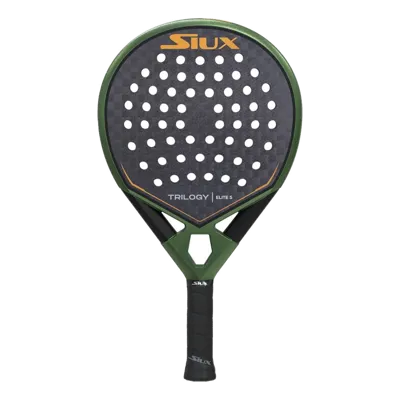
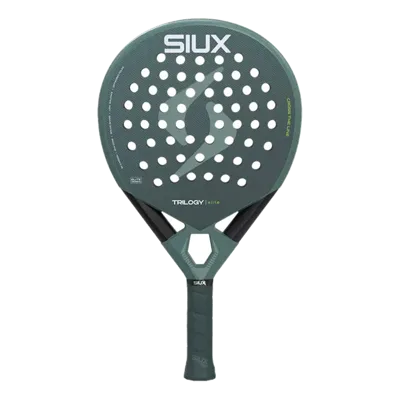
Against the Trilogy Elite 5 from 2025, the Elite 6 keeps the round shape, the low balance and the advanced level. The weight range of 355 to 375 g is the same too. The core changes from Soft EVA to EVA. The face changes from 12K carbon to 3K carbon. The frame changes from 3K carbon and aramid to carbon, and the surface from rough to sandy. Whether that alters the feel is not measured anywhere yet. A separate Trilogy Elite 2026 listing shows a 360 g minimum instead of 355 g. If the name on the shop page is unclear, match the weight range and the 3K face to be sure you have the Elite 6.
Price history
Lowest price per day across the shops in your market. Checked every night.
Put the Trilogy Elite 5 and the Trilogy Elite 6 side by side. The shape, the weight range and the low balance are identical. Yet the face, the core, the frame and the surface all carry a different name. That is the story of this racket. Nothing about its size on paper moved. What it is made of did.
There is also no review of it yet. Everything below comes from the spec sheets, so read it as a careful reading of numbers, not as a court report.
Same weight, same shape, new materials and finish
The Elite 6 is listed at 355 to 375 g, with a round shape and a low balance. The Elite 5 carries exactly the same three labels. The level is also the same: advanced.
What changed is the material list. The core goes from Soft EVA to plain EVA. The face goes from 12K carbon to 3K carbon. The frame goes from 3K carbon and aramid to carbon. The surface goes from rough to sandy.
That matters because the specs do not say whether any of this changes how the racket behaves. A changed label is a changed label. It is not proof of a measured difference. The Elite 5 is the one to check if you want the earlier build.
12K out, 3K in: what a different face means on paper
The K number is a label for the carbon weave of the face. The specs do not say how that changes play, so do not read too much into the drop from 12K to 3K.
The product page claims the 3K face gives a balance between flexibility and resistance. That is marketing language, so take it as the brand's intention. What the sheet does support: the comfort driver for this face is soft carbon, and the meters read medium comfort.
The core sits at medium density according to a retailer. Together with the 3K face, that points to a racket that is more about touch than about punch.
Elite 5, Elite 2026 and Elite 6: one family, two weight ranges
There is a second listing called Trilogy Elite 2026. It also uses an EVA core and a 3K carbon face, a round shape and 38 mm thickness. Its weight range is 360 to 375 g, not 355 to 375 g.
Is that a different racket or a different label for the same one? Nothing published says. The Elite 6 and the Elite 2026 share a year and most specs. Their minimum weights differ, and the Elite 2026 entry shows no balance label. If you are buying, check the exact name on the box and the listed weight in the shop before you order.
355 to 375 g, round, low balance: why control is High and power is Low
A round head puts the sweet spot closer to the centre and keeps the response predictable. A low balance moves weight towards the handle. Both help you place the ball and defend. Both also take away free power.
The weight range is on the heavier side. A heavy racket can add stability on contact, but it asks more from your arm over a long match. The comfort meter reflects that tension: soft face and low balance help, the weight pushes the other way.
Translated for the court: you will probably need to swing through the ball to get depth. Not a racket that does the work for you. The thickness is listed at 38 mm by one shop.
The handle uses a Switch Strap system with an interchangeable strap. The product page presents that as a comfort and hygiene feature. It is a practical detail, not a performance one.
No review, no head size, no balance in millimetres: what the sheet leaves open
Three things are missing. No tested review exists. The head area is not published. The balance in millimetres is not published either, only the label Low.
That last gap matters when you compare. The Head Gravity Pro 2024 is listed with a balance of 265 mm and the same low label, so you can place it more exactly. For the Elite 6 you only know it is low. If you are sensitive to balance, try one in a shop or ask for a demo before you commit.
Trilogy Elite 6, Gea 2 or Head Gravity Pro 2024: picking your round control racket
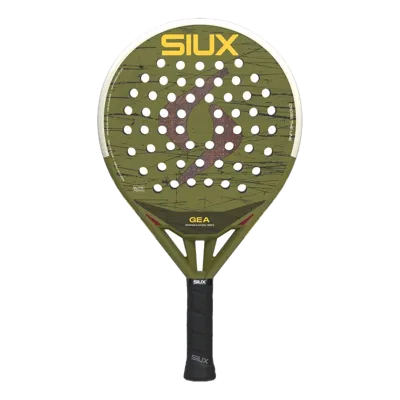
The Siux Gea 2 is the closest match on paper. It has the same shape, balance label, weight range and thickness, with a Bio EVA core and an Amplitex 3K face. Its meters match the Elite 6 on every line.
The Head Gravity Pro 2024 is listed at a fixed 365 g. Its meters read higher for comfort and sweet spot, and lower for maneuverability. If forgiveness matters more to you than quick hands, that is the one to weigh against the Elite 6.
Similar rackets
Questions before you buy
Is the Siux Trilogy Elite 6 the same racket as the Trilogy Elite 2026?
That is not clear. Both list an EVA core, a 3K carbon face, a round shape and 38 mm thickness. The Elite 2026 shows a 360 g minimum weight, while the Elite 6 shows 355 g. Check the exact name and weight range before you buy.
What changed from the Trilogy Elite 5 to the Elite 6?
The core went from Soft EVA to EVA, and the face from 12K to 3K carbon. The frame went from 3K carbon and aramid to carbon, and the surface from rough to sandy. Weight range, shape, balance label and level stayed the same.
Is it a racket for intermediate players?
A retailer lists it as advanced. On paper the round shape and low balance give control but little free power, and the weight is on the heavy side. Intermediate players who like to swing fully may manage, but it is not a beginner racket.
How does it compare with the Siux Gea 2?
On paper they are close. Both are round with a low balance, 355 to 375 g and 38 mm, and their five meters read the same. The difference is in the materials: Bio EVA and an Amplitex 3K face on the Gea 2, EVA and a 3K carbon face here.
Is the Trilogy Elite 6 worth the money right now?
Today's price is labelled "Fair price" compared with the rackets that play most alike. Which shops deliver, and what shipping costs, depends on your country. The price comparison shows it for yours.
See all pricesWhat is the closest alternative?
The Siux Gea 2 plays most alike. On paper the differences are under one point. Today: € 124.90.
Compare side by side →Who should not buy it?
Skip it if you want easy power for smashes (power 3.5/10).
How heavy is it really?
The brand gives 355 to 375 g. That counts as medium. Each racket can differ within that range.
Why a range? →