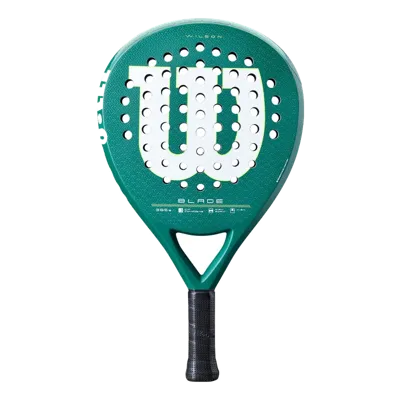
Wilson Blade V4 Padel
7.9padell.io scoreSpecs + 1 review source- Shape
- Teardrop
- Weight
- 365 g
- Balance
- Even
- Core
- Firm EVA
The Wilson Blade V4 Padel is a 365 g teardrop with a Firm EVA core. The face mixes carbon and fiberglass. The one court test rates it 74 out of 100 and praises its net stability, but flags a narrow sweet spot. On paper, comfort and maneuverability read Low. That is the catch.
RBy Ruud Caris · facts checked 6 October 2026Choose it if
- you are an intermediate or advanced player who strikes the ball cleanly and wants crisp feedback
- you spend a lot of time at the net and value stability and quick preparation there
- you like a firm, communicative touch over a soft, forgiving one
Skip it if
- your contact point wanders and you want a racket that forgives off-center hits, so look at the Wilson Blade LS V4
- your arm or elbow complains after long sessions and you want a more comfortable frame, for example the Siux Diablo Elite 6
- you are just starting out and want an easy, comfortable first racket rather than a demanding one
How it plays
Line = the average of all rackets ▲ above ▼ below
Firm EVA, a fixed heavy weight and a teardrop shape give this racket a demanding, control-leaning personality.
- Control Teardrop shape, medium balance and a firm core give clean, predictable ball direction when your contact is on time.
- Power Power is adequate rather than explosive; you generate most of it with your own technique and full swing.
- Comfort The firm core and heavy frame pass a lot of feedback to the arm, so mis-hits are felt rather than absorbed.
- Handling The racket moves steadily, not quickly, so fast defensive reactions ask for early preparation.
- Forgiveness The usable hitting zone is small for a teardrop, and the court test confirms that off-center contact is punished.
Specifications
Not published by the brand: head size, handle
Specs from padelnuestro.com · checked 25 September 2026 · Spotted a wrong spec? Report it →
Video reviews
4 videos from independent channels and shopsEvery version
Compare all versions →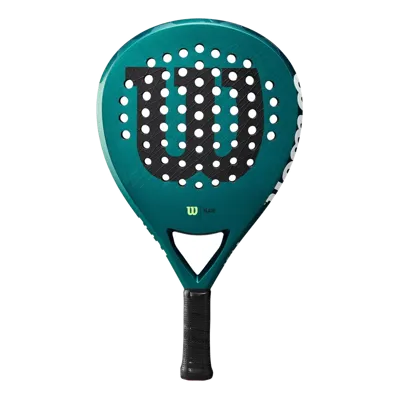
The Blade V4 follows the Blade V3, and the published specs barely moved. Same 365 g weight, same 267 mm balance, same teardrop shape, same 38 mm thickness, same carbon and fiberglass face. The listed core changed from EVA to Firm EVA, which is a changed label rather than a measured difference. One detail disappeared: the V3 was linked to pro player Javier Garrido Gómez, and no pro is published for the V4. If you find the V3, expect a very similar racket on paper. The genuinely different option in the family is the Blade LS V4, with Soft EVA, fiberglass and 355 g.
Price history
Lowest price per day across the shops in your market. Checked every night.
What reviewers say
There is only one independent court test so far. padel.how played the Blade V4 and rated it 74 out of 100. The positives cluster at the net: stability, quick preparation and crisp feedback with controlled acceleration. The negative is the sweet spot, described as narrow and demanding of precise contact. The tester sees it suiting developed intermediate and advanced all-round players with a net orientation. That single verdict lines up with the meters on this page, which read Low for comfort and Low for sweet spot. One review is a thin basis for certainty, so weigh it against your own level and arm health rather than treating it as settled.
The Wilson Blade V4 Padel is a 365 g teardrop with a Firm EVA core. It asks one thing of you: hit the middle of the face. Do that and it rewards you with clean direction and stability at the net. Miss it and the racket tells you. That tension runs through everything else on this page.
Firm EVA at 365 g: the build that sets the terms
The core is Firm EVA, with one shop listing the density as stiff. Firm foam returns the ball quickly and gives a crisp, communicative touch. It does not absorb much. The face mixes carbon and fiberglass. The frame is carbon. The surface is rough, which adds grip on the ball when you want more spin.
The weight is fixed at 365 g, not a range. That is heavy for a racket aimed at a wide audience. The stability is real: the racket does not twist easily when you block a hard shot at the net. The trade-off is fatigue over a long match, especially if your arm does the work your technique should be doing.
Teardrop, 267 mm, rough surface: where the control comes from
Teardrop shapes sit between round and diamond. You get a face that is forgiving enough for defense and direct enough for attack. The balance sits at 267 mm, labelled medium by retailers, so the racket does not pull your wrist forward like a head-heavy diamond does.
The result, on paper, is a control-first all-rounder. Direction is predictable. Your job is to supply the speed. Wilson's product page talks about controlled power and precision, and the specs support the control half of that claim more than the power half. Wilson also claims a head reinforcement against knocks and an optimised hole pattern; those are the brand's words, not measurements.
74 out of 100 from the one court test: net stability praised, sweet spot flagged
One source has actually played this racket. padel.how tested it and rated it 74 out of 100. The praise centres on the net: stability and quick preparation at the net, plus crisp feedback with controlled acceleration.
The criticism is just as specific. The tester calls the hitting zone a narrow, premium sweet spot that requires precise contact. Their description of the target player says a lot. padel.how describes the ideal owner as "A developed intermediate or advanced all-round player who wants clear feedback and accepts the need for active technique." Note the word developed. This is not a racket that grows with you through your first season.
Low comfort, Low sweet spot: what a small hitting zone asks of your technique
The meters on this page read Low for comfort, Low for maneuverability and Low for sweet spot. That is an unusual combination for a teardrop, a shape that is normally more forgiving. Two things drag it down: the firm core that passes vibration to the arm, and the test finding that off-center hits fall away fast.
What can you do about it? Two things. First, give yourself time on court to adjust your timing before judging the racket. Second, if your elbow or shoulder is sensitive, take the warning seriously. A firm 365 g frame is not kind to a sore arm.
Blade LS V4: the softer, lighter sibling in the same year
Wilson also sells the Wilson Blade LS V4 this year. Same teardrop shape, same 38 mm thickness, but a Soft EVA core, a fiberglass face and 355 g. Its meters read High comfort and Medium maneuverability.
Same family name, different temperament. The LS V4 is the version to look at first when your arm or your contact point says no. The V4 reviewed here is the firmer, heavier, more demanding sibling. Not nicer, just stricter.
Blade V4, Blade V3 or Siux Diablo Elite 6: picking your teardrop
The predecessor is the Wilson Blade V3 Padel. The published specs are nearly identical. Same 365 g, same 267 mm balance, same teardrop shape, same carbon and fiberglass face. The listed core changed from EVA to Firm EVA. That is a changed label, not a proven change in play, so treat claims of a big upgrade with care.
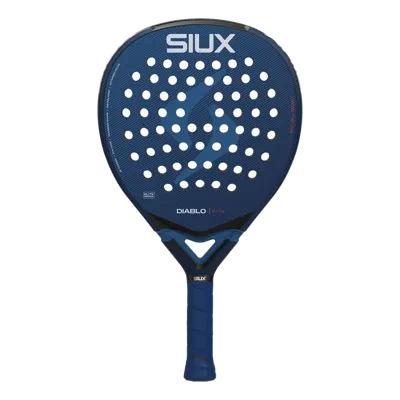
Against rivals, the Siux Diablo Elite 6 is the useful comparison. Also a 2026 teardrop with medium balance, but with 3K carbon on the face and a weight range of 355 to 375 g. Its meters read Medium comfort and Medium sweet spot where the Blade reads Low on both. If you want this style of racket with more forgiveness, that is where the comparison starts.
So who buys the Blade V4? A developed intermediate or advanced player with clean technique who wants feedback more than forgiveness. Everyone else has a kinder option in the same shop window.
Similar rackets
Questions before you buy
Is the Wilson Blade V4 Padel good for beginners?
Not really. Retailers list it for beginner through advanced, but the firm core, 365 g weight and the narrow sweet spot flagged in testing make it demanding. Wilson's own Blade LS V4, with Soft EVA and 355 g, is the friendlier starting point.
What changed from the Blade V3 to the Blade V4?
Very little on paper. Weight, balance, shape, thickness and face material are identical. The listed core went from EVA to Firm EVA, which is a label change rather than a proven performance change.
How does the Blade V4 compare to the Siux Diablo Elite 6?
Both are 2026 teardrops with medium balance. The Diablo Elite 6 uses 3K carbon faces and comes in a 355 to 375 g range. It reads Medium on comfort and sweet spot, where the Blade V4 reads Low on both.
Is the Blade V4 hard on the arm?
The signs point that way. The Firm EVA core and 365 g weight give Low comfort in the profile, and the one court test stresses the need for precise contact. If you have elbow or shoulder issues, look at the softer Blade LS V4 first.
Is the Blade V4 Padel worth the money right now?
Today's price is labelled "Good value" compared with the rackets that play most alike. Which shops deliver, and what shipping costs, depends on your country. The price comparison shows it for yours.
See all pricesWhat is the closest alternative?
The Siux Diablo Elite 6 plays most alike. Differences: comfort +1.0. Today: € 149.95.
Compare side by side →Who should not buy it?
Skip it if your elbow or shoulder complains (comfort 5.0/10), or if you are still learning: it is not very forgiving (5.0/10).
How heavy is it really?
The brand gives 365 g. That counts as medium. Each racket can differ within that range.
Why a range? →