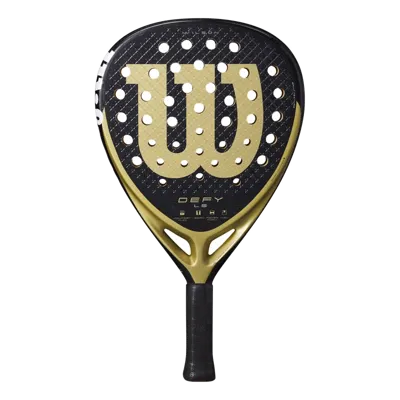
Wilson Defy LS V1 2025
7.0padell.io scoreSpecs + 1 review source- Shape
- Diamond
- Weight
- 350 to 360 g
- Balance
- Head-heavy
- Core
- Foam
The Wilson Defy LS V1 2025 is a diamond-shaped racket with a foam core and a fiberglass face, listed at 350 to 360 g. The product page sells power. The one court test found easy depth and quick head acceleration, but a lower power ceiling. Choose it for quick, accessible attack, not for raw hitting force.
RBy Ruud Caris · facts checked 5 November 2026Choose it if
- you want a diamond shape listed at 350 to 360 g and like quick head acceleration from compact swings, though the maneuverability meter is Low
- you rely on spin and quick compact swings more than on full-power smashes
- you want a soft foam and fiberglass build that the meters rate high for comfort
Skip it if
- you want more power than this one gives, in which case look at the Wilson Defy V1 2025, which has a 3K carbon face, or the Head Extreme Team 2025
- you need a forgiving sweet spot, because the diamond shape keeps that meter low
- you want a carbon-and-fiberglass face and a fixed 355 g, as the Wilson Defy LS V1 SE lists, though no test of it is available
How it plays
Line = the average of all rackets ▲ above ▼ below
On paper this is a soft, head-heavy diamond that trades some power for speed and comfort.
- Control Low, because the diamond shape, high balance and fiberglass face work against precision, and the one review rated control as neutral.
- Power Medium, since the soft foam and fiberglass hold it back while the shape and balance push it up, and the reviewer flagged a lower power ceiling.
- Comfort High, helped by the foam core and the fiberglass face, and the reviewer rated comfort as positive.
- Handling Low on the meter because of the diamond shape and high balance, yet the reviewer praised quick head acceleration.
- Forgiveness Low on the meter because of the diamond shape, although the reviewer rated the sweet spot as positive.
Specifications
Not published by the brand: thickness, head size, handle, frame
Specs from padelnuestro.com · checked 30 September 2026 · Spotted a wrong spec? Report it →
Every version
Compare all versions →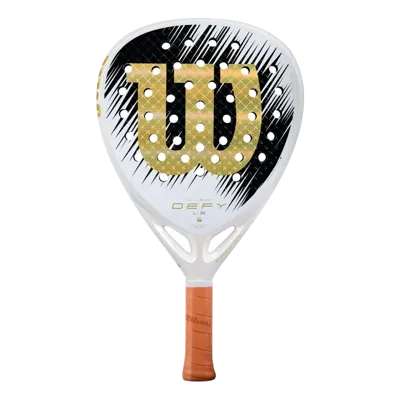
The Wilson Defy LS V1 SE (2026) is the successor, and the listings show real changes. The face moves from Fiberglass, Fiberflex to Carbon and fiberglass (ComfortFlex). The weight moves from a 350 to 360 g range to a fixed 355 g. Core, shape, level and the high balance label are the same. The balance in mm and the thickness are not published for this 2025 version, so those cannot be compared. Take the 2025 if you want the all-fiberglass face. Look at the SE if you want carbon in the face and a fixed weight.
Price history
Lowest price per day across the shops in your market. Checked every night.
What reviewers say
There is one review, from padel.how, which played the racket. It gives 77 out of 100. It likes the easy depth, the quick head acceleration from compact swings and the spin from the flexible face. It rates grip, comfort and sweet spot as positive, control as neutral and power as negative. It names a lower power ceiling and less stability on fast, aggressive shots. It suggests intermediate players who want accessible attack. The retailer lists the level as Advanced, so the sources differ there. The product page also leans on power, which the review does not support. With a single source, treat this as one view, not a consensus.
On paper, the Defy LS is lighter than the two same-year Wilson siblings listed here, the Defy V1 2025 and the Defy Pro V1 2025. padel.how found easy depth and quick head acceleration. That is a different story from the one the product page tells.
Marketed as power, tested as easy: what padel.how found
The product page calls it the ultimate racket for power, aerodynamics and spin in a lightweight frame. Treat that as a claim. The tested review gives a more modest picture. It found easy depth and quick head acceleration from compact swings. It also found strong spin from a responsive, flexible face.
The downside is on the other end. The reviewer noted a lower power ceiling and less stability on fast, aggressive shots. So this is not a racket you swing at full speed and expect to hold steady. If you play with short, quick strokes, that is less of a problem. If your game is built on big smashes, it is a real limit.
One more point. The retailer lists the level as Advanced. The reviewer points to intermediate players who want accessible attack without a demanding swing weight. Those two sources disagree a little, and both can be right. It is a diamond, but a soft one.
Fiberglass here, carbon and fiberglass on the SE: what the 2026 successor changed
The Wilson Defy LS V1 SE is the 2026 successor. Two things differ in the listings. The face goes from Fiberglass, Fiberflex to Carbon and fiberglass (ComfortFlex). The weight goes from a range of 350 to 360 g to a fixed 355 g.
Core, shape, level and the high balance label stay the same. The balance in mm and the thickness are not published for this 2025 racket, so you cannot compare them directly. The SE lists 265 mm and 38 mm.
What does that mean for you? There is no test of the SE here, so how the new face plays is not known. The practical point is simpler. If you want a face with carbon, look at the SE. If you want the all-fiberglass version, this is the one.
Foam core, fiberglass face: why comfort is the only High meter
The core is foam and the face is fiberglass with Fiberflex. The meters treat both as soft. That is why the comfort meter reads High, and the one review backs it with a positive comfort rating. The high balance pulls comfort down a little, but not enough to change the result.
The same softness holds power at Medium. Soft foam and a fiberglass face return less energy than a stiffer build. The diamond shape and the high balance add some back.
Control reads Low. That sounds harsh, but the shape and balance drive it, and the fiberglass face adds to it. The reviewer rated control as neutral. With the meter Low, the specs suggest precision will take some work.
Below the Defy V1 and the Pro: 350 to 360 g against 365 and 370 g
Of the Wilson rackets listed here, this is the lightest, although the SE is also listed at 355 g. The Wilson Defy V1 2025 is listed at 365 g with a 3K carbon face. The Defy Pro V1 2025 is listed at 370 g with 15K carbon. Both use Power Foam, and both show High power on the meters.
The LS gives up that power. In return you get a lighter racket and a higher comfort reading. The Pro shows Low comfort. The Defy V1 shows Medium. If your arm is a concern, that gap matters.
The weight is listed as a range, 350 to 360 g. That is a real spread. Check the weight of the one you buy if you are sensitive to it.
Next to the Head Coello Team 2026 and the Extreme Team 2025: where power rises
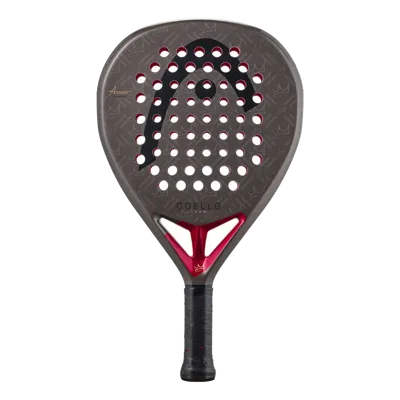
The Head Coello Team 2026 is also a high-balance diamond with a foam core and a fiberglass face. It lists 360 g, 270 mm balance and 38 mm thickness. Its meters match this racket: Low control, Medium power, High comfort. It is the closest rival on paper.
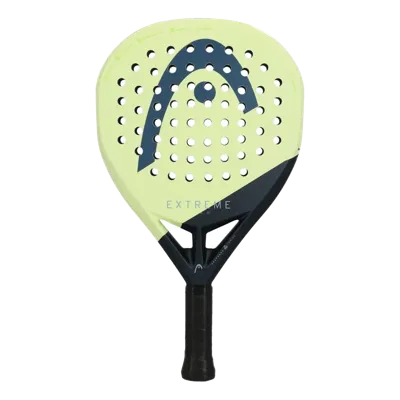
The Head Extreme Team 2025 is the step up in power. It has a Power Foam core, a medium-high balance and a fiberglass face. Its power meter reads High against Medium here, with comfort also High. If you like this racket's softness but want more punch, that is the one to compare.
Specs this racket's listings do not publish
Several specs are missing for this racket. The balance in mm is not published, only the label High. Head size, thickness, frame and handle are not published either. The weight system is not published.
That limits what the specs can tell you. You cannot judge the swing feel from the balance point or the stiffness from the thickness. Use the diamond shape, the high balance label and the weight range as your guide, and rely on the one court test for the rest.
Similar rackets
Questions before you buy
Is the Wilson Defy LS V1 2025 a power racket?
The product page presents it that way, but the tested review found a lower power ceiling. The power meter reads Medium. It is better described as fast and easy to swing.
What changed in the Wilson Defy LS V1 SE?
The face changed from Fiberglass, Fiberflex to Carbon and fiberglass (ComfortFlex). The weight changed from 350 to 360 g to a fixed 355 g. Core, shape and balance label are the same.
Is it suitable for intermediate players?
The retailer lists it as Advanced. The one reviewer recommends it for intermediate players who want accessible attack. It is a diamond, so expect less forgiveness than a round or teardrop racket.
Is it comfortable for the arm?
On paper, yes. The foam core and fiberglass face push the comfort meter to High, and the reviewer rated comfort as positive. That is a higher comfort meter than the carbon Defy V1 (Medium) and the Defy Pro V1 (Low).
Is the Defy LS V1 2025 worth the money right now?
Today's price is labelled "Pricey today" compared with the rackets that play most alike. Which shops deliver, and what shipping costs, depends on your country. The price comparison shows it for yours.
See all pricesWhat is the closest alternative?
The Head Coello Team 2026 plays most alike. Differences: control +2.0, handling +2.0. Today: € 142.90.
Compare side by side →Who should not buy it?
Skip it if you rely on placement and long rallies (control 2.0/10), or if you are still learning: it is not very forgiving (4.5/10).
How heavy is it really?
The brand gives 350 to 360 g. That counts as medium. Each racket can differ within that range.
Why a range? →