adidas Adipower Multiweight CTRL 3.4
7.6padell.io scoreSpecs only- Shape
- Round
- Weight
- 360 to 375 g
- Balance
- Not published
- Core
- EVA High Memory
The Adipower Multiweight CTRL 3.4 is a round, carbon-faced control racket listed at 360 to 375 g with a 265 mm balance. On paper it is heavy and firm, with control as its strength. No reviews exist yet and several specs are not published. Expect an arm-demanding racket, whatever the Intermediate label says.
RBy Ruud Caris · facts checked 8 November 2026Choose it if
- patient, placed shots matter more to you than quick wrist-flick power
- your arm is strong enough to swing 360 to 375 g and you want that mass behind your shots
- you know the 3.3 and want a listed heavier model with the same core and face
Skip it if
- your elbow or shoulder complains easily, since comfort is low here and the adidas Cross IT Ctrl 2026 is also rated Low on comfort
- quick hands at the net matter most, because maneuverability is low and the 3.3 at 345 to 360 g is lighter
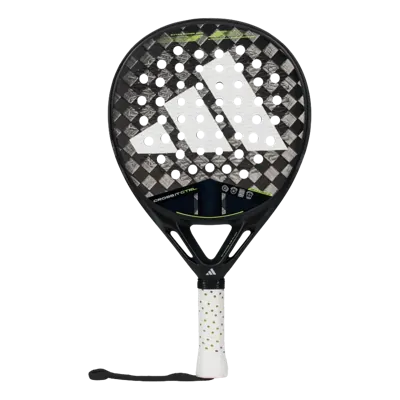
- you need a large, forgiving sweet spot, in which case the adidas Cross IT CTRL 3.4 is rated High on that meter
How it plays
Line = the average of all rackets ▲ above ▼ below
On paper this is a control racket that asks for strength and a calm swing.
- Control High, because the round shape, stiff carbon face, high-memory EVA core and balance point all lean that way.
- Power Medium, since the carbon face and heavy build add pace but the round shape holds it back.
- Comfort Low, as the stiff face and the weight both reduce how much vibration is absorbed.
- Handling Low, because the heavy build outweighs what the round shape gives back.
- Forgiveness Medium, with the round shape as the only listed factor in its favour.
Specifications
Not published by the brand: thickness, head size, handle, frame
No longer on the brand's site
Specs from the brand's own site · checked 30 September 2026 · Spotted a wrong spec? Report it →
Video reviews
1 video from an independent channel or shopEvery version
Compare all versions →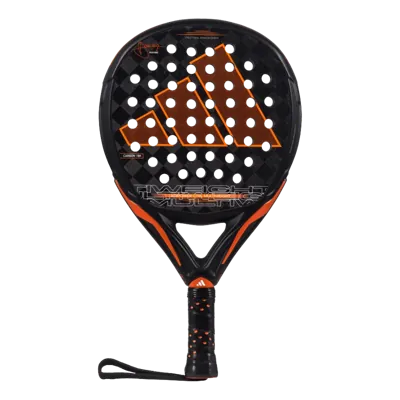
The line has two entries here. The Adipower Multiweight Ctrl 3.3 (2024) is listed at 345 to 360 g, 255 mm, an even balance label, 38 mm thick and Professional level. The 3.4 is listed at 360 to 375 g, 265 mm and Intermediate, with no year, no balance label and no thickness. Core, face, round shape and Álex Ruiz are the same on both. No change between them is confirmed, so a changed label is only a changed label. If you want the lighter option, look at the 3.3. If you want a listed higher balance in mm and can handle the extra weight, look at the 3.4.
Prices followed since 23 Sept. The chart appears after a week of prices.
Set the 3.4 beside the 3.3 and the sheets agree on core, face and round shape. They differ in weight, balance in mm and level, and several 3.4 values are not published at all. No review has tested this racket yet, so everything below comes from the specs and the meters built on them.
What the 3.4 sheet says against the 3.3
The 3.3 (2024) is listed at 345 to 360 g with a 255 mm balance and an even balance label. The 3.4 is listed at 360 to 375 g with a 265 mm balance. Its balance label is not published. Both use EVA High Memory and a Carbon Aluminized 18K face.
That looks like a step up in mass and a higher balance figure. But be careful. Nothing here marks a proven change between the two, and the 3.4 carries no year. These are listed values, not measured differences. For a look at the older model, see the 3.3 page.
Intermediate or Professional: one line, two labels
The 3.4 is labelled Intermediate. The 3.3 is labelled Professional. Both carry Álex Ruiz as the listed pro player. So the same line, the same player and a very similar build come with two different level labels.
Do not read that as a softer racket. A level tag is a label, not a measurement. The specs say heavy, firm and round. That is a lot of racket for many intermediate players. If you are unsure, trust the weight, not the label.
Round, 265 mm and 360 to 375 g: control up, handling down
Control is High. Four things push it up: the round shape, the stiff carbon face, the EVA High Memory core and the 265 mm balance. That suits a controlled game, built on placement rather than force.
Maneuverability is Low. The round shape and the balance help, but the weight pulls it down. Quick reactions will cost you more effort. Not a racket for flicking the ball back. It is one for setting up your position early.
The balance label is not published for the 3.4. The 3.3 lists 255 mm with an even label, so do not guess which label belongs to 265 mm. Read the millimetre figure and judge from there.
Carbon 18K over high-memory EVA: what to expect in your arm
Comfort is Low. The EVA core raises it a little, but the carbon-stiff face and the weight lower it. A stiff face tends to send more of the impact back to your hand. A heavy racket adds load to the shoulder over a long match.
The weight range matters too. 360 g and 375 g are not the same racket in the hand. A Weight & Balance System is listed, but the specs do not say how much it changes. Check what you receive before you commit, and build up your playing time in short sessions. If your arm is already sensitive, this is a risk you can see coming.
Power is Medium. The carbon face adds punch and the weight adds momentum, but the round shape keeps it moderate. Think steady pace.
Cross IT Ctrl models: where the meters differ
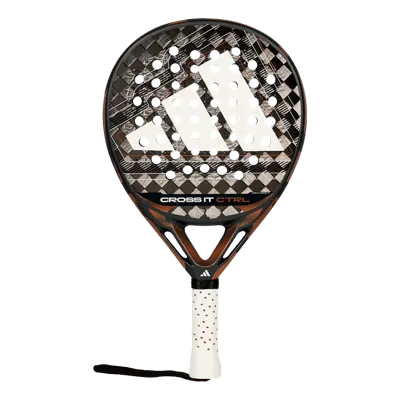
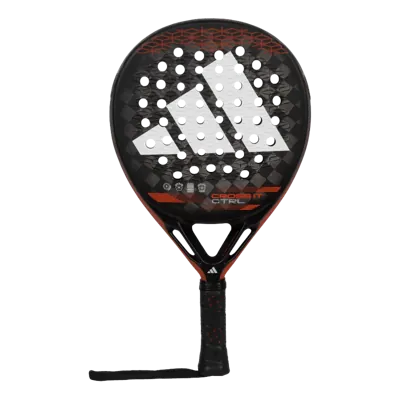
The adidas Cross IT Ctrl 2026 shares the round shape, the EVA High Memory core and the 360 to 375 g range. Its face is Carbon Aluminized 15K, not 18K, and it is listed as Professional level. Its meters show control High, power Low and sweet spot High. Comfort and maneuverability are Low, the same as here. So you trade a little power for a bigger sweet spot. The Cross IT CTRL 3.4 from 2025 shows the same meters.
The older Cross IT Ctrl from 2024 matches this racket meter for meter: control High, power Medium, sweet spot Medium. It also lists 265 mm. But it has the 15K face and a Professional label, so the match is in the meters, not in the build.
Weight & Balance System and Álex Ruiz: what is listed, and what nobody has tested
The brand lists a Weight & Balance System and Álex Ruiz as the pro player. That is all the sheet says. How the system works, how much it changes the racket and whether Ruiz plays this exact version are not published.
Also missing: frame material, head size, thickness and handle. Thickness matters, because the 3.3 lists 38 mm and the 3.4 gives nothing. Until a reviewer plays it, treat this racket as a heavy, round control model on paper, with plenty of open questions. If you can, hold one before you buy and see whether 360 g or more suits your arm.
Similar rackets
All rackets that play like the adidas Adipower Multiweight CTRL 3.4 →
Questions before you buy
Is the 3.4 really easier than the 3.3 because it says Intermediate?
Not necessarily. The 3.3 is labelled Professional and the 3.4 Intermediate, but the 3.4 is listed as heavier, at 360 to 375 g against 345 to 360 g. A label is not a measurement of difficulty.
Is this racket hard on the arm?
On paper, yes. The meters put comfort at Low because of the stiff carbon face and the weight. Build up your sessions gradually and pay attention to your elbow and shoulder.
How does it differ from the Cross IT Ctrl 2026?
The Cross IT Ctrl 2026 has a 15K carbon face and is rated Low on power and High on sweet spot. This racket has an 18K face with Medium power and Medium sweet spot.
Has anyone reviewed it?
Not yet. Frame, head size, thickness and handle are not published either, so the page relies on the specs alone.
What is the closest alternative?
The adidas Cross IT Ctrl 2026 plays most alike. Differences: comfort +1.0. Today: € 189.90.
Compare side by side →Who should not buy it?
Skip it if you want easy power for smashes (power 5.5/10), or if your elbow or shoulder complains (comfort 4.0/10).
How heavy is it really?
The brand gives 360 to 375 g. That counts as medium. Each racket can differ within that range.
Why a range? →