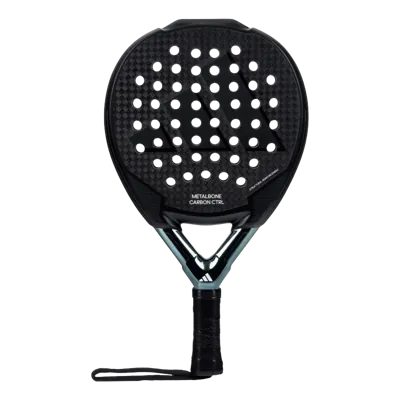
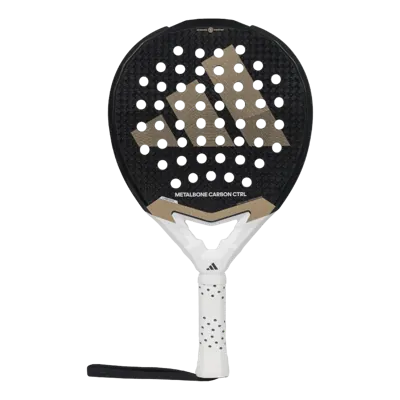
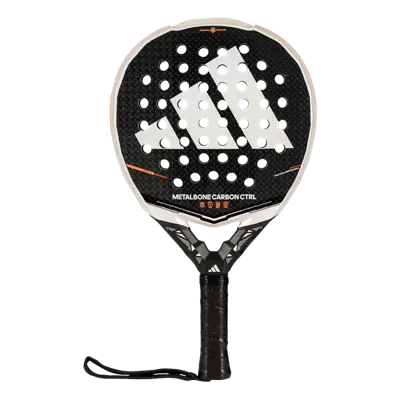
Three names, nearly one spec sheet. The Metalbone Carbon Ctrl 3.3, the 3.4 and the 2026 all list a 6K carbon face, a round head, an even balance and 360 to 375 g. Only the 2026 adds a balance figure. So what do the names actually sort?
3.3, 3.4 or 2026: three names, one published recipe
Not three rackets, but three labels on the same published recipe. Compared with the 3.4, nothing differs: the same core, face, shape, 38 mm thickness, 485 cm2 head and weight range. The 2026 also matches, and only adds a balance figure of 260 mm that the other two do not publish. That is a gap in the listing, not a measured change.
Three video reviews, three readings of the power
The video reviewers describe different things. Dani 13 played it and called it technical and demanding, with strong control but vibration on off-centre hits and effort needed to get depth. Virgin Active Padel Club ZA also played it and found a soft, responsive sweet spot with real power from it. Padel Profi Deutschland did not test it on court. Its review talks about a diamond shape and maximum power, which does not match this round racket, so treat it with caution.
Round head, even balance, 360 to 375 g: why handling reads Low
A round head and an even balance normally make a racket easy to move. Weight cancels that out. At 360 to 375 g this racket is at the heavy end, so it is slower to swing. What can you do? Keep your swings compact and your preparation early. The profile drivers show that the heavy weight raises the power rating slightly, which is why the power meter does not fall even lower.
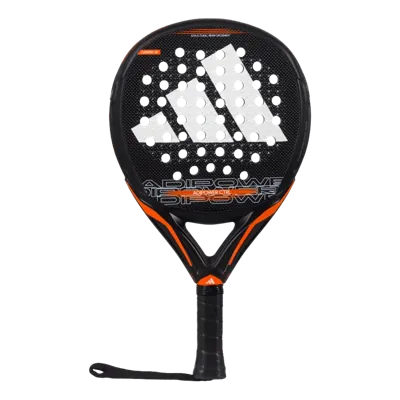
6K carbon on the Metalbone, 3K on the Adipower: the twin that differs by one face
The closest relative is the adidas Adipower Ctrl 3.3. It lists the same round shape, even balance, soft core, 38 mm thickness and weight range. The one published difference is the face: 3K carbon there, 6K carbon here. Its meters read the same as this racket. The two share the same meters and differ only in face.
Octagonal Structure and Spin Blade, says adidas: what the page claims
The brand lists an Octagonal Structure frame and a Spin Blade Decal surface. The product page text claims the tubular octagonal core gives great consistency and very high resistance to torsion. It also claims the hole pattern creates more friction for spin. Those are marketing claims, not measurements. Part of that text appears to describe other adidas rackets, so read it with care. The Padel Profi Deutschland video, which did not test it on court, also mentions extra spin from the rough surface, but it describes a diamond shape too, which does not match this racket.
Not published: balance in mm, handle, weight system
Adidas gives the balance only as a label, Even, with no millimetre figure for the 3.3. The handle details and any weight system are not published either. So you cannot judge exactly how even the balance is, or how the grip is built. The brand lists Pol Hernandez as the pro player and gives the level as Professional. Dani 13 put it at intermediate to advanced. If you are between levels, the weight is the first thing to check against your own arm.