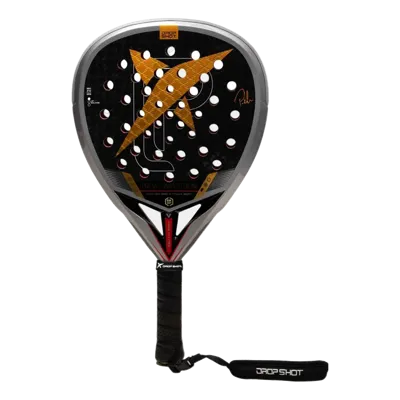
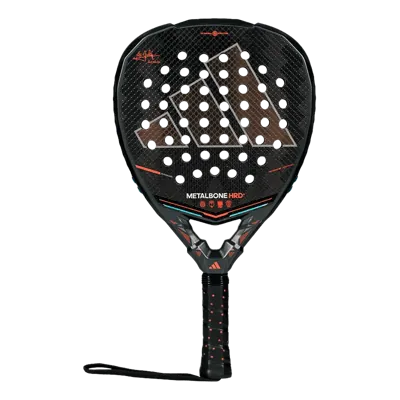
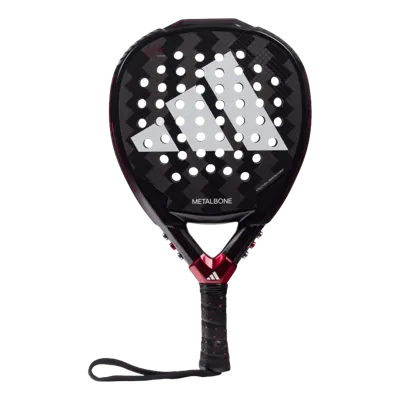
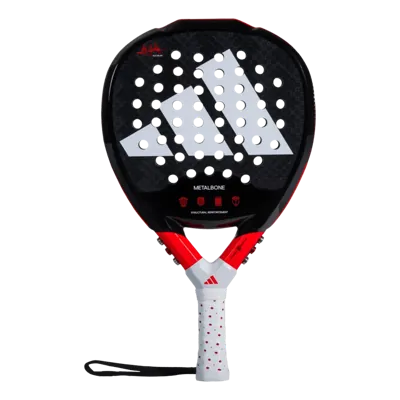
adidas Metalbone 3.3
2024

adidas Metalbone 3.3

8.8padell.io scoreSpecs + 1 review source
Shape
Diamond
Weight
345 to 360 g
Balance
Head-heavy
Core
EVA Soft Performance
Does it suit your game?Seven quick questions, with this racket as the starting point.
Question 1 of 7

What is your level?

The short answer

The Metalbone 3.3 is a head-heavy diamond racket that adidas lists at Professional level. It weighs 345 to 360 g and is 38 mm thick. Reviewers who played it liked the ball output and the large sweet spot. The catch is that it asks for good technique, and the balance in millimetres is not published.

RBy · facts checked 18 October 2026

Choose it if

  • you already hit hard from the back and want a racket that adds speed to the smash and the volley
  • you like to adjust your gear and will test the removable weights in the neck
  • you move up from an intermediate racket and have the technique to control a head-heavy diamond

Skip it if

  • you want control first, because the adidas Metalbone Ctrl 3.3 is round and even-balanced, with High control and sweet spot meters
  • you have a sensitive arm, because a stiff carbon face on a head-heavy frame is not gentle
  • you are new to padel and still learning where the ball should go, since adidas labels this a Professional racket

How it plays

8.8
padell.io score 8.8Play 9.0 (60%) and reviews 8.4 (40%). Based on 1 review source. How the score works
Control4.5below average▼
Power10.0above average▲
Comfort6.0around average●
Handling3.0below average▼
Forgiveness4.5below average▼

Line = the average of all rackets ▲ above ▼ below

On paper this is an attacking racket, and reviewers describe a soft feel and a generous sweet spot.

  • Control The diamond shape and head-heavy balance work against control, so you place the ball with technique, not with help from the frame.
  • Power A stiff carbon face and a diamond head raise power.
  • Comfort A soft core helps, but the stiff face and the head-heavy balance keep comfort at a middle level.
  • Handling Head-heavy weight in a diamond head makes quick hands at the net harder.
  • Forgiveness The meters read low because of the diamond shape, yet reviewers who played it call the sweet spot generous.

Specifications

Launched2024Newer version from 2025
Weight345 to 360 gLight: quick in the hand, less mass behind the ball
BalanceHead-heavy according to the brandHead-heavy: more power overhead, slower to move
FaceCarbon Aluminized 2 to 1 fiberStiff: precise and powerful at speed, less damping
CoreEVA Soft PerformanceSoft: comfort and ball exit, less control at high speed
Thickness38 mmThe maximum the rules allow
Head size485 cm²
SurfaceSpin Blade DecalRough: helps with spin
FrameCarbon

Not published by the brand: handle

No longer on the brand's site

Specs from the brand's own site · checked 25 September 2026 · Spotted a wrong spec? Report it →

Video reviews

7 videos from independent channels and shops

What 7 video reviewers say

6 played it on court, 1 discusses the specs

Often mentioned
Plus points
  • Adjustable weight system5 of 7
  • Good spin3 of 7
  • Good in defence2 of 7
  • Large sweet spot2 of 7
Minus points
  • Little feel3 of 7
  • Demanding, needs good technique2 of 7
  • Lacks power2 of 7
  • Expensive2 of 7
Summaries by padell.io, based on what each reviewer says in the video. Tap a time to watch that moment.
Tested on court

The reviewer finds the adidas Metalbone 3.3 to be a very soft racket that offers good ball output and a large sweet spot. It is a highly customizable racket that suits players who value control and versatility over raw power.

Tested on court

The reviewer finds the 2024 adidas Metalbone 3.3 to be a powerful and responsive racket that offers good control. It is suitable for high intermediate to advanced players who want a balance of power and touch.

Tested on court

The reviewer finds the adidas Metalbone 3.3 to be a high performing racket that excels in volleys and smashes. It offers good power and control, but requires a certain skill level to handle effectively.

Tested on court

The reviewer finds this racket to be a well-balanced and versatile option that is easy to play with for intermediate players. It offers good spin and a comfortable feel, though it lacks the power for aggressive smashers.

Tested on court

The reviewer finds this racket to be a highly versatile option that performs well in all areas of the game. It is particularly well suited for intermediate to advanced players who do not require extreme power but value control and manoeuvrability.

Discusses the specs

The adidas Metalbone 3.3 is an attacking racket that features a weight adjustment system and a rough surface for spin. It offers a balance of power and comfort due to the softer foam used in the construction. This racket is suitable for attacking players who want power without using the stiffest racket available.

The line shows two changes around this racket, and both are changed labels. From the 3.2 to the 3.3 the face went from Aluminized Carbon to Carbon Aluminized 2 to 1 fiber. The surface went from Spin Blade Mold to Spin Blade Decal. From the 3.3 to the 3.4 Ale Galán the face became Carbon Aluminized 16K, and the other listed specs stayed the same. Weight, thickness, shape, core and balance label are identical across all three. No source in the data measures what the new faces do on court. One video reviewer found the 3.3 slightly bouncier than its predecessor. If you want the newest face, look at the 3.4. If you want the racket these reviews describe, this is the 3.3.

Price history

23 Sept€ 159.95 · € 209.9510 Nov

Lowest price per day across the shops in your market. Checked every night.

What reviewers say

padel.fyi played the 3.3, rated it 8 out of 10 and praised the ball output, the sweet spot and defensive baseline play. Its one complaint was the wrist strap position, which it says bothers some players. Three video reviewers, the4Set, Fabio Ferro and Virgin Active Padel Club ZA, call the weight and balance system useful or adjustable. The4Set and Virgin Active call the sweet spot large, while Padel Chiquito finds it demanding for less experienced players. They split on power. Fabio Ferro says it lacks power for aggressive smashes, while Virgin Active and Padel Chiquito call it powerful. They also split on difficulty: Fabio Ferro calls it very easy to play, while Padel Chiquito and Virgin Active say it needs skill or good technique. The4Set found the rubber too soft.

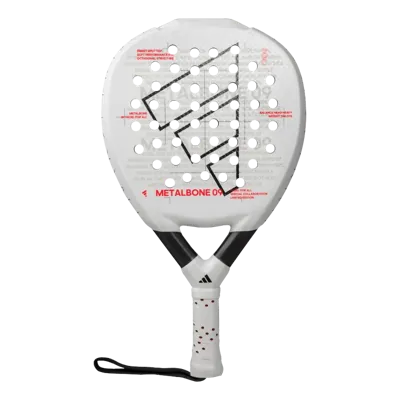
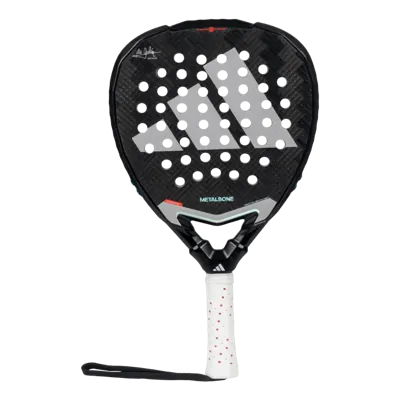
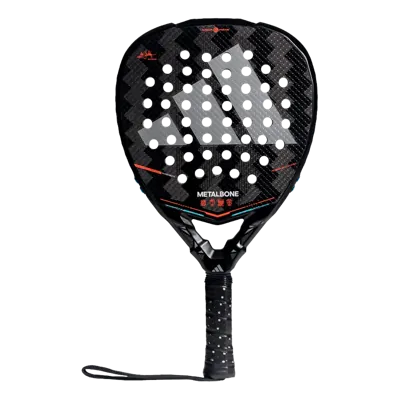
Metalbone 3.2, 3.3 and 3.4 list the same weight range, 345 to 360 g. They share a 38 mm thickness, a diamond shape and a head-heavy balance. Yet the face changes at every step. This 3.3 sits in the middle. Knowing what changed around it tells you a lot about what you are buying.

Three Metalbones, three faces: where the 3.3 sits in the chain

The Metalbone 3.2 lists an Aluminized Carbon face and a Spin Blade Mold surface. The 3.3 lists a Carbon Aluminized 2 to 1 fiber face and a Spin Blade Decal surface. Then the 3.4 Ale Galán moves to Carbon Aluminized 16K.

That is two face changes in a row, plus a new surface name on the 3.3. The other listed specs match: 345 to 360 g, 38 mm, a diamond shape, a head-heavy balance and an EVA Soft Performance core. These are changed labels, not measured changes. No source in the data measures how the faces differ on court.

One video reviewer called the 3.3 slightly bouncier than the previous model. That is one opinion, not a measurement. Read it as a hint and nothing more.

The Metalbone familySame year, from most power (left) to most control (right)

A large sweet spot in the reviews, a Low sweet spot in the meters

This is the odd part. padel.fyi played the racket, gave it 8 out of 10 and described a generous sweet spot. Two video reviewers who also played it, the4Set and Virgin Active Padel Club ZA, call it large too.

The meter on this page reads Low. It is built from the specs, and the diamond shape pulls it down. The soft core pulls the other way, and the reviews count as positive too. So which do you trust?

Both, with care. The meter describes the shape. The reviewers describe how the racket plays. One video reviewer, Padel Chiquito, warned that the sweet spot is demanding for less experienced players. Expect forgiveness on clean contact and less help when you mishit.

Six screws and a Weight & Balance System: what the page claims and what stays unpublished

The product page says the system uses removable weights in the neck. It claims you can change the balance and the total weight, and lean towards attack or control. That is the brand's claim. Reviewers call the system useful or highly adjustable. One also said that adjusting the screws can be tedious.

Here is what is missing. The balance in millimetres is not published. Only the label "Head Heavy" is. You also do not know how far the weights move the racket from that label. The weight range is 345 to 360 g as listed. Treat the adjustability as a way to tune your racket, not as a promise that it turns into a control racket.

A retailer lists Ale Galán as the pro player. The brand lists a 485 cm2 head and a length of 455 mm.

Soft EVA under a stiff carbon face: why power is High and control Low

The core is EVA Soft Performance, and a retailer describes it as lower density. The face is carbon-stiff. A soft core under a stiff face usually gives easy ball output and some damping. Ball output comes up in the reviews, from padel.fyi and from video reviewers.

The brand lists a carbon frame too, and the balance sits towards the head. On paper that adds momentum on smashes. It also makes the racket harder to swing in a hurry. The reviewers disagree on power. Fabio Ferro says it lacks power for aggressive smashes. Padel Chiquito says it is strong on smashes, and Virgin Active Padel Club ZA says power is easy to reach.

In practice: power is there, control comes from you. Comfort sits in the middle, because the stiff face and the head-heavy balance work against the soft core.

Metalbone Ctrl 3.3 or the Arrow Hit Light: where the handling changes

If the 3.3 sounds like too much racket, look at the Metalbone Ctrl 3.3. It is round and even-balanced, and its control and sweet spot meters read High. Power drops to Low. It is the opposite trade.

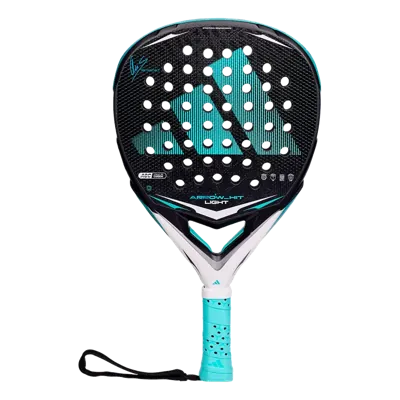
The adidas Arrow Hit Light Ari Sánchez lists the same weight range, shape, balance and core as this racket, with an ASC face. On paper it is a close relative, not a calmer one. Its meters match the 3.3.

So the choice is simple. Want power and a bigger hitting reward: stay with the 3.3. Want to hit with more safety: go round and even.
Written byPadel player and founder of padell.io

Bought, played and sold more rackets than was good for him, and built padell.io to bring it all together.

About padell.io →

Was this page useful?

Similar rackets

Often compared: Metalbone 3.3 vs adidas Metalbone 3.4 - Ale Galán

All rackets that play like the adidas Metalbone 3.3 →

Questions before you buy

Is the Metalbone 3.3 a good racket for beginners?

Probably not. adidas lists it at Professional level, and a video reviewer says it needs a certain skill level. The diamond shape and head-heavy balance reward good technique.

What changed between the Metalbone 3.2 and 3.3?

The listings show a different face name, Carbon Aluminized 2 to 1 fiber instead of Aluminized Carbon, and Spin Blade Decal instead of Spin Blade Mold. Weight, shape, core and thickness are the same. One reviewer found the 3.3 slightly bouncier.

Is the balance of the 3.3 adjustable?

The brand says yes, through removable weights in the neck. Reviewers call the system useful, but one finds the screws tedious to adjust. The balance in millimetres is not published.

Is the 3.3 hard on the arm?

The soft core helps, but the stiff carbon face and head-heavy balance keep comfort at a medium level. If your arm is sensitive, the Metalbone Carbon Ctrl 3.3 has a High comfort meter, a round shape and an even balance.

What is the closest alternative?

The adidas Metalbone Pro Edt 2026 Ale Galán plays most alike. Differences: power -1.0. Today: € 235.99.

Compare side by side →
Who should not buy it?

Skip it if you rely on placement and long rallies (control 4.5/10), or if you are still learning: it is not very forgiving (4.5/10).

How heavy is it really?

The brand gives 345 to 360 g. That counts as light. Each racket can differ within that range.

Why a range? →