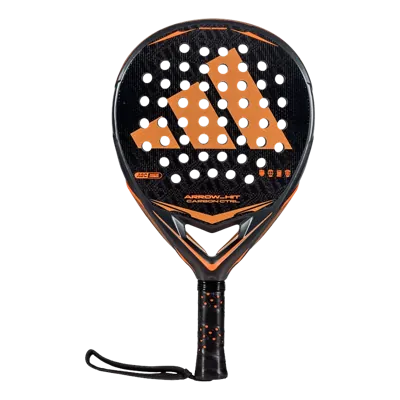
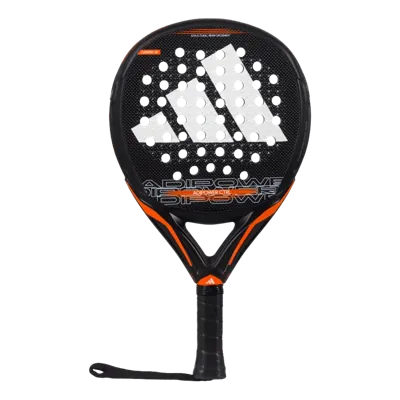
The other round exception is the Arrow Hit Ctrl 2026, the non-Carbon version. Same round shape, same even balance, same 360 to 375 g weight range and the same soft EVA core. It carries Alex Ruiz as its pro player. This Carbon Ctrl lists an Extra Power Grip handle. What separates the two faces is unclear, since adidas lists both as ASC. Treat them as close relatives until more is published.
ASC face, soft EVA, medium balance: where the High control comes from
The build is simple to read. The core is EVA Soft Performance, a soft foam. Soft foam absorbs the ball and holds it a fraction longer, which helps placement and takes the sting out of hard hits coming at you. The face is ASC, an adidas carbon rated carbon-medium in stiffness. That adds some firmness and response on top of the soft core, so the racket does not feel like a sponge.
Retailers list the balance at 260 mm, squarely medium. Not head-heavy, not head-light. On court that means the racket does not pull your volleys down or drag through slow swings. It goes where your hand goes.
The surface carries a Spin Blade Decal, a textured finish adidas claims adds precision to sliced and angled shots. That is the brand talking, not a measurement, but a rough face is a plausible help if you shape your bandejas and viboras.
Heavy at 360 to 375 g: why the maneuverability meter reads Low
Here is the catch. The weight runs from 360 to 375 g, and that is heavy. The maneuverability meter reads Low because of it. At the net, in fast exchanges, you will notice the grams. Quick reaction volleys ask more of your wrist and forearm than a lighter racket would.
Comfort also lands at Medium rather than High, and the weight is the reason. The soft core cushions each hit, but a heavy racket swung for ninety minutes brings its own kind of fatigue. If you have had elbow trouble, consider the lighter end of the range or a different racket entirely. The fix, if you love everything else here, is to pick a unit near 360 g. Weights vary per racket, so check before you buy.
A brand-side video, no independent court test
No independent reviewer has published a court test of this racket yet. What exists is a video from the allforpadel channel, the same site adidas lists for its official specs. It describes the round shape, the centered sweet spot and carbon reinforcements in the structure. That matches the specs, and the racket in the video appears to be this model, but it is not a neutral test.
So everything here comes from the spec sheet. That is still useful information. Round shape, soft core, medium balance and heavy weight combine in predictable ways, and the control and power meters follow from them. But nobody outside adidas has yet told you how it behaves on court. If a court test matters to you, wait for one, or demo the racket before you commit.
Metalbone Carbon Ctrl or Cross IT Carbon Ctrl: the near-twins from the same brand
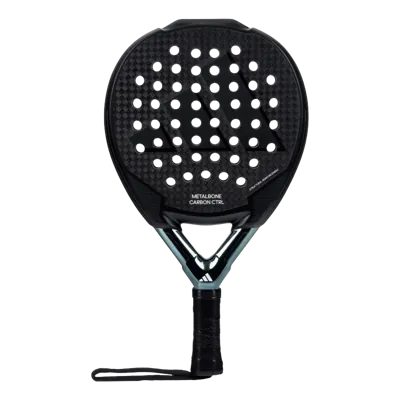
Adidas also sells two rackets that look almost identical on paper. The Metalbone Carbon Ctrl 2026 shares the round shape, the 260 mm balance and the soft EVA core. The weight range is identical too, 360 to 375 g. The difference is the face, 6K carbon instead of ASC, and a comfort rating of High instead of Medium. If arm friendliness is your priority, that is the stronger spec sheet.
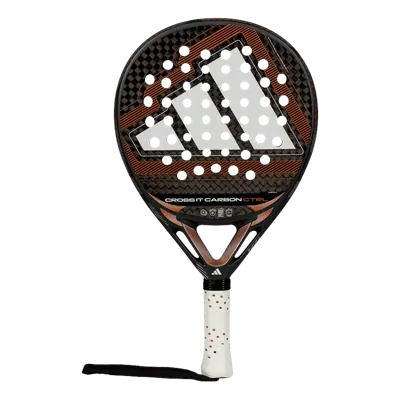
The Cross IT Carbon Ctrl 2026 is closer still. Round, even balance, soft EVA, same weights, same thickness, and the same five meter labels, Medium comfort included. Only the face differs, Carbon Aluminized 18K. Between these two, the choice comes down to which face material you trust and how each sits in your hand.
And if you came to the Arrow Hit name for its attacking identity, this Ctrl version is not that. The Arrow Hit Carbon 2026 is the head-heavy diamond with High power. Same family, opposite intent. Pick the one that matches how you actually win points, not the name you like.