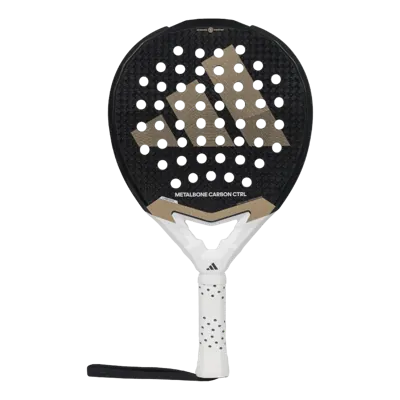
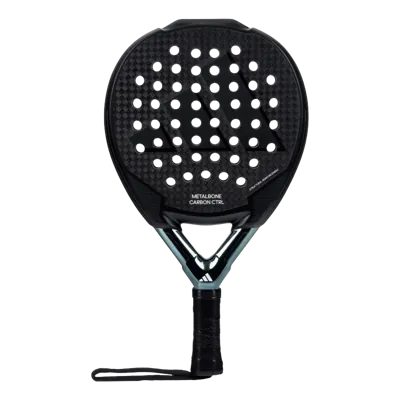
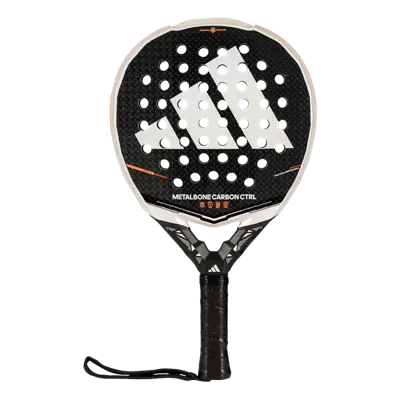
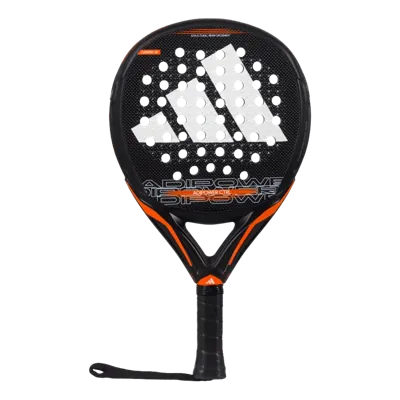
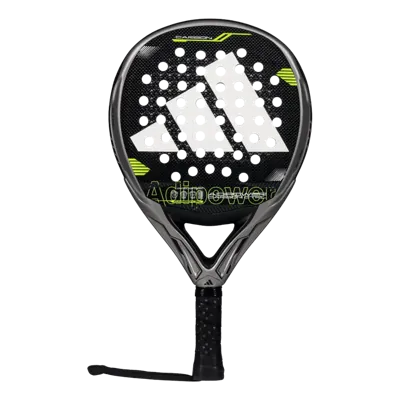
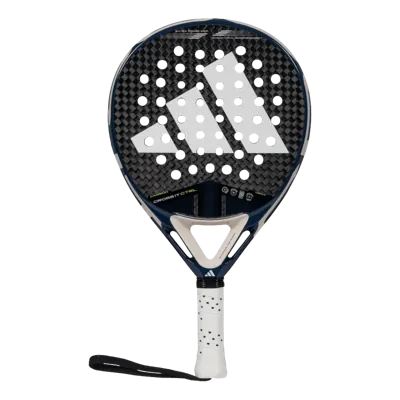
Most reviewers praise the control and handling of this racket. Then they split on the one thing that decides whether you enjoy it: how big the sweet spot really is.
No written reviews exist yet for this racket. What you get here are four video reviews plus the published specs. Three of the videos played the racket on court and one did not. One more caveat: the xTRES Padel video is only a partial match, because it compared the racket with the standard model and may describe a related version. Nobody behind this page has played it, so everything below is a reading of those sources.
Generous or small: two video reviewers, two sweet spots
PadelHQ praised the round shape for its generous sweet spot. Dani 13 said the opposite: the sweet spot is quite centred and small, you need a precise strike, and off-centre hits feel dry and lack response.
Both could be right. A round head with a soft core should forgive more than a diamond on paper. Dani 13's report is a reminder that a forgiving shape still rewards a clean strike. If your contact is clean, you will likely enjoy it. If it is not, expect to notice on the dry hits.
Light and agile, say the videos: why the weight range says otherwise
All four reviewers called the racket fast, agile or light. The brand lists 360 to 375 g, and the profile on this page treats that weight range as heavy. That is why maneuverability is rated low.
So which is it? The round head and even balance may explain part of the quick feel, but that is a guess, not something a source states. The number on the scale does not change. If you are used to lighter rackets, hold it before you decide. xTRES Padel even noted slightly slower movement than the standard model.
Lacks power, and that looks like the design
Three of the four reviewers named power as the weak point. PadelHQ said it is not head heavy and lacks power for smashes. Padel Review said it lacks power at higher levels of play. Dani 13 said it is demanding and takes effort to produce pace.
That matches the specs. A round 485 cm2 head, a soft EVA Soft Performance core and an even balance all favour control. The heavy weight range is the only factor in the profile that raises power. The rest is your swing.
If you like to finish points overhead, a diamond shape may suit you better. If you win points by waiting, this one fits.
Metalbone, Cross IT or Adipower: three adidas rackets, one profile
The adidas Cross IT Carbon CTRL 3.4 has the same published specs as this racket. The adidas Adipower Carbon CTRL 3.4 differs in one line: a 3K carbon face instead of 6K. All three are round, even balance, 38 mm thick, 360 to 375 g and rated for control.
So the choice is less about how they play on paper and more about which one you can try. Real differences in feel may exist, but no source here measures them.
What the Metalbone name adds: 6K carbon and an octagonal frame
The brand lists a 6K carbon face, an Octagonal Structure frame and a Spin Blade Decal surface. The product page claims the tubular carbon frame gives stability and resists torsion, and that the surface helps spin. Those are marketing claims, not measurements.
PadelHQ did say the surface technology helps add spin. That is one video reviewer who did not test on court, and it fits what the brand says. Treat it as a pointer, not proof.
Not published: balance in mm, handle, and who plays it
The brand calls the balance even but gives no figure in millimetres. The handle is not published either, and neither is a pro player for this version. The 3.3 listed Pol Hernandez, but that does not carry over here.
The Metalbone Carbon Ctrl 2026 page shows 260 mm for the balance. That may be a useful hint, but it is a different listing. Do not treat it as a measurement of this racket.