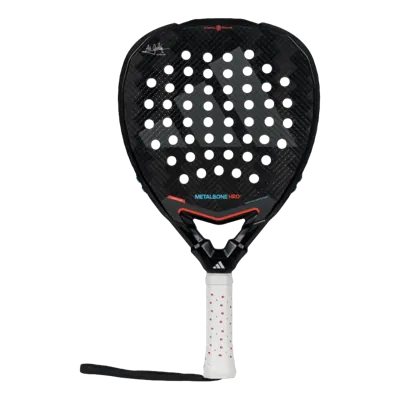
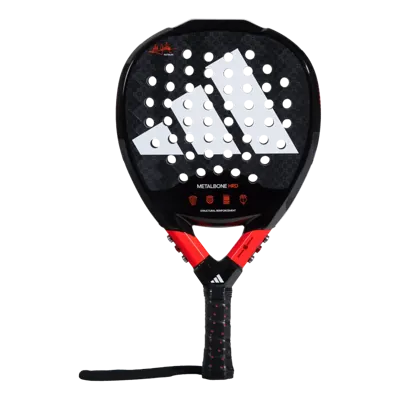
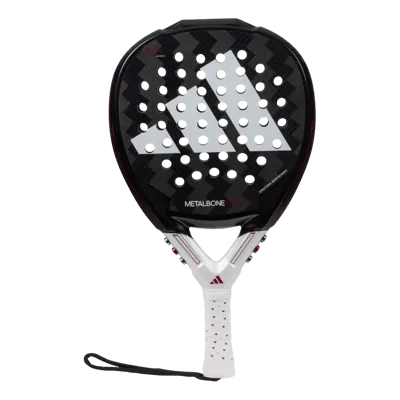
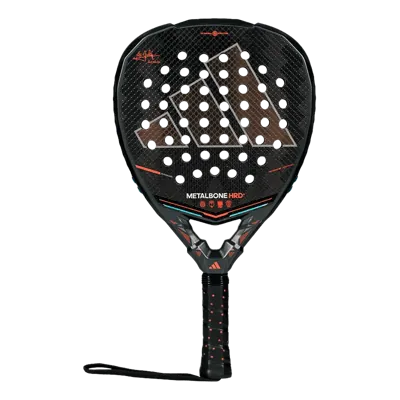
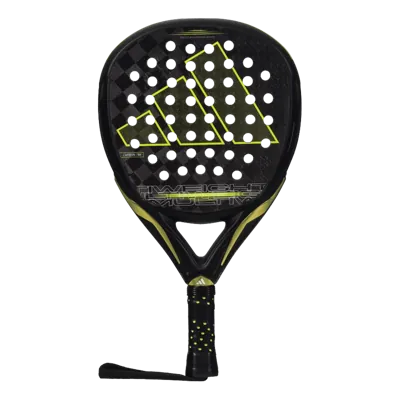
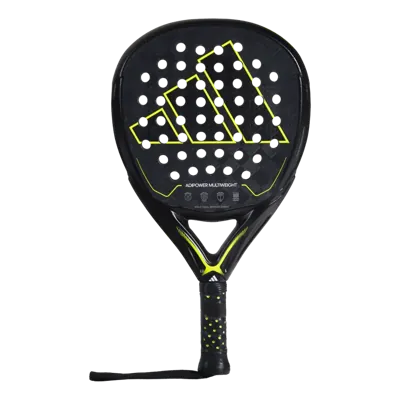
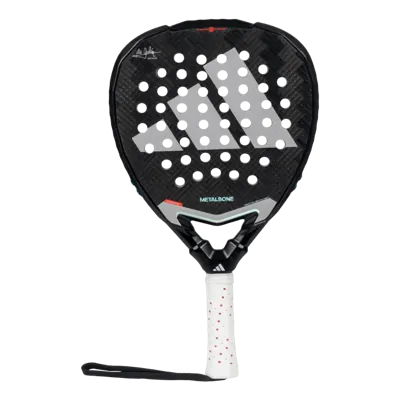
The face on this racket changed this year. adidas moved from a 2-to-1 carbon weave to a 16K weave. The surface finish also changed, from a decal to a textured face. Everything else on the spec sheet stayed the same: the head-heavy balance, the diamond shape, the 38 mm profile, the 345 to 360 gram range. This is the Metalbone HRD+ 3.4 Ale Galán. It is adidas's professional-level, head-heavy diamond racket for 2025. The changes here are smaller than the name suggests.
2 to 1 becomes 16K: what actually changed in the face
The previous version, the adidas Metalbone HRD+ 3.3, used a face listed as Carbon Aluminized 2 to 1. This one lists Carbon Aluminized 16K. Everything around it held steady. The EVA High Memory core stayed. So did the head-heavy balance, the diamond shape, the 38 mm thickness, the 345 to 360 gram weight range. A weave change like this usually points to a stiffer face. The profile meters here do show power reading high and control reading low. That is consistent with a stiffer hit. But a spec label changing is not a measured improvement on its own. No review compares the 3.3 and the 3.4 on court yet.
A textured surface where the old one had a decal
The surface also changed, from a Spin Blade Decal on the 3.3 to a Textured finish on the 3.4, according to a retailer listing. That is a smaller, cosmetic-leaning change than the face swap. It also comes from a shop rather than adidas directly, so treat it with a little more caution. The frame construction itself is not published for either version, so there is no way to say whether anything structural moved along with it.
Head-heavy and diamond: low on four of five meters
On the five meters shown for this racket, only power reads high. Control, comfort, maneuverability and sweet spot all read low. That pattern comes straight from the shape and balance. A diamond head narrows the sweet spot by design. A head-heavy balance pushes mass toward the tip, which adds power but takes away from touch, arm comfort and quick hands at the net. None of that is unusual for a signature racket built around one professional's offensive game, but it is worth knowing before you buy one.
adidas's weight and balance claim, and what it does not tell you
adidas describes a Weight & Balance System on the product page. It says screws, plates and removable washers on the frame let you shift weight and change how it is distributed. That is a brand claim, not an independent measurement. It is also worth noting that the base balance point in millimeters is not published at all. So you know the racket ships head-heavy. You know adidas says you can adjust it. But you cannot check the starting point yourself from the numbers on this page.
Metalbone HRD+ or Metalbone 3.4: two Galán rackets, one season
Ale Galán has his name on more than one racket this year. The adidas Metalbone 3.4 Ale Galán shares the diamond shape, head-heavy balance and 38 mm thickness. It runs an EVA Soft Performance core instead of EVA High Memory, and its comfort meter reads medium rather than low. If the low comfort reading here worries you, that sibling is the more forgiving option to compare it against. A successor for 2026 also exists. It changes the surface again, from Textured to Smart Holes Curve with Spin Blade Decal, while the face stays the same 16K weave as this racket.
Nothing reviewed yet, only the spec sheet to read
There are no published reviews of this exact version, no video reviews, no player comments on record. Everything above comes from adidas's own specs and one retailer's surface listing. That is not a flaw in the racket, just a gap in what is known about it so far. Anyone comparing it to the 3.3 it replaces, or to the Metalbone 3.4 Ale Galán released alongside it, is working from spec sheets on both sides for now.