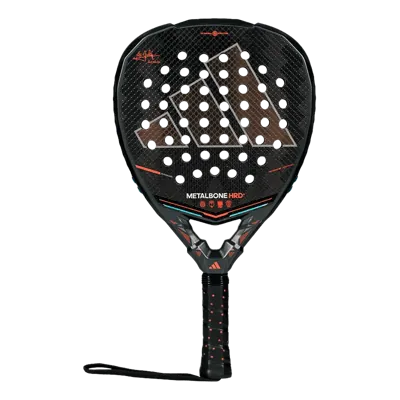
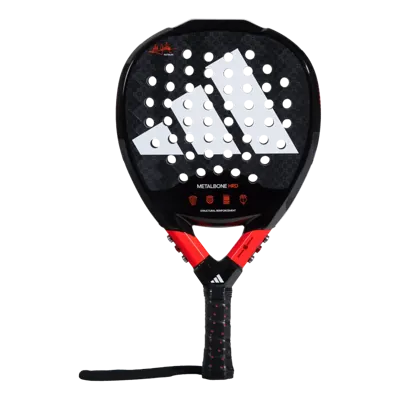
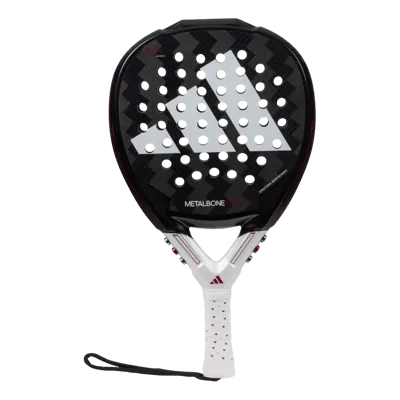
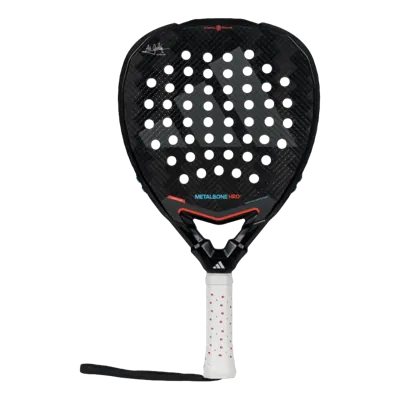
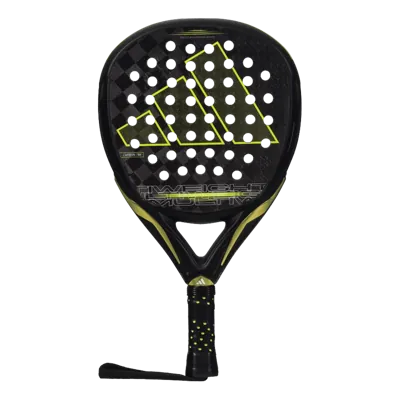
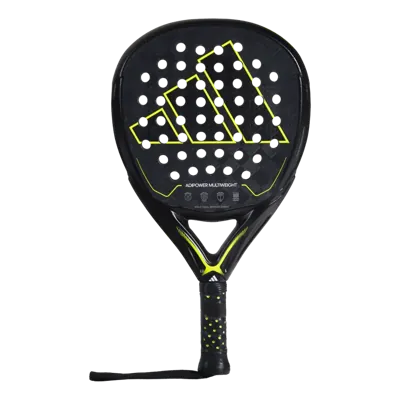
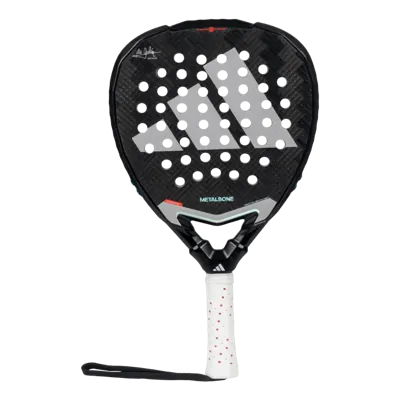
Four versions of the Metalbone HRD line share the same 38 mm diamond, the same Head Heavy label and the same 345 to 360 g range. The 2026 racket changes one thing on paper: the surface. That makes this page less about a new racket and more about a familiar one. If you know the line, you mostly know what you are getting.
Four versions, one racket on paper
The line starts with the Metalbone HRD 3.2 in 2023. The HRD+ 3.3 followed in 2024, and the HRD+ 3.4 Ale Galán in 2025. Now there is the HRD+ 2026. Across all four, the listed level (Professional), shape (Diamond), thickness, balance label, core (EVA High Memory) and weight range stay the same.
What moved are the face labels. The 3.2 lists 2-1 Aluminized Carbon. The 3.3 lists Carbon Aluminized 2 to 1. The 3.4 and this racket list Carbon Aluminized 16K. The step from 3.2 to 3.3 is only a different way of writing the same thing. A changed label is not a rebuilt racket. Between 3.3 and 3.4 both the face label and the surface changed, so that step is the bigger one on paper.
Smart Holes Curve in, Textured out: the one change for 2026
The 3.4 is listed with a textured surface. The 2026 racket lists Smart Holes Curve and a Spin Blade Decal. Face, core, shape, thickness, weight range and balance label are the same.
What does that mean for you? Probably less than the name suggests. A video review from Nmscontrolpadel compared the 2025 and 2026 rackets. The reviewer found the tactile feel and handling similar. The reviewer also noted an updated wrist strap system and a slightly different finish on the faces. That video did not test the racket on court, so treat it as an opinion, not a measurement. Its suggestion: if the difference between the two is large, the upgrade may not be needed. If you own the 3.4, the direct comparison lays the specs side by side.
What reviewers found: power praised, forgiveness missing
The one written test comes from padel.how, which played the racket and gave 70 out of 100. It praises power and precision on clean overhead contact. It warns that timing must be strict, with little forgiveness off-centre. The three video reviewers who played it say much the same. They talk about power in smashes and aerial play, and about a demanding racket that rewards technique.
The disagreement is the sweet spot. One video reviewer called its size good for such a powerful racket. padel.how and another video reviewer found it unforgiving. Both can be true: it may be fair for a diamond and still small next to a round racket.
The Weight & Balance System: what adidas claims, what is not published
The racket carries a Weight & Balance System. The product page claims it lets you customise weight and balance. How far it moves the balance is not published, and the balance in millimetres is not published either. The brand only gives the label Head Heavy. One video reviewer likes that the system allows customisation. Another says it can affect maneuverability.
So you cannot know the exact balance point before you hold it. Treat any number you see elsewhere with care. The listed length is 455 mm and the head area 485 cm2, which helps you place it against other rackets.
Low control, Low sweet spot: what a head-heavy diamond asks of your timing
The meters read Low for control, comfort, maneuverability and sweet spot, and High only for power. Not a flaw list, but a trade. Weight sits toward the head, so the racket carries momentum into the ball. The same weight makes it slower to swing in a defensive scramble, and a video reviewer mentions arm fatigue.
What can you do about it? Hit early, keep your swings compact and choose it only if your arm copes with a firm racket. The stiff carbon face and the metal elements add to the firm hit, and one video reviewer mentions possible vibrations over time. If your elbow or shoulder already complains, a different racket is a better start than a stronger grip.
HRD+ 2026, Adipower Multiweight 3.3 or Metalbone 3.4: picking your adidas diamond
The Adipower Multiweight 3.3 shares the diamond shape, the Head Heavy label, the 38 mm thickness and the 345 to 360 g range. Its face is listed as 18K carbon, and its meters match this racket. The same-year Metalbone Ale Galán uses a different core, EVA Soft Performance, and its control meter reads Medium instead of Low.
In practice the difference to the Multiweight 3.3 is limited to the face: 18K carbon against 16K. Pick by how the racket sits in your hand and how your arm responds, not by the year on the label.