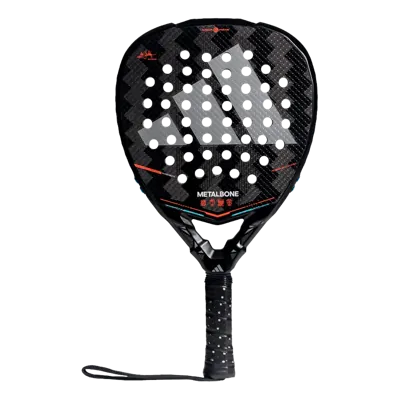
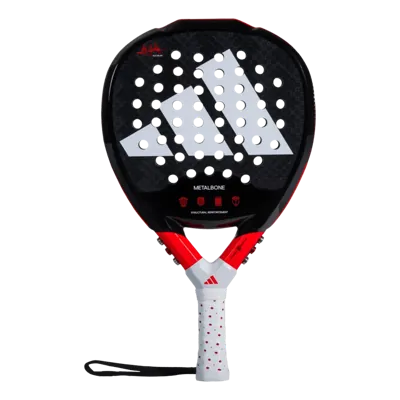
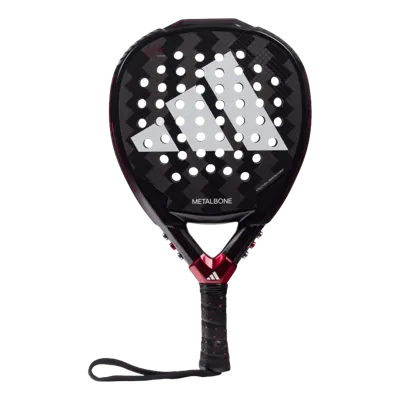
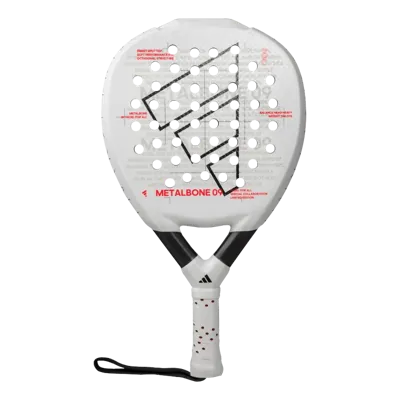
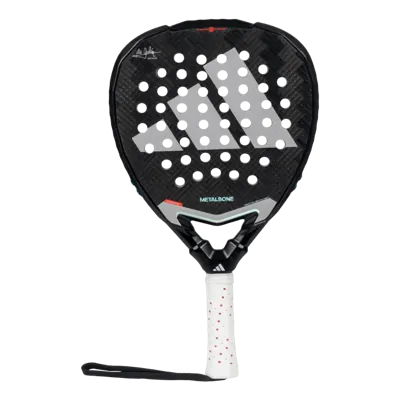
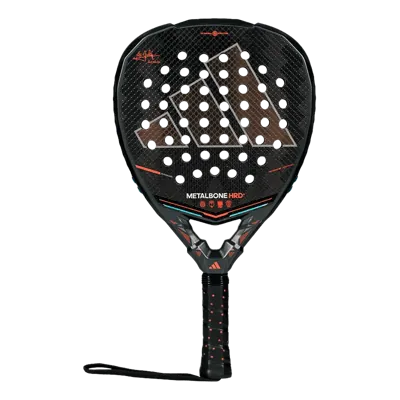
Compare the adidas Metalbone 2026 Ale Galán spec sheet with last year's Metalbone 3.4 Ale Galán and you will not find a single changed number. Same diamond shape, same 345 to 360 g weight range, same 38 mm thickness. Same Eva Soft Performance core, same Carbon Aluminized 16K face. Adidas presents the 2026 as a new model signed by Ale Galán. The specs tell a simpler story.
Same racket, new year
Every spec compared between the 3.4 and the 2026 comes back identical. The 2026 lists a weight and balance system that lets you shift up to 11.2 g. For the 3.4 that spec is not published, although Padelvergleich praised an adjustable weight system in its review of the 3.4.
This matters for one practical reason. If you already play the 3.4, there is no on-paper reason to switch. If you are choosing between the two, compare them side by side and pick on availability, not on expectations of an upgrade.
Diamond shape with a soft core: what the build gives you
The construction pairs two opposite ideas. The face is Carbon Aluminized 16K, a stiff carbon weave. The core is Eva Soft Performance, a soft foam. Stiff outside, soft inside.
What you notice: ball exit comes easily, because the soft core rebounds. But the stiff face keeps the contact firm and direct. One video reviewer described the feel as medium hard, another called the response slightly elastic. Both fit this build.
The frame uses what adidas calls an Octagonal Structure, and the surface carries a Spin Blade Decal texture for grip on the ball. PADELREVIEW ENG praised the spin in both of its videos. The handle carries adidas's Extra Power Grip label, and one video reviewer found the long handle harder to maneuver.
Power is the point, forgiveness is the cost
The diamond shape and head-heavy balance put mass behind your overheads. Testers agree this is where the racket earns its keep. After playing it, padel.how found it strongest for players who accelerate fully through an overhead. Your swing needs to be full and early.
The cost shows up in two places. First, the sweet spot is compact. Both padel.how and the video reviews flagged limited forgiveness on off-center contact. Second, maneuverability is low. Fast defensive exchanges and quick net reactions ask more of your preparation than a round or even-balance racket would.
Sensitive elbow? Try it first. The comfort rating is low, and one video reviewer warned the rubber can transmit more vibration in hot conditions. The soft core helps, but the stiff face and head-heavy build still make this a demanding frame.
Why one review says 64 and another says 91
The ratings for this racket are unusually far apart. Padel.how tested it on court and gave 64 out of 100, praising depth and stability but marking down the compact sweet spot and comfort. Padelvergleich tested the identical 3.4 Ale Galán and gave 91 out of 100, calling the power extraordinary and the weight system a highlight.
Between them sits Padelzoom at 8.6 out of 10. That rating is computed from specs by an algorithm, not played on court. It rates comfort and sweet spot positively where the court tests do not. Trust the sources that swung it. They agree on the essentials: powerful, stable, demanding.
Which Metalbone sibling suits you better
The 2026 Metalbone family is wide. If this racket's profile almost fits but not quite, a sibling might. The Metalbone Ctrl 2026 keeps the same 16K face and soft core. It swaps to a round shape and even balance. That means more control, less power, easier defense.
Want a firmer version of the same Galán frame? The Metalbone HRD+ 2026 swaps the soft core for Eva High Memory, a harder foam. Its power rating stays High, the same as here, so the difference is in stiffness of contact, not raw output. The Metalbone Carbon 2026 goes heavier at 360 to 375 g with a 6K carbon face. The Reserve 2026 is the Advanced-level variant at that same heavier weight. Same family, different demands.