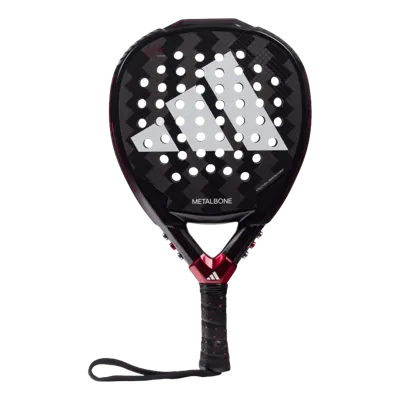
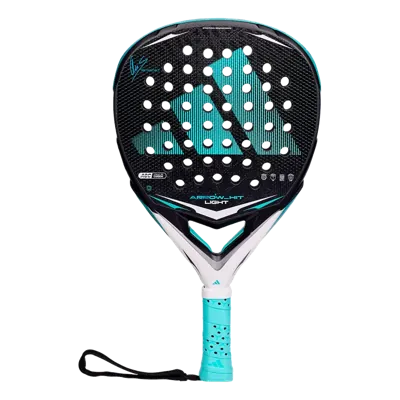
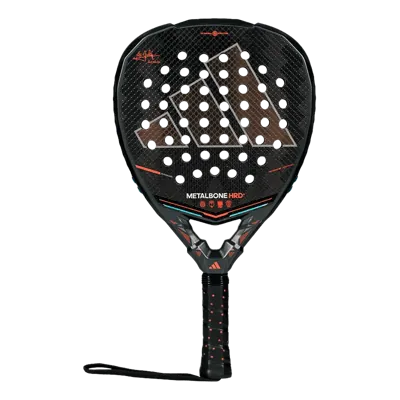
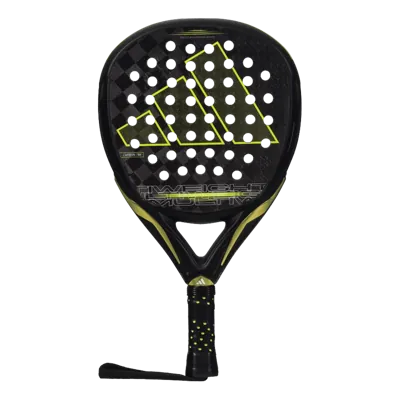
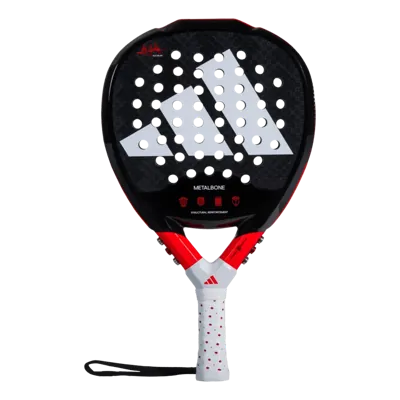
adidas Metalbone 3.4 - Ale Galán
2025

adidas Metalbone 3.4 - Ale Galán

8.7padell.io scoreSpecs + 1 review source
Shape
Diamond
Weight
345 to 360 g
Balance
Head-heavy
Core
EVA Soft Performance
Does it suit your game?Seven quick questions, with this racket as the starting point.
Question 1 of 7

What is your level?

The short answer

The adidas Metalbone 3.4 Ale Galán is a 2025 diamond-shaped, head-heavy attacking racket in the 345 to 360 g range. Padelvergleich rated it 91 out of 100 and praised its power and adjustable weight system. The catch: it is demanding, and reviewers describe a small sweet spot. Not a first racket.

RBy · facts checked 9 October 2026

Choose it if

  • you already hit with real power and want a racket you can tune with weights
  • you play an attacking game and finish points with smashes and overheads
  • you want the Ale Galán Metalbone and are happy to accept a demanding racket for more punch

Skip it if

  • you want a forgiving, easy racket, in which case look at the round adidas Metalbone Ctrl 3.4
  • you value quick hands at the net, since the round adidas Metalbone Ctrl 3.4 reads medium for maneuverability while this racket reads low
  • you are still building technique and consistency, since reviewers call this racket demanding

How it plays

8.7
padell.io score 8.7Play 8.8 (60%) and reviews 8.5 (40%). Based on 1 review source. How the score works
Control4.5below average▼
Power10.0above average▲
Comfort6.0around average●
Handling3.0below average▼
Forgiveness3.0below average▼

Line = the average of all rackets ▲ above ▼ below

On paper this is an attacking diamond that rewards a full swing and punishes loose technique.

  • Control The meter reads low, because the diamond shape and head-heavy balance work against it, even though some video reviewers liked the control.
  • Power The meter reads high, helped by the stiff carbon face, the diamond shape and the head-heavy balance.
  • Comfort The meter reads medium, as the soft core takes out some vibration while the stiff face and balance pull the other way.
  • Handling The meter reads low, so expect a racket that is solid and stable rather than quick in the hand.
  • Forgiveness The meter reads low, and two video reviewers also found the sweet spot small.

Specifications

Launched2025Newer version from 2026
Weight345 to 360 gLight: quick in the hand, less mass behind the ball
BalanceHead-heavy according to the brandHead-heavy: more power overhead, slower to move
FaceCarbon Aluminized 16KStiff: precise and powerful at speed, less damping
CoreEVA Soft PerformanceSoft: comfort and ball exit, less control at high speed
Thickness38 mmThe maximum the rules allow
Head size485 cm²
SurfaceSpin Blade DecalRough: helps with spin

Not published by the brand: handle, frame

Specs from the brand's own site · checked 23 September 2026 · Spotted a wrong spec? Report it →

Video reviews

9 videos from independent channels and shops

What 8 video reviewers say

8 played it on court

Often mentioned
Plus points
  • Lots of power5 of 8
  • Adjustable weight system4 of 8
  • Good control3 of 8
  • Easy to handle3 of 8
  • Comfortable, little vibration2 of 8
  • Good feel2 of 8
  • Strong overheads2 of 8
Minus points
  • Demanding, needs good technique4 of 8
  • Harder in defence3 of 8
  • Harder to handle3 of 8
  • Small sweet spot3 of 8
Summaries by padell.io, based on what each reviewer says in the video. Tap a time to watch that moment.
Tested on court

The reviewer highlights the racket's highly customizable nature, noting that the weight and balance system significantly alters its performance. It is designed for skilled players who have a clear preference for how their racket should feel and perform on court.

Tested on court

The reviewer finds this racket more technical than the previous version and more offensive. It suits players with at least a medium level who want more power and speed in their attacking game.

Tested on court

The reviewer finds this racket to be a significant improvement over previous versions. It offers a great balance of power and control, making it suitable for aggressive players who want to dominate the net.

Tested on court

The reviewer finds the racket to be a serious and powerful tool that has undergone significant changes in its weight distribution. It is better suited for players who prefer a solid and stable racket rather than those looking for high maneuverability.

Tested on court

The reviewer finds this racket more manageable and easier to use than the HRD version. It offers a good balance of power and control, making it suitable for a wide range of players from intermediate to advanced levels.

Tested on court

The reviewer finds this racket offers high power and is surprisingly manageable in defense. It is well suited for advanced or professional players who prefer an aggressive game style.

Against the 3.3, the only change on paper is the face: Carbon Aluminized 2 to 1 fiber became Carbon Aluminized 16K. Shape, core, thickness, weights and surface are the same. That is a changed label, not a proven change in feel.

The 2026 Ale Galán also keeps the same face and weights. Its weight system entry now reads 11.2 g, and it lists a 265 mm balance that the 3.4 does not publish. If you want a Metalbone with a published balance figure, look at the 2026 model. Otherwise the 3.3 and the 3.4 are very close.

Price history

Today€ 169.95Lowest in 30 days€ 169.95vs 30-day average-17%
23 Sept€ 169.95 · € 234.0014 Nov

Lowest price per day across the shops in your market. Checked every night.

What reviewers say

Padelvergleich, which played the racket, gave it 91 out of 100. It praised the explosive power and the customisable weight system, and noted that you need advanced technique and fitness. It rated durability negative.

Video reviewers agree the racket is serious and demanding. Two mention a strong smash. They split on control: one found it great, another praised it but found the racket heavy. Two found the sweet spot small. One saw it as balanced rather than head heavy. A fourth said it is for players who know their preferences.

Padelvergleich called the weight system on the adidas Metalbone 3.4 Ale Galán a real revolution. Yet the spec sheet shows that the face wording is the only thing that changed against the 3.3. So what are you actually buying? A powerful, demanding diamond with a tunable weight setup. Here is how to read it.

One face label changed against the 3.3: what the 3.4 really adds

The 3.3 listed a Carbon Aluminized 2 to 1 fiber face. The 3.4 lists Carbon Aluminized 16K. Everything else on the sheet is the same. That means diamond shape, 38 mm thickness, 345 to 360 g, a head-heavy label and a soft EVA core. The Spin Blade Decal surface and the Weight & Balance System are unchanged too.

That is a changed label. It is not a measured change. If you own a 3.3, the specs give you no clear reason to move. If you are choosing between them, treat them as close relatives and compare the 3.3 on what you can actually find to try.

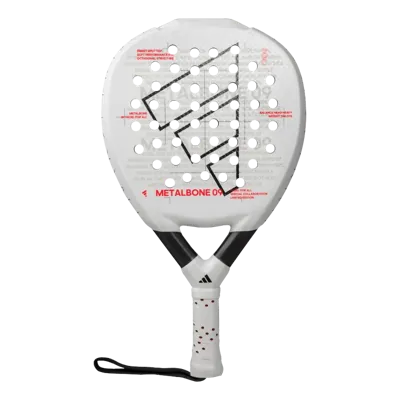
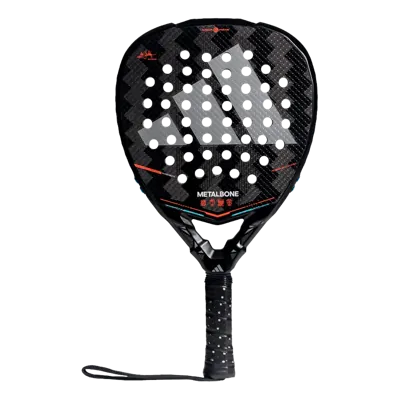
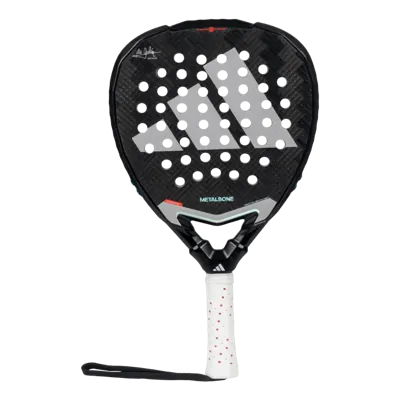
The Metalbone familySame year, from most power (left) to most control (right)

Weight & Balance System: what the brand claims and what reviewers found

The product page says the system uses screws, plates and removable washers on the sides and top of the frame. It claims you can change the weight by up to 11.2 g and shift its distribution, toward control or toward power. That is the brand's claim, not a measurement.

Reviewers back the idea. Padelvergleich lists the customisable system as a strength. One video reviewer says the system noticeably alters how the racket performs. In that view it suits skilled players who know what they want. The same reviewer warns it is not for players unsure of their preferences. Fair point: a tunable racket helps only if you can tell what each change does.

One caution. The balance in mm is not published for this racket, so you cannot see the starting point on paper. The frame and handle details are not published either.

Four videos and one test: where they agree and where they split on control

Power is the common thread. Padelvergleich praises explosive power. Two video reviewers mention a strong smash, and another points to good leverage on overheads.

Control is where they split. One video reviewer calls control and feel great and reports no vibration issues. Another also praises the control, yet calls the racket heavy, short on maneuverability and more demanding than before. The control meter on this page reads low. So the sources do not line up neatly, and that is useful: control seems to depend on how well you handle a head-heavy diamond.

The sweet spot is the clearer weak point. Two video reviewers call it small, one saying it is smaller than on earlier versions. The Padelvergleich review rates it neutral.

One more split. A third video describes the racket as balanced and not overly head heavy, while the spec label says head heavy. Treat that as one opinion and check the weights in your own hands.

Carbon Aluminized 16K over soft EVA: why power reads high and the sweet spot low

The face is carbon-stiff, and stiff faces return energy. The diamond shape moves the mass toward the top of the head. Together they push power up. A retailer lists the core density as Hard Touch, which fits an attacking racket, though that comes from a shop and deserves care.

The soft EVA core is the counterweight. It takes some sting out of impact, which is why comfort reads medium rather than low. The sweet spot still reads low, because the diamond shape is less forgiving on off-centre hits. Not a flaw in itself, but a trade you accept for power.

345 to 360 g with a head-heavy label: what it asks of your arm

The weight range is 345 to 360 g, and the head is 485 cm2 on a 38 mm profile. That is a normal weight for a pro-level racket. Yet the head-heavy balance puts more of it in the head, so the swing can seem heavier than the number suggests. Expect a racket that asks for solid arm strength and good timing on smashes and overheads.

If your arm tires or your wrist complains, the adjustable weights are one possible fix, since the brand says you can shift the balance. Whether that fully solves it is untested here. A lighter, rounder racket is the safer route.

3.4, 2026 and the HRD+ sibling: which Ale Galán Metalbone to look at

The 2026 Ale Galán keeps the same face, core, shape and weights. The only listed difference is the weight system entry, which now reads 11.2 g instead of Weight & Balance System. That looks like a relabel, so it says little about on-court change. It also lists a 265 mm balance, which this 3.4 does not publish.

The HRD+ 3.4 Ale Galán swaps the soft core for EVA High Memory. Its comfort meter reads low, against medium here. If your arm is sensitive, this standard 3.4 is the gentler of the two.
Written byPadel player and founder of padell.io

Bought, played and sold more rackets than was good for him, and built padell.io to bring it all together.

About padell.io →

Was this page useful?

Similar rackets

Often compared: Metalbone 3.4 - Ale Galán vs adidas Metalbone 2026 Ale Galán · Metalbone 3.4 - Ale Galán vs adidas Metalbone 3.3

All rackets that play like the adidas Metalbone 3.4 - Ale Galán →

Questions before you buy

Is the Metalbone 3.4 Ale Galán different from the 3.3?

On paper only the face changed, from Carbon Aluminized 2 to 1 fiber to Carbon Aluminized 16K. The other listed specs are identical, so it is a changed label rather than a proven difference.

Is this racket suitable for beginners?

No. The brand lists it as professional level, and Padelvergleich says it needs advanced technique and fitness. The sweet spot is also described as small.

Can you really change the weight?

The product page claims you can adjust it by up to 11.2 g with screws, plates and washers. Reviewers liked the customisation, but that figure is the brand's own claim.

Is it more comfortable than the HRD+ version?

On paper, yes. This racket has a soft EVA core and a medium comfort meter, while the HRD+ 3.4 Ale Galán uses EVA High Memory and reads low.

Is the Metalbone 3.4 - Ale Galán worth the money right now?

Today's price is labelled "Good value" compared with the rackets that play most alike. Which shops deliver, and what shipping costs, depends on your country. The price comparison shows it for yours.

See all prices
What is the closest alternative?

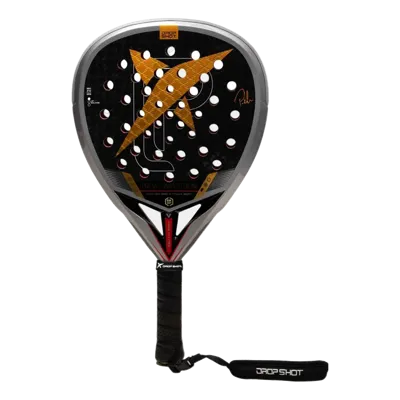
The Drop Shot Canyon Pro Attack Soft plays most alike. Differences: power -1.0, forgiveness +1.0. Today: € 189.90.

Compare side by side →
Who should not buy it?

Skip it if you rely on placement and long rallies (control 4.5/10), or if you are still learning: it is not very forgiving (3.0/10).

How heavy is it really?

The brand gives 345 to 360 g. That counts as light. Each racket can differ within that range.

Why a range? →