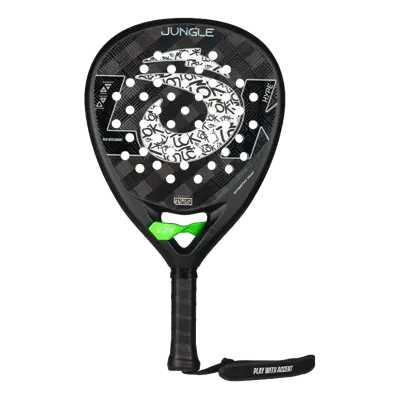
12K carbon and X-EVA out, 3K carbon and Hard EVA in: what the 3.0 rebuilt
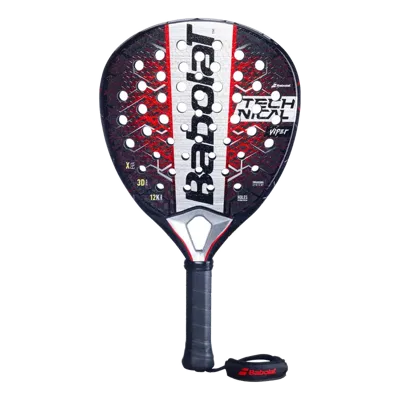
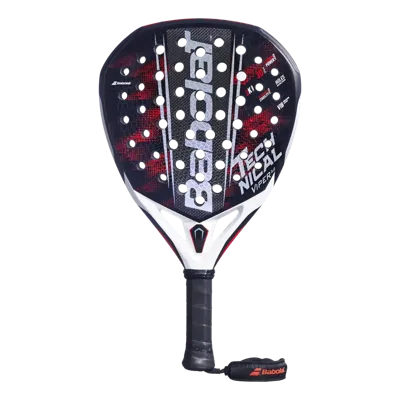
The 2025 Viper is no longer the newest Viper. The Babolat Technical Viper 3.0 (2026) keeps the diamond shape, the carbon frame and the 38 mm thickness. Almost everything else on the sheet moves. The face goes from 12K carbon to 3K carbon. The core goes from X-EVA to Hard EVA. The listed weight rises from 365 g to 370 g. The balance label changes from High to Head Heavy.
What does that mean for you? On paper, the 3.0 is a little heavier and a little more head-weighted. Be careful with the balance label, though. It is a change of wording between two listings, not a measurement. Only the 3.0 has a published balance, 270 mm. For the 2025 model the figure is not published. If you want the newer racket, look at the 3.0 page. If you are choosing between them, compare the cores and faces first.
90 out of 100 and four video reviews: power agreed, forgiveness not
Padelvergleich gave the racket 90 out of 100. It praises the power and the spin from the surface. It also flags the demands on technique and strength, and it calls the racket a strong power option for players who want to attack hard.
The four video reviewers played it on court and mostly agree. Power for smashes comes first. A small sweet spot comes second. One reviewer says it is not very forgiving and can be tough on the arm. Another says it is demanding in defence. The reviews section has the detail, and they do not agree on everything.
Control from anywhere on the court, says the product page: the meters answer Low
The product page claims the racket lets you control the game from anywhere on the court. Treat that as marketing. The control meter here reads Low. A diamond head and a high balance both pull control down. The X-EVA core and the 12K carbon face pull it up a little.
Some reviewers still call the control good. Read that as good for a power racket. It is not a forgiving racket that does the work for you. Reviewers say it needs clean, precise contact. If you miss, you will notice.
365 g and a high balance: what the heavy head asks of your arm
The listed weight is 365 g, with no range between a minimum and maximum. That is heavy. Add a high balance, and the mass sits towards the head. That helps on smashes and hurts when you need to react quickly. The maneuverability meter reads Low for that reason.
The comfort meter also reads Low. The retailer's listing mentions vibration absorption. Padel Review lists that as a pro, yet also names arm fatigue in long matches as a con. PADELREVIEW ENG separately calls the racket tough on the arm. If you play often, that matters more than any spec. Start with shorter sessions and see how your elbow responds.
Viper, Veron and Vertuo 2025: same shape, different faces
Babolat's 2025 Technical range shares the diamond shape, the 38 mm thickness and a high balance. The faces differ. The Technical Veron 2025 uses a Carbon Flex face, the same X-EVA core and the same 365 g. Its comfort meter reads Medium where the Viper's reads Low. The Technical Vertuo 2025 has a fiberglass face over an EVA core at 355 g, and also reads Medium for comfort. Both are listed at the Advanced level too.
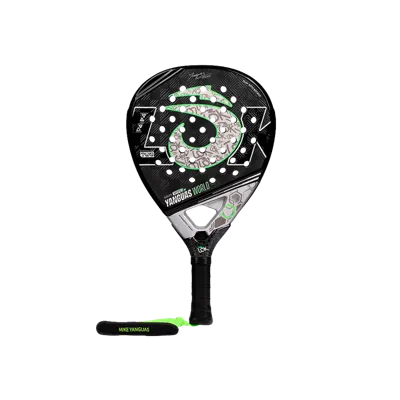
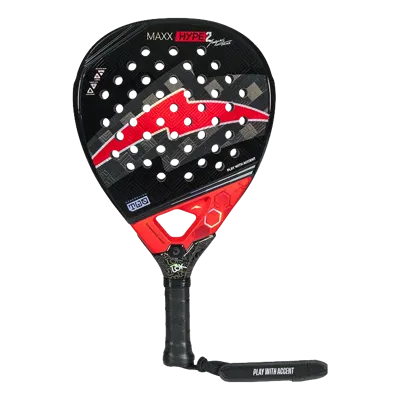
So if the Viper's demands sound like too much, the siblings are the closest step down in harshness. If you want more of the same, look towards the pro-level LOK models such as the Maxx Hype Green Mike Yanguas. It is listed with a Top balance label and a 360 to 375 g range.
No balance in mm, no head size: what the sheet leaves open
Several numbers are not published for this racket: balance in mm, head size in cm2 and the weight system. That matters, because balance in mm is the clearest way to compare it with the 3.0, which does list 270 mm. Without it, the High label is all you have. The handle is listed as Syntec Pro.