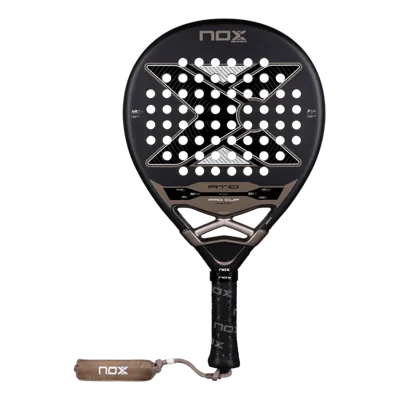
Nox AT10 Pro Cup Hard 2026
7.0padell.io scoreSpecs only- Shape
- Teardrop
- Weight
- 360 to 375 g
- Balance
- Even
- Core
- HR3 Hard EVA
The Nox AT10 Pro Cup Hard 2026 is the firm half of Tapia's Pro Cup pair. It is a teardrop between 360 and 375 grams with a hard HR3 EVA core and a fiberglass face. On paper it gives a crisp, direct hit with a small sweet spot and little forgiveness. No reviewer has tested it yet, so every judgement on this page rests on the published specifications.
RBy Ruud Caris · facts checked 25 September 2026Choose it if
- you already hit clean and want a firm, precise response off the face
- you prefer a teardrop that rewards full swings from the back of the court
- you compared it with the Soft version and know you want the harder core
Skip it if
- your elbow or wrist complains after long sessions, the [Nox AT10 Pro Cup Soft by Agustín Tapia](/rackets/nox/at10-pro-cup-soft-by-agustin-tapia/) is the softer twin
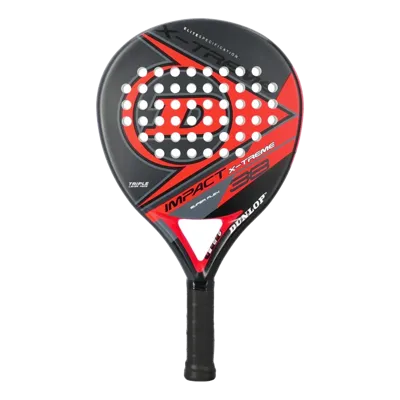
- you are still learning and miss the center often, the [Dunlop Impact HL Red](/rackets/dunlop/impact-hl-red/) rates higher on comfort and sweet spot
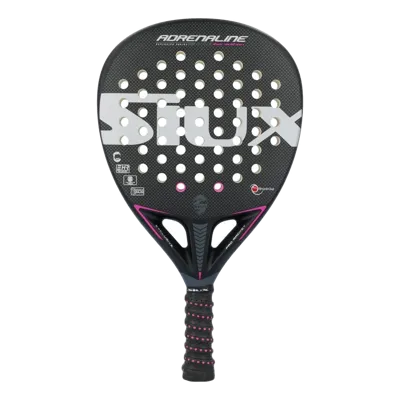
- you want quick hands at the net, the [Siux Adrenaline IBAI Edition](/rackets/siux/adrenaline-ibai-edition/) maneuvers more easily
How it plays
Line = the average of all rackets ▲ above ▼ below
No independent test exists yet, so this reads the on-court behaviour straight from the specifications.
- Control The teardrop shape and medium balance keep the face predictable, while the fiberglass face takes away some of the precision a stiffer material would give.
- Power The hard HR3 core and heavy build return energy well on full swings, while the fiberglass face takes some edge off raw smash speed.
- Comfort A hard core in a heavy frame is the least forgiving combination here, and off-center hits will reach your arm.
- Handling A heavy frame with medium balance moves slower at the net than lighter rackets.
- Forgiveness The hard foam shrinks the effective hitting zone, so timing matters more than with softer rackets.
Specifications
Not published by the brand: head size, handle
Specs from the brand's own site · checked 24 September 2026 · Spotted a wrong spec? Report it →
Every version
Compare all versions →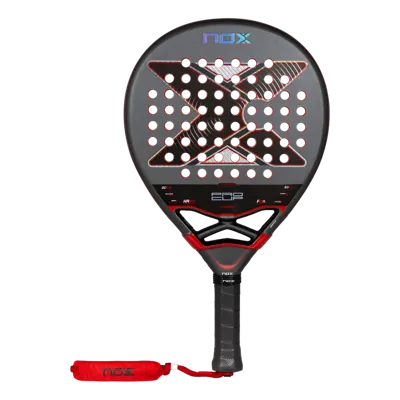
The listed successor is the Nox Pro Cup Hard for 2027. The core, frame, balance label, surface, thickness and weight range carry over unchanged. Three labels differ. The face is now called Silver Fiberglass instead of Fiberglass Alum. The shape is listed as Teardrop instead of Drop / Tear. The level reads Advanced instead of Avanzado. Treat those as relabelled descriptions rather than a measured change, because the two models were matched automatically and may not be the same racket. If you are choosing between them, the construction on paper is the same: hard HR3 core, fiberglass-type face, 360 to 375 g.
Price history
Lowest price per day across the shops in your market. Checked every night.
Agustín Tapia's name sits on two nearly identical Nox rackets for 2026, and the only real difference between them is the density of the foam inside. The AT10 Pro Cup Hard 2026 takes the firmer option, an HR3 HARD EVA core, and wraps it in a fiberglass face and a carbon frame. Weight runs from 360 to 375 grams, the profile measures 38 mm thick, and the shape is what Nox calls Drop / Tear. Retailers list the balance as medium, though Nox itself does not publish a balance in millimetres.
That is the whole picture, because no independent reviewer has tested this racket yet. Everything below reads the specs and says honestly what they suggest.
Hard or Soft, the only real difference
The Nox AT10 Pro Cup Soft by Agustín Tapia shares the face, the frame, the shape, the weight range and the thickness with this racket. Same balance label too. The core is the single fork: HR3 SOFT EVA against HR3 HARD EVA. You can compare the two directly.
Hard foam deforms less at impact. You get a crisper, more direct response and the ball leaves sooner, which suits players who generate their own pace. Soft foam absorbs more, holds the ball a fraction longer and forgives late contact. Nox sells the Hard at the advanced level, and that label fits the specs. Not better, but more demanding.
A firm hit with a modest margin
The core is the story. HR3 is Nox's high density EVA, and the HARD variant is the firmest version of it in this line. Expect a solid, compact feel at contact. The ball does not sink in, so what you put in is close to what you get out.
The face softens that a little. Nox uses Fiberglass Alum, fiberglass with a metallic finish, and the product page claims it sits between carbon and fiberglass in stiffness. Fiberglass flexes more than carbon at impact, which adds some comfort and a touch of easy depth on slower balls. The brand lists the surface as Exclusive Spin.
The trade-off is the sweet spot. Hard foam shrinks the zone where the racket responds well, and the profile data rates both comfort and sweet spot low. Miss the center and you will feel it in your hand. If your arm has ever grumbled, test it before you buy, or look at the Soft.
Heavy weight, planted swings
Between 360 and 375 grams this sits in the heavy class for a padel racket. Medium balance keeps the weight from pulling toward the head, so it is not a hammer. But mass is mass. Quick exchanges at the net ask more of your preparation. So do fast reactions on low balls and late blocks on hard smashes.
From the back of the court the same weight works for you. A heavier racket stays stable through the swing. On bandejas and deep volleys it carries through the ball. That is the classic heavy teardrop pattern. Not fast, but planted.
Power 10 out of 10 says Nox: what the brand's own numbers are worth
Nox rates this racket Power 10 out of 10 and control 8 out of 10 through retailers. Treat those as the brand's own judgement, not a measurement. The spec sheet tells a more mixed story. The hard core and the weight push power up. The fiberglass face pulls it back down. The teardrop shape sits between round and diamond. On paper that lands at medium power with medium control. The bias goes to the player who swings hard and hits clean.
No reviews yet: reading the spec sheet alone
At the time of writing there are no independent reviews, no video tests and no player threads about this exact model. That matters for how you should buy it. The judgements on this page rest on the construction: hard core, fiberglass face, heavy build, medium balance. If you can, demo it against the Soft before deciding. That is the comparison the specs cannot settle for you.
Where it sits among the 2026 AT10 rackets
The 2026 AT10 family spreads wide. The Nox AT10 Genius 18K Alum 2026 keeps the teardrop shape but swaps the face for 18K carbon. Nox rates it at the professional level, with a higher power profile. The Genius Attack models go further still, with diamond shapes and high balance aimed at pure attacking play. At the friendlier end sits the Nox AT10 Genius Ultralight 26, a teardrop at 310 to 325 g that Nox rates for beginners and intermediates.
The Pro Cup Hard sits in between: an advanced-level teardrop with a firm edge. It asks for technique, gives back precision, and leaves the comfort question to its Soft twin.
Similar rackets
Questions before you buy
What is the difference between the AT10 Pro Cup Hard and the Pro Cup Soft?
Only the core. The Hard uses HR3 HARD EVA, the Soft uses HR3 SOFT EVA, and the face, frame, shape, weight and thickness are identical. The Hard gives a firmer, more direct hit; the Soft absorbs more and forgives more.
Is the Nox AT10 Pro Cup Hard 2026 suitable for beginners?
Nox itself rates it at the advanced level. The specs agree: a hard core, a small sweet spot and 360 to 375 g punish inconsistent contact. Beginners are better served by a lighter, more forgiving racket like the Dunlop Impact HL Red, which rates higher on comfort and sweet spot.
Is this the racket Agustín Tapia plays with?
Nox lists Agustín Tapia as the pro player for this racket on its own site, and his name runs across the whole AT10 line.
Is the Pro Cup Hard a power racket?
Nox claims Power 10 out of 10, but that is the brand's own rating. The specs point to medium power. The hard core and weight help on full swings, while the fiberglass face and teardrop shape keep it short of a pure attacking racket.
Is the AT10 Pro Cup Hard 2026 worth the money right now?
Today's price is labelled "Good value" compared with the rackets that play most alike. Which shops deliver, and what shipping costs, depends on your country. The price comparison shows it for yours.
See all pricesWhat is the closest alternative?
The Nox AT10 Pro Cup Soft by Agustín Tapia plays most alike. On paper the differences are under one point. Today: € 147.48.
Compare side by side →Who should not buy it?
Skip it if your elbow or shoulder complains (comfort 4.5/10), or if you are still learning: it is not very forgiving (5.0/10).
How heavy is it really?
The brand gives 360 to 375 g. That counts as medium. Each racket can differ within that range.
Why a range? →