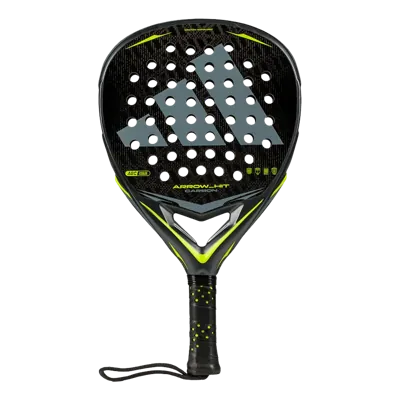
This racket is a contradiction on paper. The adidas Arrow Hit Carbon 2026 combines a soft EVA Soft Performance core with a head-heavy diamond build. One part of the design tries to help you. The other part demands that you arrive on time, every time.
Soft core, hard geometry: the contradiction that defines this racket
Most attacking diamonds use harder foams to squeeze out pace. This one goes the other way. The EVA Soft Performance core is soft, which absorbs impact and holds the ball on the face a fraction longer. Around it, adidas places a diamond shape, a head-heavy balance label and a weight range of 360 g to 375 g.
The result on the profile meters is telling. Power reads High. Control reads Low. Comfort lands at Medium, which is unusual for a diamond in the heavy weight class. You get an attacking racket that hits hard without the stiff, board-like contact that many power rackets have. That is the promise. The cost shows up elsewhere.
ASC carbon over EVA Soft Performance: where High power and Medium comfort come from
The face is ASC, adidas's carbon surface in the middle of its stiffness range. It is firm enough to return energy into the ball. The product page also describes perimeter reinforcements and carbon tendons through the heart of the racket for torsional resistance. Treat those as brand claims, since no independent measurement backs them.
What the specs do support is simpler. A heavy racket, a diamond head and a carbon face all push power upward. The soft core pushes comfort upward and pulls some pace back out. The Spin Blade Decal surface is the brand's spin texture, again a claim rather than a tested fact. adidas does not publish the frame material or the head size, so those stay open questions.
The Intelligent Balance System and a balance label that needs reading twice
The spec sheet lists a weight system called Intelligent Balance System. Beyond the name, adidas publishes no details about how it works or what it changes. Shops list the balance at 265 mm, a medium figure. The brand labels the racket Head Heavy. Those two disagree, and no source explains the gap.
What you can say safely: this is a racket where the balance story is not settled on paper. For a diamond, that matters. A head-heavy setup slows fast exchanges at the net and quick defensive blocks. If balance is a deciding factor for you, confirm the actual setup with the shop before you buy.
90 out of 100 from the one court test: comfort praised, sweet spot flagged
Padelvergleich played this racket and rated it 90 out of 100. That source highlighted the balance adjustment system and found solid power with surprising comfort for an offensive racket. It rated grip, power, comfort and durability positively. The reservation: a small sweet spot that requires consistent technique.
A video review from Mundo Padel Argentina reached a similar conclusion from the specs alone. It did not test on court. It called the racket powerful but too demanding for beginners.
A downside with proportion, then. The small sweet spot is real, and it punishes late contact. The counterweight is the soft core, which makes the racket more forgiving on impact than its silhouette suggests. You still need to hit the middle.
Low control, Low sweet spot: what the diamond asks of your timing
Diamond rackets concentrate their strongest response in a smaller area and sit weight high. Here the meters confirm both: Low control, Low sweet spot, Low maneuverability. In practice that means defensive lobs under pressure and fast reactions at the net ask more of you than a round racket would. The handle is adidas's Extra Power Grip, which the brand includes in its attacking setup.
Who absorbs that cost well? Advanced players with repeatable technique, the group Padelvergleich names as the target. Who pays double? Intermediates whose contact point drifts, and anyone coming from a round racket expecting the same margin for error.
Arrow Hit Carbon, Arrow Hit Carbon Ctrl or Head Extreme Pro 2026: picking your attacking racket
Within the 2026 Arrow Hit family, the adidas Arrow Hit Carbon Ctrl flips the formula. Round shape, even balance, High control and High sweet spot, Low power. Same core, same face, opposite intent. If your game is patience and placement, that is the sibling to look at. The plain Arrow Hit 2026 shares this racket's diamond build but reads Low on comfort, so the Carbon is the softer landing of the two.
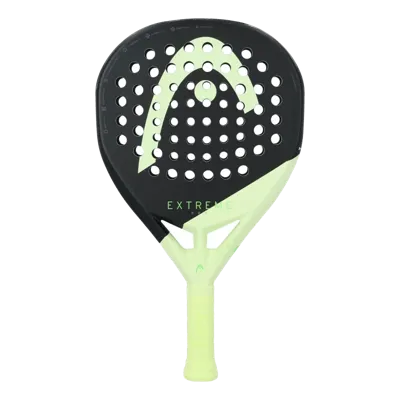
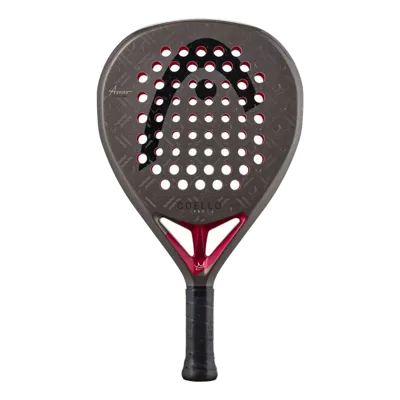
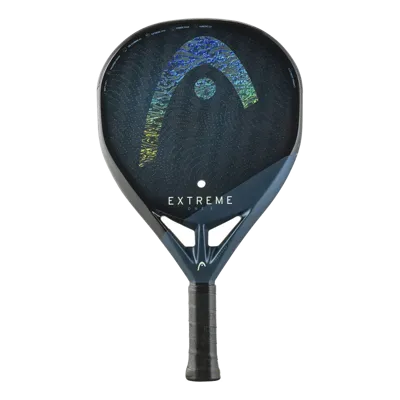
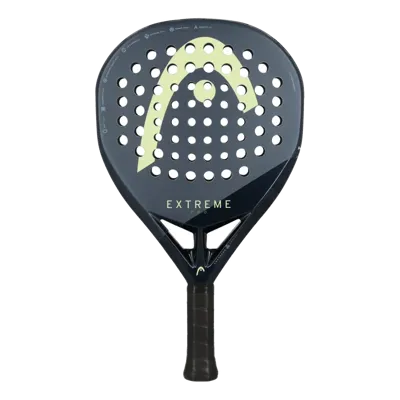
Against outside rivals, the Head Extreme Pro 2026 is the closest match on the spec sheet: diamond, 270 mm balance, fixed 370 g, High power. The difference is control, Medium there versus Low here, which makes the Head the more forgiving attacking option. The Head Extreme Pro 2026 comparison lays them side by side. Choose the adidas if you want the softer core. Choose the Head if you want more built-in control at a similar weight.