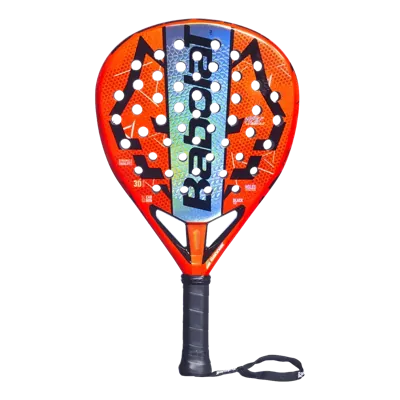
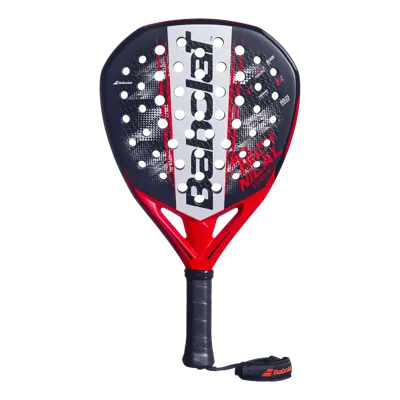
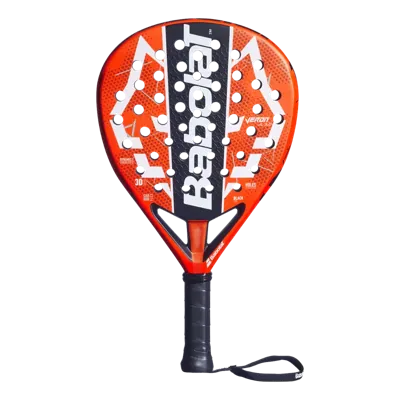
The Viper Soft Juan Lebrón 3.0 is the softer take on Babolat's heavy diamond. The one reviewer who played it says the difference shows up in defense, not in raw power. That is a useful starting point. Most diamond rackets are bought for smashes. This one asks whether you can keep the smash and lose fewer balls in defense.
Soft Carbon and Black EVA: how this Viper differs from the hard Juan Lebrón
The face is Soft Carbon and the core is Black EVA. The standard Babolat Viper Juan Lebrón 3.0 uses 3K carbon over Hard EVA. This version also weighs 365 g against 370 g. Shape and thickness stay the same: diamond, 38 mm.
What does that change for you? On paper, a softer face and a different core should make the ball leave the racket a little more gently. Babolat does not publish a number for that, so treat it as a direction, not a measurement. The frame is carbon, and the handle is Syntec Pro.
The brand also lists a Dynamic Stability System. Babolat says it stiffens the frame and makes it steadier on impact. That is a brand claim, and no reviewer confirms it.
Comfort without losing intensity, says Babolat: the meters answer Low
The product page says the Soft Carbon raises comfort without taking away intensity. It is marketing, so read it as intent.
The comfort meter on this page reads Low. It is built from the specs and the review. The Soft Carbon face pushes comfort up. The Black EVA core, the weight and the head-heavy balance push it down, and the reviews do not help.
So expect softer than the hard Viper, not soft. If your elbow or shoulder already complains, a 365 g head-heavy diamond is a risk. A lighter racket with an even balance is the safer way to find out.
73 out of 100 from padel.how: easier power, better defense, slow to start
Only one source is listed, and it played the racket. padel.how gives it 73 out of 100. It found easier medium-speed power than on the standard Viper and a larger sweet spot that helps defense. The reviewer says defense is clearly better than with the hard Viper.
The same review names a cost. Initial movement is slower, so you need to prepare early. It recommends the racket for advanced attackers who want high power with more match margin. Grip, comfort, control and sweet spot are all rated neutral, and power is the only positive.
That sits oddly beside the meters. The review calls the sweet spot larger than on the hard Viper, while the sweet spot meter here reads Low. Both can be true: larger than a very hard racket, still small next to a round one. One review is thin evidence, so do not take either reading as settled.
365 g and a head-heavy label: what the heavy head asks of your arm and your preparation
Babolat lists 365 g with no range, and the balance as Head Heavy. The weight is high but not extreme. The heavy head is the bigger factor. It adds momentum to a smash or a bandeja, and it makes the racket slower to bring around in a short exchange.
That matches the review about slow initial movement. The fix is habit, not equipment. Get the racket back early, shorten your swing at the net, and hold your ready position with the head up.
Babolat describes the intended player as one with an attacking style. It does not give a skill level. Treat it as a racket for players who already hit with confidence.
Viper Soft, Technical Viper Soft and Viper Juan Lebrón: which Viper to look at
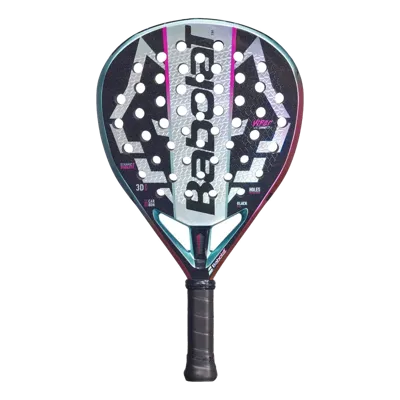
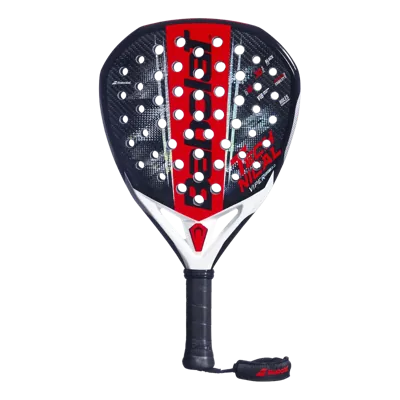
The Babolat Viper Juan Lebrón 3.0 is the hard version: 3K carbon, Hard EVA, 370 g. Choose it if you want the original feel and can live with less forgiveness. The Babolat Technical Viper Soft 3.0 has the same listed build as this racket: Soft Carbon, Black EVA, 365 g, diamond, 38 mm. It also publishes a 270 mm balance, which this one does not. If the numbers matter to you, that listing is easier to judge.
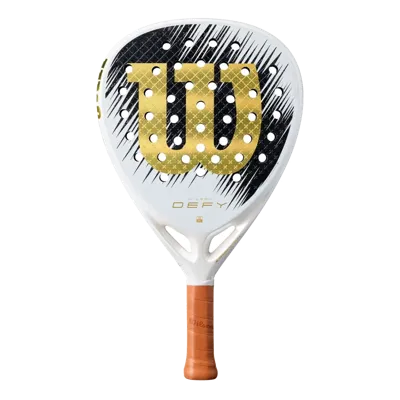
The Wilson Defy V1 SE is a different brand with a similar profile: diamond, 365 g, 265 mm balance, and an Advanced level label. It is a sensible second opinion if you want a heavy attacking racket from outside the Viper line.
Balance in mm, head size, weight system: what the sheet leaves open
Three specs are not published for this racket: the balance in mm, the head size and the weight system. Babolat gives only the label Head Heavy. You cannot tell how head-heavy it really is, or how large the hitting area is.
The usual workaround is to look at a sibling that does list them, but the Technical Viper Soft 3.0 is a different product. Use it as a hint, not as proof. If you can, try the racket before you commit. With a heavy diamond, a short test says more than the sheet does.