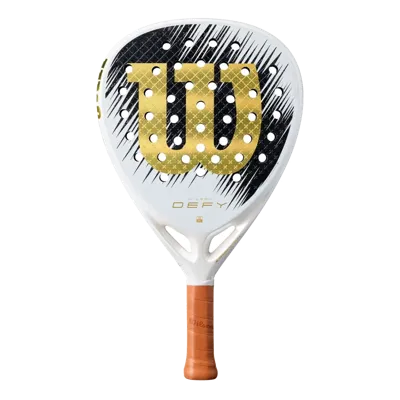
Wilson Defy V1 SE
7.1padell.io scoreSpecs only- Shape
- Diamond
- Weight
- 365 g
- Balance
- Head-heavy
- Core
- High-density Power Foam
The Wilson Defy V1 SE is a 365 g diamond racket with a 265 mm balance, listed for advanced players. On paper it is built for smashes and finishing shots. The catch: control, comfort and sweet spot all read low, and no review has tested it yet.
RBy Ruud Caris · facts checked 9 October 2026Choose it if
- you already hit hard overhead shots and want a racket that adds weight to them
- you play an attacking game at the net and can handle a heavy diamond for a full match
- you are advanced and want a middle step between the lighter Defy LS V1 SE and the heavier Defy Pro V1 SE
Skip it if
- you want forgiveness on off-centre hits, because the sweet spot reads Low here
- you have a sensitive elbow or shoulder and need comfort, because the Wilson Defy LS V1 SE reads High for comfort
- you are still learning the game and need a racket that is easy to swing and place
How it plays
Line = the average of all rackets ▲ above ▼ below
On paper this is an attacking racket: hard core, diamond head, heavy weight.
- Control Low, because the diamond shape works against it, even though the balance point helps a little.
- Power High, as the hard Power Foam core, the diamond shape and the heavy weight all add to it.
- Comfort Low, since the hard core and the weight outweigh the softer carbon face.
- Handling Low, because a heavy diamond is slow to bring round, though the balance point is not extreme.
- Forgiveness Low, as the hard core and the diamond shape both shrink the area that hits cleanly.
Specifications
Not published by the brand: head size, handle, frame
Specs from padelnuestro.com · checked 23 September 2026 · Spotted a wrong spec? Report it →
Video reviews
1 video from an independent channel or shopPrice history
Lowest price per day across the shops in your market. Checked every night.
Three Wilson Defy V1 SE rackets share a diamond head, a 265 mm balance and a 38 mm profile. The difference between them comes down to grams and carbon. This one sits in the middle, and there is no review of it yet. Everything below comes from the listed specs, so read it as what the paper suggests, not as court experience.
355, 365 or 370 g: where the Defy V1 SE sits in its own family
The Defy LS V1 SE weighs 355 g and uses a carbon and fiberglass face called ComfortFlex. Its meters read High for comfort and Medium for power. The Defy Pro V1 SE weighs 370 g with a 15K carbon face. It reads Medium for control and High for power.
The V1 SE on this page sits between them at 365 g with a 3K carbon face. Its meters are High power and Low everywhere else. So you get the power of the heavier racket without the control step up. You also give up the comfort of the lighter one.
If you like the idea but fear the weight, look at the Defy LS V1 SE. If you want the extra control reading, the Defy Pro V1 SE is the one to check.
Aerodynamics, frame stiffness and spin texture: what Wilson claims and what is listed
The product page names three technologies. Aerocax Design is said to improve swing speed. A frame technology is said to stiffen the frame and add power. Spin2 Texture is said to create more spin. These are claims from the seller. Nothing here measures them.
What is listed is simpler. The surface is rough, which fits the spin claim in a general way. The frame material is not published, so you cannot check what the stiffness claim sits on. Treat the three names as marketing until someone tests them.
High-density Power Foam under 3K carbon: why power reads High and comfort Low
The core is high-density Power Foam. The listing describes it as firm, and the meters treat it as hard. A hard core sends more energy back into the ball. It also sends more vibration back into your hand.
The 3K carbon face is the softer part of the build, and it raises comfort a little. It does not cancel the hard core and the 365 g. That is why power reads High and comfort Low. Not a flaw, just a trade.
365 g with a 265 mm balance: what the heavy diamond asks of your arm
365 g is heavy. The weight is listed as fixed, with no range between a minimum and a maximum. The 265 mm balance is listed as high, so the head carries some of that mass.
In practice, the specs suggest slower hands at the net and more load on the arm over a long match. Maneuverability reads Low for that reason. The upside is stability when you hit through the ball. If your arm tires, the fix is not a trick. It is a lighter racket, such as the 355 g LS version.
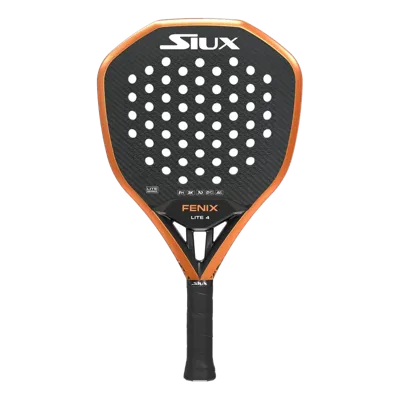
Defy V1 SE or Siux Fenix Lite 4: two high-balance 3K diamonds
The Siux Fenix Lite 4 is the closest match on paper. It is also a high-balance diamond with a 3K carbon face, listed for advanced players. Its meters match this racket: High power, Low on the rest.
The difference is the core. It is listed as EVA hard rubber instead of Power Foam. The weight is given as a range from 355 g to 375 g. The Wilson is fixed at 365 g. If you want to know exactly what you will hold, that is a small point in its favour.
Frame, handle, head size: what the sheet leaves out
The listing does not publish the frame, the handle, the head area or the weight system. It also names no pro player. That matters for a diamond racket, where head area and frame stiffness shape the feel. Before you buy, check those details with the shop or the brand.
Similar rackets
Questions before you buy
Is the Wilson Defy V1 SE a racket for beginners?
No. It is listed for advanced players, and on paper it is heavy, head-heavy and hard to control. Beginners will find the small sweet spot hard to use.
How does it differ from the Defy Pro V1 SE?
The Pro is listed at 370 g with a 15K carbon face, and its control reads Medium. This one is 365 g with 3K carbon, and its control reads Low.
Is it comfortable for the arm?
On paper, no. Comfort reads Low because of the hard core and the weight. The Defy LS V1 SE at 355 g reads High for comfort.
Has it been reviewed?
Not yet. No review or court test was found, so this page rests on the listed specs.
Is the Defy V1 SE worth the money right now?
Today's price is labelled "Fair price" compared with the rackets that play most alike. Which shops deliver, and what shipping costs, depends on your country. The price comparison shows it for yours.
See all pricesWhat is the closest alternative?
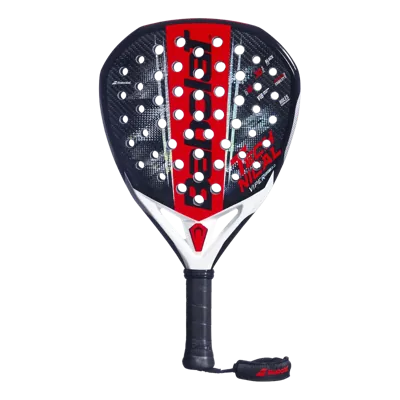
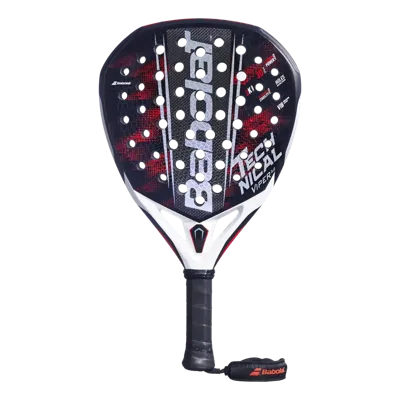
The Babolat Technical Viper Soft 3.0 plays most alike. Differences: comfort +1.0, forgiveness -1.0. Today: € 167.14.
Compare side by side →Who should not buy it?
Skip it if you rely on placement and long rallies (control 4.5/10), or if your elbow or shoulder complains (comfort 4.0/10), or if you are still learning: it is not very forgiving (3.0/10).
How heavy is it really?
The brand gives 365 g. That counts as medium. Each racket can differ within that range.
Why a range? →