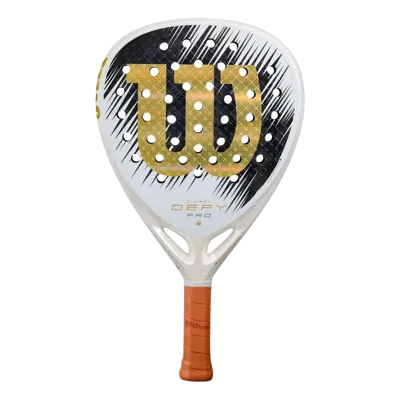
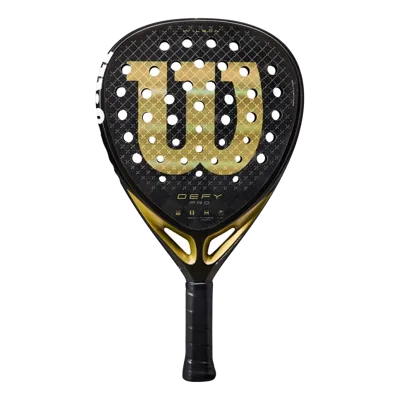
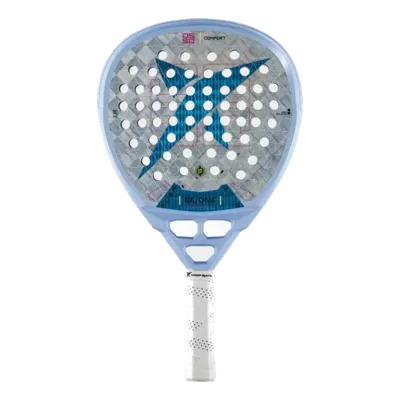
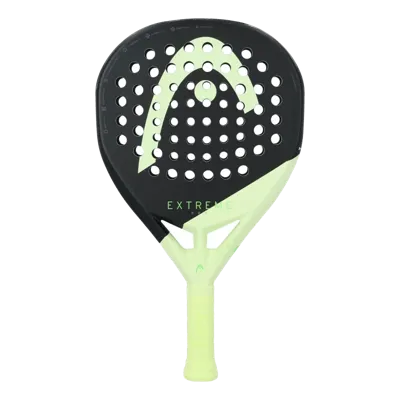
Put the Wilson Defy Pro V1 SE next to last year's Defy Pro V1 and the sheet gives you nothing to tell them apart. Same 15K carbon, same Power Foam, same diamond, same 370 g. So what does the SE label add? On the published specs, nothing.
SE or 2025: eight matching specs and no changed one
The comparison covers balance label, core, face, level, shape, surface and both weight figures. All eight match. Nothing is listed as changed. Four things are unknown for the older model: balance in mm, frame, pro player and thickness. A gap could hide there, but nothing says it does.
A changed name is a changed label, not a measured change. Treat the two as the same racket until a source shows otherwise. You can read the Defy Pro V1 2025 page for the earlier listing.
A twin's review: what padel.how found on the 2025 Defy Pro V1
The only review so far tested the 2025 twin, not this exact racket. Padel.how played it and gave 71 out of 100. Its testers liked the acceleration and the pronounced spin texture at high speed. They did not like the narrow sweet spot, which loses depth when contact lands to the side. Comfort also read negative. Their review names advanced attacking players with fast swings and clean upper-central contact as the right fit.
The pattern is clear. This racket pays you back when you bring the speed yourself. If your swing is slow, it has little to give you.
What the product page claims and what the meters read
The product page claims maximum power and control at the net, and describes the racket as rigid, stable and explosive. Power holds up on paper, and the meters read High. Control is a different story. It reads Medium. The diamond shape pulls it down, while the carbon face and the balance lift it.
Comfort reads Low. That fits the stiff face and the weight. The page also lists some construction technologies. Those are the brand's own claims, and no independent source here says what they do on court.
370 g at 265 mm in a diamond head: what it asks of your arm
370 g is heavy. A balance of 265 mm is high, so the weight sits toward the head. Together with a 38 mm thickness, the specs suggest a racket that carries momentum through the ball but tires the arm over a long match.
Not a racket to pick up for one hard session after a long break. Build up first. Strong shoulders, a proper warm-up and a plan to rest if the elbow complains all matter here. The surface is rough, and the padel.how testers called the spin texture effective at high swing speeds. That suits a player who already swings fast.
The retailer lists it for advanced players, and a power profile. Both fit what the numbers say. A smash or a víbora is where this shape earns its place. Defending from the back of the court with it is harder, because the weight and the diamond head slow every change of direction.
Defy Pro V1 SE next to the Defy V1 SE and the Defy LS V1 SE
The Defy V1 SE uses a 3K carbon face and weighs 365 g. Its meters match this one except for control, which reads Low there. The Defy LS V1 SE weighs 355 g and has a carbon and fiberglass ComfortFlex face. It reads High for comfort and Medium for power.
So the Pro is the control-leaning choice of the three, and the LS is the gentler one. If your arm is the worry, start with the LS. If you want the most power from the family and can live with the weight, the Pro is the one to look at.
Frame, handle, head size: what the sheet does not publish
Frame, handle, head size and weight system are not published. Neither is a pro player for this version. A related line player, Javi Garrido, plays left and uses another version from the same line. That says nothing about this exact racket.
The head size is simply not published. A diamond head is usually the smaller and less forgiving kind, but the exact figure is missing here, so the page cannot tell you how much.