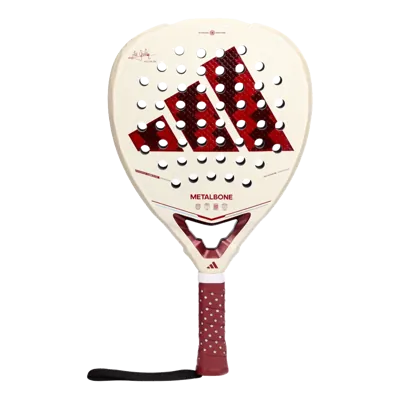
adidas Metalbone Reserve 2026
7.5padell.io scoreSpecs only- Shape
- Diamond
- Weight
- 360 to 375 g
- Balance
- Head-heavy
- Core
- EVA Soft Performance
On paper, the Metalbone Reserve 2026 is a head-heavy diamond of 360 to 375 g with a stiff aluminized carbon face. Power reads high, while control, comfort and sweet spot read low. The product page promises comfort and controlled power, but the specs point to a racket that wants a strong, accurate swing. No reviews found yet.
RBy Ruud Caris · facts checked 9 October 2026Choose it if
- you already hit hard and want a heavy, head-heavy racket that adds mass to your swing
- a diamond head suits you and you accept a small, demanding hitting zone for the sake of power
- your arm is conditioned for 360 to 375 g and you want a stiff carbon face rather than a soft, forgiving one
Skip it if
- you want a forgiving racket for long rallies, because the Metalbone Carbon 2026 reads high on comfort where this one reads low
- you want more control from a heavy diamond, in which case the Wilson Defy Pro V1 SE reads medium on control
- you are still learning the game or coming back from arm trouble, since the Drop Shot Quantum 2.0 is listed down to Intermediate level
How it plays
Line = the average of all rackets ▲ above ▼ below
On paper this is an attacking racket: weight, a diamond head and a stiff face all push toward power.
- Control Low, because the head-heavy diamond shape works against placement even though the soft core helps a little.
- Power High, as the stiff carbon face, diamond shape, heavy weight and head-heavy balance all add to it.
- Comfort Low, since the stiff face and the weight send more of the impact to your arm than the soft core takes away.
- Handling Low, as the diamond shape, the weight and the head-heavy balance make quick hands at the net harder.
- Forgiveness Low, because the diamond head concentrates the useful hitting zone, and the soft core only partly offsets that.
Specifications
Not published by the brand: handle
Specs from the brand's own site · checked 25 September 2026 · Spotted a wrong spec? Report it →
Every version
Compare all versions →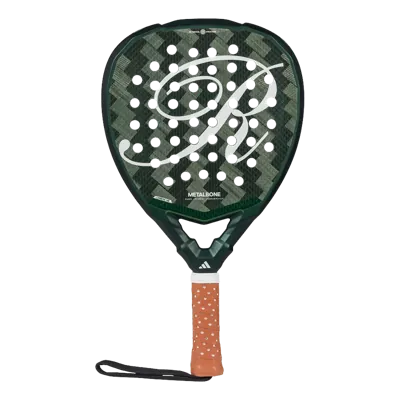
The automatic predecessor, the Metalbone Reserve 2025, is probably a different model, since it lists another player name. Do not read this as a version story. Weight, shape, core, face, thickness and balance label match, but the frame text and the level label differ. A changed label is only a changed label here, not a measured change. Treat the 2026 racket on its own specs.
Price history
Lowest price per day across the shops in your market. Checked every night.
The product page calls the Metalbone Reserve 2026 a racket with a solid balance between comfort and controlled power. A head-heavy diamond of 360 to 375 g rarely reads that way on paper. This page tests the claim against the specs, because no review has been found yet.
A balance of comfort and control, claimed for a diamond
Adidas describes a stable, consistent response from the Carbon 16K surface. That is a brand claim, not a measurement. The specs tell a different story. The shape is diamond, the balance is head heavy and the weight is in the heavy range. Each of those pulls control and comfort down and pushes power up.
One ingredient does pull the other way. The core is EVA Soft Performance, and a soft core usually helps comfort and forgiveness a little. It is not enough to flip the picture. The meters on this page read Low for control, comfort, maneuverability and sweet spot, and High for power.
So is the claim false? Not exactly. It may be true for a strong player who already controls a heavy diamond. For anyone else, read it as marketing.
Advanced here, Professional on its Metalbone siblings
The level label on this racket reads Advanced. Several same-year Metalbone listings, such as the Metalbone Carbon 2026 and the Ale Galán edition, read Professional. The build does not explain the gap. This racket shares the Carbon Aluminized 16K face, the EVA Soft Performance core, the diamond shape and the head-heavy balance with the Ale Galán edition.
Treat the label as a hint, not as a measured difference. Do not read it as a softer racket. On paper it is just as demanding as its siblings. Advanced here suggests a player with solid technique and a fit arm.
360 to 375 g with 485 cm2: how much racket you must carry
The brand lists 360 to 375 g. That is a range, so your own racket may land anywhere inside it. The exact weight system is not published, and neither is the handle.
A retailer lists the head at 485 cm2. The thickness is 38 mm and the length is 455 mm. Those figures do not describe a small racket. They describe a long, heavy frame that moves more slowly at the net.
What do you notice on court? Slow hands in fast exchanges. Volleys that need earlier preparation. In return, you get more mass behind the ball on attacking shots. If your shoulder tires after an hour, this weight will show it.
Aluminized 16K carbon over soft EVA: where Low comfort comes from
The face is Carbon Aluminized 16K and the frame is carbon. Adidas says the aluminum makes the feel stiffer and suits players who hit hard. That fits the comfort meter, which reads Low. A stiff face returns more vibration, and weight adds to it.
The soft core is the only counterweight. It softens the contact a little, but the stiff face and the weight outvote it on paper.
What can you do about it? Warm up properly, keep your grip relaxed and do not add overgrips that make the handle thicker than you need. Better still, try one before buying if your elbow has a history.
Alejandro Galán, no review and no balance figure: what you cannot check
A retailer lists Alejandro Galán as the associated player. That is a listing, not proof of how he sets up his own racket.
The balance is labelled Head Heavy, but the millimetre figure is not published. Other Metalbone siblings list 260 mm or 265 mm, yet this racket does not, so do not assume a number. No review, video or player discussion has been found for it. Everything here comes from specs and brand claims.
Reserve, Metalbone Carbon or Wilson Defy Pro V1 SE: picking your heavy diamond
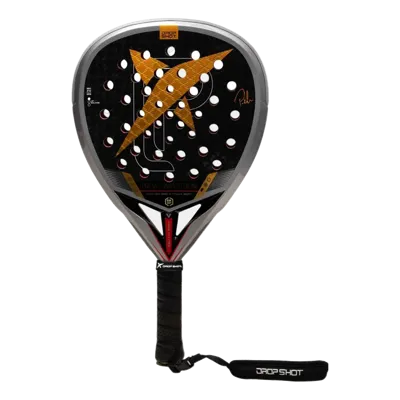
If you like the idea of a heavy diamond, compare three options. The Metalbone Carbon 2026 has a 6K carbon face and reads High on comfort, with the same Low control. The Wilson Defy Pro V1 SE is listed at 370 g with a 265 mm balance and reads Medium on control. The Drop Shot Quantum 2.0 is listed at 360 to 370 g for Intermediate and Advanced players.
The Reserve fits when you want the stiff aluminized face and are sure about the weight. Otherwise one of the others may suit your arm better.
Similar rackets
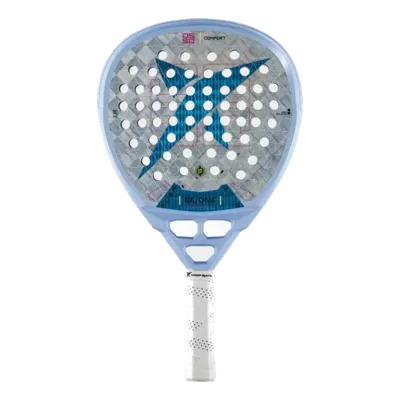
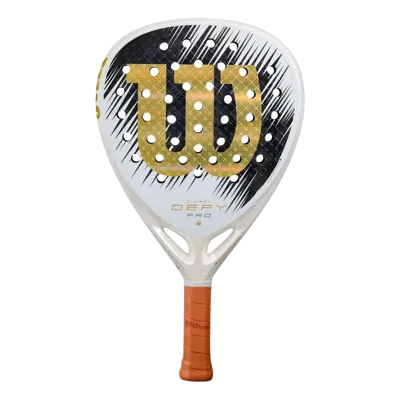
All rackets that play like the adidas Metalbone Reserve 2026 →
Questions before you buy
Is the Metalbone Reserve 2026 the same as the Metalbone Pro EDT by Ale Galán?
No, they are listed as separate rackets. The Pro EDT is described on the product page as a limited edition, and the Reserve is a different listing with its own level label, Advanced.
Is it a beginner racket?
No. The brand lists it as Advanced, and on paper the weight, diamond shape and head-heavy balance ask for a strong, controlled swing.
Is it hard on the arm?
On paper, probably. Comfort reads Low because of the stiff face and the weight. No review confirms it yet, so try one first if you have elbow or shoulder trouble.
How does it differ from the Metalbone Carbon 2026?
The Carbon uses a 6K carbon face and reads High on comfort, while this racket uses Carbon Aluminized 16K and reads Low. Both are head-heavy diamonds of 360 to 375 g.
Is the Metalbone Reserve 2026 worth the money right now?
Today's price is labelled "Pricey today" compared with the rackets that play most alike. Which shops deliver, and what shipping costs, depends on your country. The price comparison shows it for yours.
See all pricesWhat is the closest alternative?
The Drop Shot Quantum 2.0 plays most alike. On paper the differences are under one point.
Compare side by side →Who should not buy it?
Skip it if you rely on placement and long rallies (control 4.0/10), or if your elbow or shoulder complains (comfort 5.0/10), or if you are still learning: it is not very forgiving (4.0/10).
How heavy is it really?
The brand gives 360 to 375 g. That counts as medium. Each racket can differ within that range.
Why a range? →