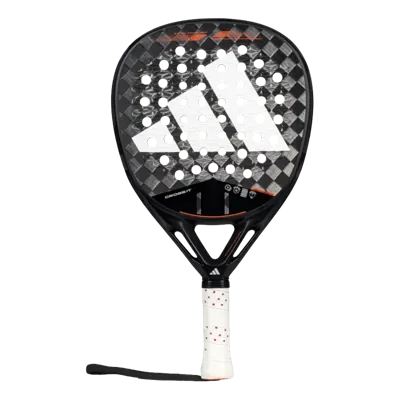
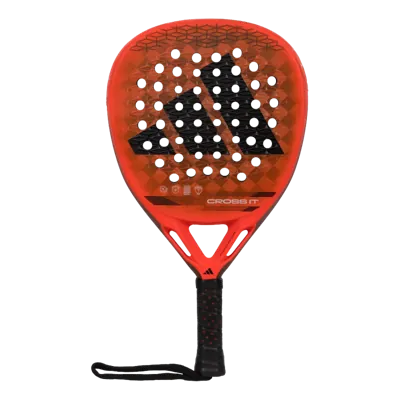
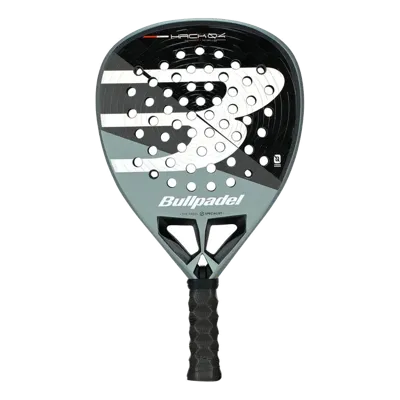
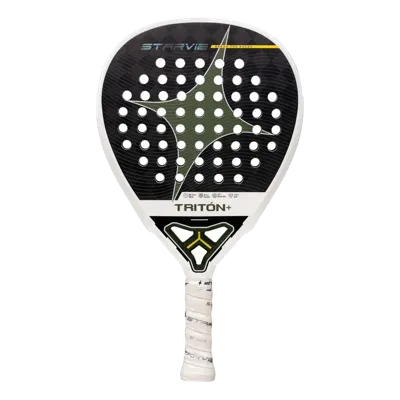
Only one listed spec separates the adidas Cross IT 3.4 from last year's Cross It 3.3. The balance label moved from Even to Head Heavy. Everything else on the sheet is the same. No written review exists yet. This page has not tested the racket on court either. So what follows rests on the specs and on three video reviews.
Even in 2024, head heavy now: the one label that moved
The 3.3 from 2024 and the 3.4 from 2025 share the same core, EVA High Memory. They share the same face, Carbon Aluminized 15K, the same diamond shape, the same 38 mm thickness and the same 360 to 375 g weight range. Both are listed as Professional. Handle and surface finish are not published for the 3.3, so those cannot be compared.
So the story is small but real on paper. A label changed from Even to Head Heavy. That is a changed label, not a measured change. The brand has not published a balance in mm for the 3.4 to show how far it moved.
What a head-heavy label does to 360 to 375 g in a diamond
Weight is already high here. Put more of it toward the head and you get a racket that swings through the ball with momentum. That helps when you want to hit hard and well-timed shots. The brand lists the player profile as Attack, which fits.
The cost is on the other side. Quick volleys at the net, blocks against a fast ball and late changes of direction ask more of your wrist. The Low maneuverability reading comes from exactly this mix of diamond shape, heavy weight and head-heavy balance.
A retailer lists the length at 455 mm. The brand does not list it, so treat it as a retailer figure. One video review mentions an extended handle for leverage, and the product page claims the longer handle shifts the balance toward the head. Treat both as claims, because the handle is not in the published specs.
What can you do about it? If you like the idea but fear the weight, try the racket before committing. The exact weight of a single racket within the 360 to 375 g range is not specified.
Three video reviews, three opinions on forgiveness
All three videos say they were played on court, and they do not agree. The details are in the reviews box below. In short, one found it demanding in the air and harsh on the arm. One said it punishes off-centre contact. One called the sweet spot generous. That split is useful: it suggests your own technique decides how this racket treats you.
Carbon Aluminized 15K over EVA High Memory: where High power and Low comfort come from
The face is carbon and stiff. A stiff face returns energy quickly, which helps power and hurts comfort. The EVA High Memory core is listed as medium. It raises control and comfort a little. It is not enough to cancel the face, the weight and the balance. The surface is listed by a retailer as a 3D finish, and one video review says the texture helps with spin. That is a single source, so take it as a pointer, not a fact.
Cross IT 3.4 next to the CTRL, the Team and the Carbon-Maxi Arce
The adidas Cross IT CTRL 3.4 uses the same core and face, but in a round shape with even balance. Its meters read high control and high sweet spot, with low power. It is almost the opposite approach with the same materials.
The adidas Cross IT Team shares the diamond shape and head-heavy label, but has a fiberglass face and an Advanced level. Its comfort reads high where this racket reads low. The Carbon-Maxi Arce is also a head-heavy diamond, with a 6K carbon face and EVA Soft Performance core, and its comfort reads medium.
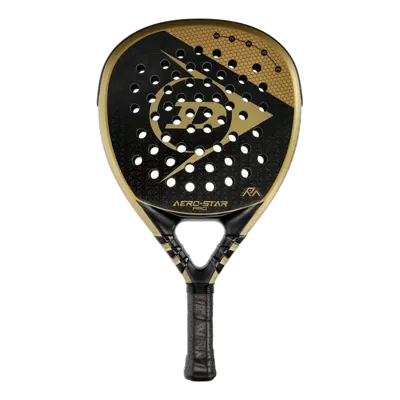
Outside the family, the Dunlop Aero-Star Pro is another diamond at 360 to 375 g with a listed balance of 270 mm. Its control reads medium, one step above this racket.
Balance in mm, head size, frame: what the sheet does not publish
For the 3.4 the brand has not published the balance in mm, the head surface, the frame, the handle or the weight system. Those are the numbers that would tell you how head-heavy it really is and how large the usable face is. Until they appear, Head Heavy is a label, not a measurement. Do not assume it is extreme.