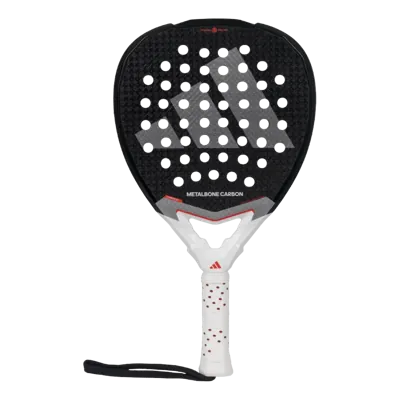
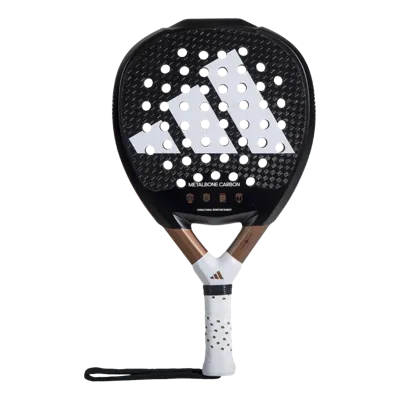
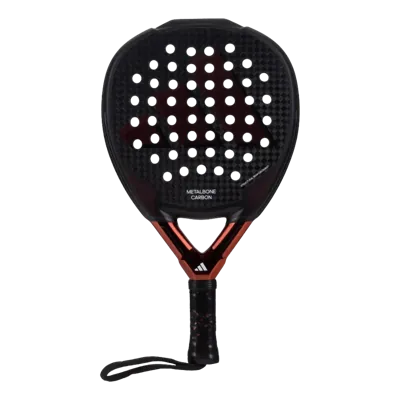
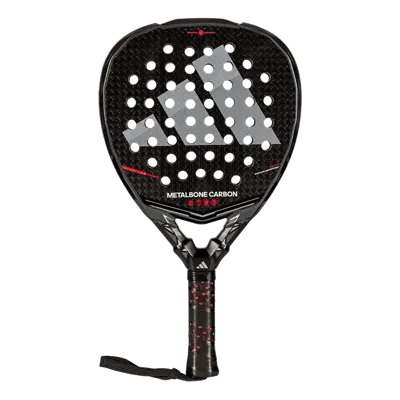
Three Metalbone Carbon rackets in a row share the same face, core, shape, 485 cm2 head and 360 to 375 g weight range. This 3.4 is the middle one. That makes the name less important than the specs, and the specs tell you what to expect.
Three years, one sheet: what the 3.4 changes against the 3.3 and the 2026
On paper, nothing. The 3.3 and the 2026 version match this racket on every published spec. The only changed label in the line sits earlier. The surface went from Spin Blade Mold on the 2023 original to Spin Blade Decal on the 3.3. A changed label is not a measured change.
One gap matters. Balance in millimetres is not published for the 3.4. The 2026 sheet shows 265 mm, but you should not assume the same for this racket. The brand also does not publish a weight system.
The product page claims the 2025 collection brought an extended handle and a tubular carbon frame. The sheets cannot confirm a difference. The frame reads Octagonal Structure on both the 3.3 and the 3.4, and the handle is unknown for the 3.3.
A review of the 3.3: what padel.fyi found, and why it still counts
The only written review in the index is padel.fyi, and it is about the 3.3. It gave 7.4 out of 10. The 3.3 has the same published specs as this racket, so the findings carry over, with that caveat.
The tester liked the low arm fatigue and called the racket medium hard and suited to intermediate players. The criticism was net play: too much trampoline effect made control harder at the net. Positive marks went to power, comfort, control and sweet spot.
Four videos, one split: agile and stable, but a small sweet spot
Four video reviewers played a Metalbone Carbon of this type on court. They agree on power. Dani 13 found good power for its hardness and good control when attacking. Padel Review called it agile, stable and free of vibration.
They also agree on the catch. Dani 13 and Padel Review both describe a demanding sweet spot. Padel Review said it is not forgiving on off-centre hits and smaller than on the control version. Dani 13 said it takes some adaptation.
They split on handling. Fabio Ferro and Padel Review praised how easy it is to move. Dani 13 found it hard in forced situations. Padel Reviews called it light for its weight and liked the longer handle. Fabio Ferro said the head is not very heavy.
Soft EVA under 6K carbon: why power and comfort read High and control Low
The core is EVA Soft Performance, and the face is 6K carbon. A soft core absorbs shock, which is why comfort reads High. The brand lists the level as Professional, and its player profile is Attack.
Control reads Low for another reason. The diamond shape and the head-heavy label both pull it down. The soft core pulls it up a little, which is why one reviewer still found good control in attack. Not control for everything, but control when you are on the front foot.
The brand lists the thickness at 38 mm and the length at 455 mm. The surface is Spin Blade Decal. Padel Reviews wished it had more texture, while Fabio Ferro liked the spin it gave.
360 to 375 g with a head-heavy label: what the heavy diamond asks of your arm
The brand gives a weight range, 360 to 375 g, rather than one figure. That is heavy. Add the head-heavy label and the racket carries momentum into the ball, which helps smashes and bandejas but slows quick reactions at the net.
The tension is clear. The meters read Low for maneuverability, while padel.fyi, reviewing the identical 3.3, called it highly manoeuvrable with little arm fatigue. Both can be true for a strong player. If your arm tires early, try the racket before you commit.
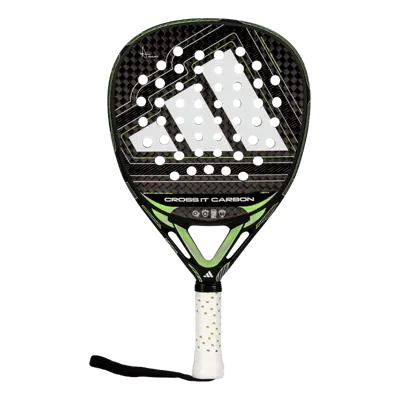
Metalbone Carbon 3.4 or the Cross IT Carbon Maxi Arce: two near-identical sheets
The Cross IT Carbon-Maxi Arce shares the face, core, shape, balance label and weight range with this racket. Its comfort reads Medium against High here, and that is the only meter that differs. Decide on feel on court, not on the spec sheet.